How to formulate high-quality lessons learned: a rapid review
Christian Dagenais, Michelle Proulx, Aurélie Hot, Esther McSween-Cadieux, Romane Villemin, Lara Gautier, Sydia Rosana de Araujo Oliveira, Patrick Cloos, Lola Traverson, Kate Zinszer, Valéry Ridde

TL;DR
This paper proposes a structured method for creating high-quality lessons learned from projects, aiming to improve future practices and resilience in hospital systems during crises like the COVID-19 pandemic.
Contribution
A guide with 11 steps for developing quality lessons learned, based on a rapid review of existing literature.
Findings
Three principles for developing quality lessons learned were identified: creating a supportive climate, choosing the right leaders, and engaging in a scientific approach.
A guide comprising 11 steps was developed to structure the process of formulating quality lessons learned.
Abstract
Lessons learned convey information and experiences that were studied when carrying out projects or policies, in order to improve procedures and practices to better cope with future similar problems in other contexts. Although the term lessons learned appears in the titles of thousands of scientific articles, most do not describe how these lessons were produced or the level of rigor involved in their development. As part of a project aimed at deriving lessons from hospitals’ resilience during the COVID-19 pandemic in five countries (the HoSPiCOVID project), we sought to systematised the process of producing these lessons. To do so, we conducted a rapid review to identify the best ways of developing quality lessons learned (QLLs). A QLL results from a systematic process of collecting, compiling, and analysing data derived from a research project. The rapid review follows the same key…
Genes, proteins, chemicals, diseases, species, mutations and cell lines named across the full text — each resolved to its canonical identifier and authoritative record.
Click any figure to enlarge with its caption.
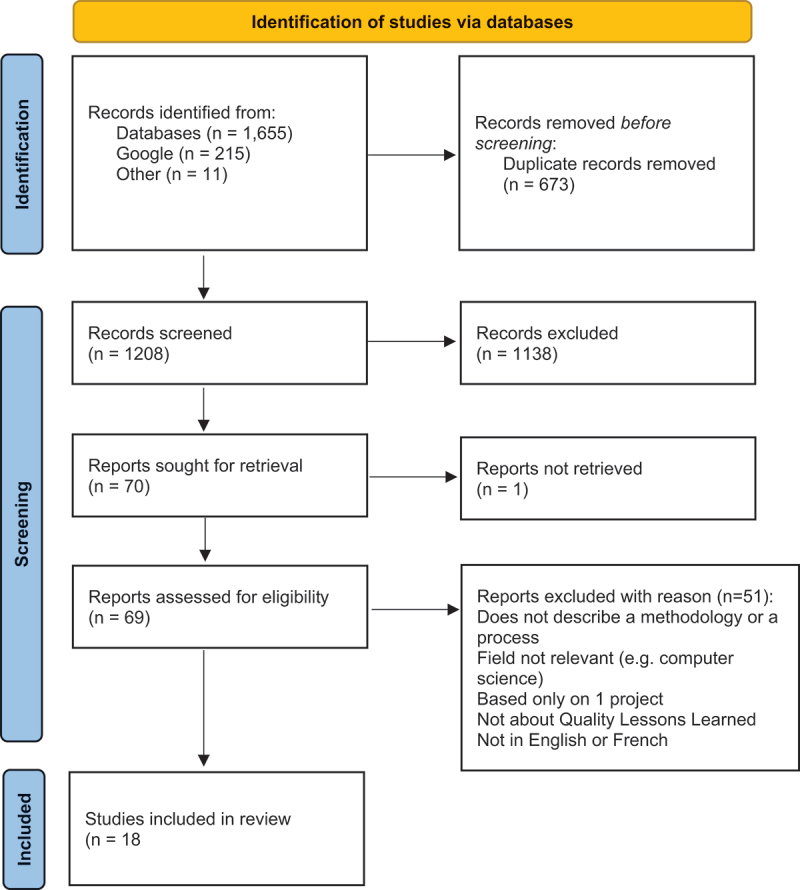 Figure 1
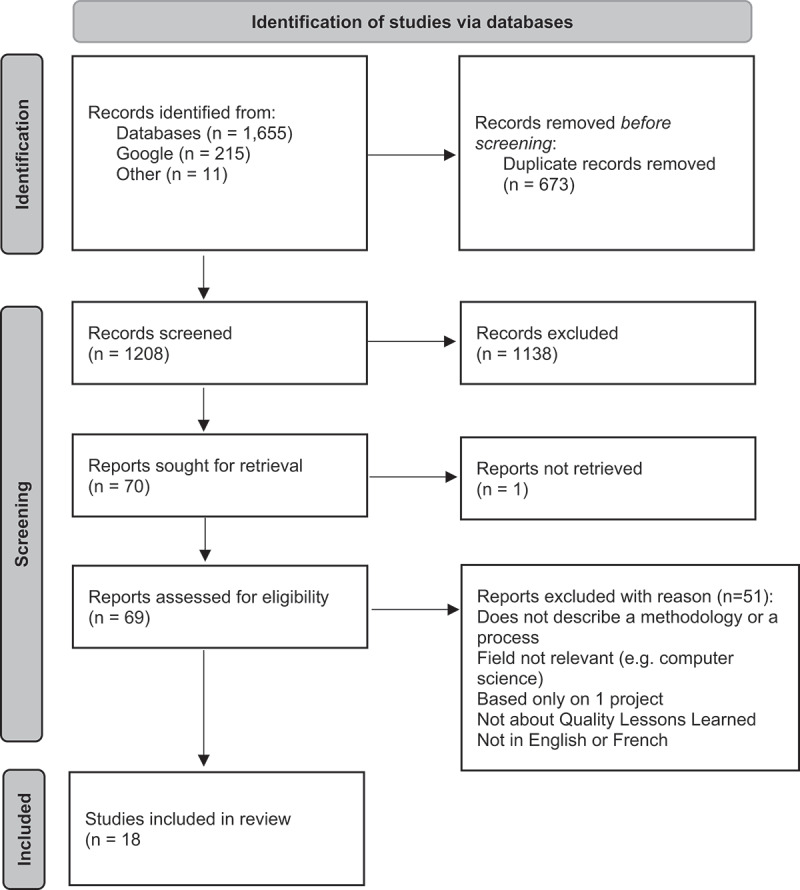 Figure 2
- —Canadian Institute of Health Research
Peer Reviews
No public reviews on file for this paper yet. If you reviewed it on a platform where reviews are public (OpenReview, ICLR, NeurIPS, ICML), you can paste yours below so the community can read it here.
Videos
No videos yet. Explain this paper in a talk, walkthrough, or lecture? Add one.
Taxonomy
TopicsHealth Policy Implementation Science · Patient Safety and Medication Errors · Viral Infections and Outbreaks Research
Background
In early 2020, the Director of the World Health Organization (WHO) declared the emergence of a novel coronavirus a public health emergency of international concern [1]. As the outbreak rapidly escalated into the COVID-19 pandemic, a wide range of policies and practices were introduced to slow transmission, develop and validate rapid diagnostic tests, treat infected individuals, and create vaccines. Hospitals worldwide had to devise strategies to manage the influx of patients.
Amid the widespread disruptions caused by COVID-19, health systems around the world faced the urgent challenge of implementing effective control measures while maintaining essential services. In response, WHO emphasised the importance of systematically documenting lessons learned from national COVID-19 responses [2].
However, scientific studies rarely follow a structured process like the one described by WHO. Many articles present a set of lessons learned or feature the term in their titles, yet few explain the underlying processes through which these lessons were identified [3]. In practice, the scientific literature seldom details systematic, transparent, and rigorous approaches to identifying lessons learned [3–5].
This gap highlighted the need for clearer guidance on how to formulate quality lessons learned in a way that supports transferability and evidence-informed decision-making. In the context of research projects conducted in complex or rapidly evolving environments, there was a need for structured approaches that allow research teams to generate lessons grounded in empirical data and transparent reasoning.
This article presents the findings of a rapid review of best practices, procedures, and approaches for developing what Michael Q. Patton refers to as quality lessons learned (QLLs) [6] (see definition below).
The review was conducted as part of the HoSPiCOVID project, which compared the resilience of hospital and public health systems and their personnel in five countries (Brazil, Canada, Japan, France, and Mali) [7]. In addition to its empirical focus, the project also aimed to generate and share QLLs with hospital and public health officials in the participating countries in order to support future preparedness and system strengthening efforts.
Method
A rapid review provides an overview of the available knowledge on a given object of study [8–10]. The method follows the same steps as a systematic review, but in an accelerated and simplified manner [11,12], to produce evidence within the shorter time frame imposed by an emergency situation [13,14], as was the case here. For this review, our team chose to limit the number of databases queried, excluding any assessment of the methodological quality of the selected papers and focusing on a descriptive synthesis of findings [14–16].
Search strategy
The search strategy (see Appendix A) was developed in close collaboration with a senior information specialist. Search terms were related to: 1) lessons learned (excluding best practices) and 2) method (e.g. process, approach, criteria). The information specialist conducted a systematic search of the published and grey literature across two scientific databases: MEDLINE and Web of Science. MEDLINE was selected as it is the most widely used database in the health sciences. To complement the MEDLINE search and broaden the scope to related scientific fields relevant to the health sector, Web of Science was also used. We considered that the combination of these two databases provided adequate coverage of the health sciences literature for the purposes of this rapid review.
Grey literature was identified through searches using the Google Web search engine and consultations with experts. Google’s advanced search tool was employed to retrieve documents – particularly guides, tools, and similar resources – centred on the lessons learned process as the main topic, while minimising irrelevant results. This search yielded 215 relevant documents, which were added to the initial set.
Study selection: eligibility criteria
Documents were included in the review if they: described a methodology or a process to capture quality lessons learned or presented a tool or a guide to capture lessons learned; were published between 2000 and 2020; and were published in English.
Documents were excluded from the review if they: discussed a process or a tool specific to a field that was not relevant to the health sector (e.g. computer science, engineering); discussed lessons learned from a single project or initiative (without describing how they produced them); or were not available in full text (e.g. abstract only).
Data extraction: selection and coding
First, titles and abstracts of all documents were screened in Zotero by the first author to assess their potential eligibility based on the inclusion and exclusion criteria. Second, all documents presumed to meet the criteria were retrieved as full texts. The final selection of relevant documents was done independently by three authors (CD, MP, EMC) based on a full article review. Discrepancies concerning the retrieval of articles were resolved through consensus. Data were extracted by four authors (CD, MP, EMC, RV) using predefined Excel data extraction sheets, which included document characteristics as well as the criteria defined above.
Information extracted from the selected documents included:
- Characteristics of the selected items (e.g. title, authors, year of publication, country, journal, discipline);
- Definition proposed for ‘lesson learned’;
- Steps to produce lessons learned (e.g. timing, process, stakeholders);
- Methods or techniques for collecting data (e.g. interview grid);
- Quality criteria for a lesson learned (e.g. checklist);
- Methods of formulating lessons learned;
- Implementation or dissemination of lessons learned.
Results
The search yielded 1,881 records, of which 1,208 were screened after removing duplicates. Eighteen documents published between 2000 and 2020 were included in the final review (Figure 1 - PRISMA flowchart). These documents were produced primarily in high-income countries: United States (5), United Kingdom (4), Canada (4), with others from Australia, Switzerland, Saudi Arabia, and collaborative efforts involving Japan and the UK or the US. They included peer-reviewed articles (6), grey literature from official bodies (5), monographs (2), a book chapter, and various other sources (e.g. commentaries, conference proceedings). A detailed list is available in Appendix B. Figure 1.PRISMA flow-chart.
Despite their diversity, these documents converge on a common goal: improving how organisations generate and use lessons learned. They offer guiding principles, conceptual models, and procedures for producing what we refer to as ‘quality lessons learned’ (QLLs). Through a content analysis of this literature, we identified three core dimensions:
- A shared definition of QLLs;
- Guiding principles for their development;
- A recommended set of steps to structure the process.*
What is a Quality Lesson Learned (QLL)?
A quality lesson learned (QLL) is a statement or recommendation based on tacit or explicit knowledge, drawn from positive or negative experiences, and intended to guide future practice. QLLs aim to be transferable, helping others perform tasks more effectively or avoid repeating past mistakes.
Unlike anecdotal reflections, QLLs result from systematic efforts to collect, compile, and analyze information. They often emerge from evaluations of projects, programs, policies, or research activities. Their value lies in contextualising what happened, understanding why it happened, and distilling that insight into actionable guidance.
Several sources define QLLs as useful knowledge gained through experience—knowledge that can be generalised, shared, and applied in other settings [3,5,17–19]. They are most effective when they lead to concrete improvements in processes, efficiency, or safety [18,20].
Guiding principles for the lessons learned development process
Three core principles emerged from the reviewed literature to guide the development of QLLs. Together, they highlight the importance of rigor, inclusion, and trust throughout the process.
Foster a safe and collaborative environment
Trust is essential for stakeholders to openly share both successes and failures [21]. Creating a climate of collaboration – across organisational levels – encourages honest reflection [5,22]. This requires clear communication, respect for all viewpoints, and transparency about the process and its benefits [23]. Support from leadership and shared responsibility among partners can further strengthen engagement [5,22].
Ensure credible and inclusive leadership
Effective facilitation depends on leaders who model openness, honesty, and respect [23]. Involving team or project leads from the start helps coordinate efforts, encourage participation, and ensure follow-up [18]. Managers can also play a key role in motivating teams and maintaining momentum.
Apply a systematic, evidence-informed approach
The QLL development process should follow a structured, transparent methodology grounded in a research mindset. This includes formulating a guiding question, collecting data systematically from multiple sources, and analysing it rigorously and collaboratively [24]. Primary and original data sources are preferable. Over-reliance on a single perspective or selective data filtering should be avoided to preserve the credibility of findings.
Steps for developing quality lessons learned
Drawing on the 18 selected documents, we propose an 11-step iterative approach for developing and disseminating quality lessons learned (QLLs). These steps are organised into two key phases:
Phase 1 – preparing the process (steps 1–5)
This phase lays the foundation for a credible, inclusive, and rigorous QLL process.
- Step 1: Identify and engage stakeholdersStakeholders – internal and external – should be involved early to clarify goals, scope, data sources, and organisational constraints [5,18,20,25]. Their involvement ensures that the QLLs are relevant and actionable.
- Step 2: Define a clear objectiveThe process should have a clearly stated purpose, co-developed with stakeholders. Are the QLLs meant to inform internal reflection, external sharing, future planning, or all of these? [3,20,26]
- Step 3: Specify the project(s) and events under reviewClarifying the project or event of interest (e.g. crisis response) allows teams to define the scope, responsibilities, timeline, and frequency of analysis [4,20,27].
- Step 4: Choose the right timingQLLs can be developed at various points – not just post-project. Capturing lessons during implementation may enhance ongoing effectiveness and reduce memory bias [5,17,20,22,27–29].
- Step 5: Select a data collection strategyThe approach should be adapted to the audience, scope, time frame, available resources, and roles of those involved [18,20,26]. It should rely on diverse and credible data sources.
Phase 2 – identifying and formulating QLLs (steps 6–11)
This phase focuses on data gathering, analysis, validation, and dissemination.
-
Step 6: Define data collection questionsCommon guiding questions include: What happened? What worked? What didn’t? What should be done differently? [5,20,21,26,29,30]. These may be explored through After Action Reviews (AARs) or other structured group discussions [18,23,30].
-
Step 7: Collect dataData sources may include group discussions, individual interviews, documents, direct observation, and incident reports [18,21,23,24,26,28,30]. Triangulation helps ensure completeness.
-
Step 8: Verify data and fill gapsBefore analysis, teams should identify missing elements and collect any additional information needed to complete the picture [26].
-
Step 9: Analyse data and formulate QLLsQLLs should be grounded in a systematic analysis – whether through team discussions, content analysis, analytical frameworks, or conceptual models (e.g. Syllk model, triple-loop learning) [3,4,17,21,24,27–29]. Analytical tools (e.g. matrices or grids) can support consistency (Table 1).Table 1.Proposed grids for QLL analysis.AuthorsAnalysis gridCDC [17]
-
Project information and contact information for additional detail
-
A clear statement of the lesson
-
A background summary of how the lesson was learned
-
Benefits of using the lesson and suggestions for how it may be used in the future McDonald [24]
-
Analysis of the data collected by relevant category (environment, inputs, process, outcomes, etc.) using the following questions: what happened, what contributed to success, what contributed to failure, what needs to be improved?
-
In-depth examination of the data for the ‘process’ category using a congruence assessment matrix (see Appendix C) Milton [18]
-
Identify what went well and what could have gone better
-
Identify the audience for whom the QLL is intended
-
Revisit the target situation or context
-
Analyse the differences between what was expected and what happened
-
Look for the root causes, i.e. create a list of causes
-
Make a recommendation for the future. Qatar National Project Management (n.d.) [31]
-
Purpose
-
Project goal
-
Project outcomes
-
Project evaluation (this section should state whether or not the project’s outcomes were realised and describe how success was measured against outcomes)
-
Project strengths
-
Project areas for improvement
-
Advice for similar projects
-
Step 10: Validate QLLs
-
Validation ensures that QLLs are accurate, relevant, and useful. This may involve structured feedback from stakeholders or review sessions with senior actors [4,6,18,29]. Criteria include contextual clarity, specificity, supporting evidence, target audience relevance, and applicability conditions [4,6,24,32,33].
-
Step 11: Archive, disseminate, and implement QLLs
-
Lessons should be stored in accessible formats (databases, web portals), shared across networks (e.g. newsletters, communities of practice), and integrated into ongoing training and project planning [3,5,18,20,22,26,28,29,34]. Implementation requires leadership, follow-up, and sometimes a roadmap to ensure that lessons lead to concrete change.
Discussion
Purpose and scope of the guide
This article presents the foundation of a practical and evidence-informed guide for producing quality lessons learned (QLLs), structured around three guiding principles and an 11-step process. The approach is intended to support teams plan a reasoned and rigorous process, while offering resources for deeper exploration of specific steps. By synthesising best practices from a diverse body of literature, the framework aims to generate lessons that are not only contextually grounded but also transferable and actionable – ultimately improving organisational learning and future responses.
Distinctive contribution
Unlike much of the existing literature, which provides fragmented or anecdotal recommendations [3,5], this guide proposes a comprehensive, step-by-step method grounded in three guiding principles: creating a climate of trust, selecting appropriate leadership, and adopting a scientific approach. This structure enhances both conceptual clarity and practical implementation.
Empirical support and flexibility
As mentioned earlier, the guide was developed and applied in the context of the international HoSPiCOVID project, conducted across five countries with varying levels of resources. This application demonstrates the framework’s flexibility and relevance in both crisis situations and routine quality improvement initiatives [7]. While many authors emphasise high-risk contexts for lessons learned, others highlight the value of capturing insights from everyday operations [22,35]. This dual focus reinforces the guide’s relevance for both adaptive and everyday resilience.
Filling a gap in literature and practice
The guide addresses a widely acknowledged gap: although thousands of articles reference ‘lessons learned,’ few describe how these are derived or whether they are transferable. In contrast, this framework emphasises data triangulation, stakeholder engagement, and contextual analysis [4], offering a transparent and replicable process for formulating QLLs. The sharing of tools, guiding questions, and examples in the rapid review ensures adaptability to diverse contexts and sectors.
Addressing limitations and critical issues
Despite its contributions, the literature examined in this rapid review presents several shortcomings. Few publications describe in detail the analytical steps used to transform collected information into quality lessons learned (QLLs). As such, more effort is needed to systematise and specify the procedures that lead to QLLs – such as identifying problems, documenting resolutions, analysing challenges, and formulating evidence-based recommendations.
Moreover, the actual application and use of QLLs are rarely addressed in a systematic manner. Similarly, few authors critically reflect on the influence of power dynamics among stakeholders – yet these relationships inevitably shape how experiences are interpreted, potentially leading to resistance or facilitation of change.
Another important gap concerns the role of those initiating or leading the process. Their perspectives may unconsciously shape the way QLLs are framed – for instance, through confirmation bias [36] or cognitive bias [24]—by favouring information that aligns with their expectations and worldview. While the QLL approach proposed here incorporates mechanisms to mitigate these risks (e.g. source triangulation, seeking disconfirming evidence, and validation exercises), these biases remain a potential concern – especially when the evaluators are internal actors with institutional stakes in the outcomes.
Finally, interpersonal or organisational tensions must not be overlooked. As previously mentioned, acknowledging conflict and valuing collaboration among individuals with diverse perspectives is essential for producing well-rounded and robust lessons [36].
Policy and system-level implications
Beyond individual projects, the guide has clear implications for public policy and health systems. The 11-step process has proven adaptable in low- and middle-income countries, as illustrated in the HoSPiCOVID project across a range of settings, providing initial support for its adaptability. We recommend that this structured, participatory approach be proactively integrated into policy cycles – from design to implementation – to strengthen learning, accountability, and adaptive capacity [6,18]. Ministries, public agencies, and international organisations could embed the protocol within evaluation and quality assurance mechanisms.
Comparison with traditional quality improvement approaches
While traditional quality improvement (QI) methods – such as Plan-Do-Study-Act (PDSA) cycles – prioritise rapid, pragmatic solutions rooted in experiential knowledge, they often lack generalisability. In contrast, the QLL approach is grounded in research logic, combining tacit and explicit knowledge, rigorous data collection, stakeholder validation, and transparent synthesis. This makes it particularly valuable in research settings where generalisation, accountability, and knowledge mobilisation are essential.
Future research should further explore how the QLL approach can complement or integrate with existing QI practices, especially in resource-constrained environments. It is also necessary to establish clearer criteria for distinguishing a QLL from a personal opinion or anecdote. While valuable lessons may emerge from individual experiences, they must be supported by credible data, triangulated perspectives, and a transparent analytical process to be recognised as QLLs. Additional studies are needed to evaluate the implementation of the guide across various institutional and cultural contexts and to assess the quality, utility, and impact of QLLs on real-world decision-making.
Conclusion
This rapid review proposes a structured, evidence-informed procedure for formulating quality lessons learned (QLLs), grounded in principles of transparency, stakeholder engagement, and methodological rigor. Developed to support a multi-country project on hospital system resilience, the approach offers a practical tool to help teams reflect critically on their experiences and generate actionable insights.
Beyond this specific context, the guide addresses a broader gap in both literature and practice: while thousands of scientific articles refer to ‘lessons learned,’ few describe how these were derived or whether they are transferable. This work responds to that gap by offering a replicable, step-by-step method applicable to health systems research, organisational learning, and post-crisis evaluations.
The proposed procedure has already been implemented in the hospital resilience project, with initial results presented in a separate article. A second article, currently under review with Global Health Action, provides a detailed account of the implementation process [37].
Ultimately, this work supports researchers, practitioners, and decision-makers seeking to move beyond anecdotal observations towards the development of validated, high-quality lessons to inform future projects, policies, and organisational responses. Ongoing work will explore how the approach is used in practice and how it may evolve based on user feedback.
The reference list from the paper itself. Each links out to its DOI / PubMed record.
- 1World Health Organization. Statement on the second meeting of the International Health Regulations (2005) Emergency Committee regarding the outbreak of novel coronavirus. 2019. p. 2020 [cited 2025 Jul 8]. Available from: https://www.who.int/news/item/30-01-2020-statement-on-the-second-meeting-of-the-international-health-regulations-(2005)-emergency-committee-regarding-the-outbreak-of-novel-coronavirus-(2019-ncov)
- 2World Health Organization. Guidance for conducting a country COVID-19 intra-action review (IAR). 2020 [cited 2025 Jul 8]. https://www.who.int/publications/i/item/WHO-2019-n Co V-Country_IAR-2020.1
- 3Mc Clory S, Read M, Labib A. Conceptualising the lessons-learned process in project management: towards a triple-loop learning framework. Int J Proj Manag. 2017;35:1322–11. doi: 10.1016/j.ijproman.2017.05.006 · doi ↗
- 4Lo TKM, Fong P. Evaluation of knowledge quality of lessons learned by asking questions. In: Proceedings of the European Conference on Knowledge Management, ECKM; Passau, Germany. 2011. p. 1049–1057.
- 5Williams P. Lessons learned guidelines. Southampton, (UK): Vivace Consortium Members; 2007 [cited 2025 Jul 8]. Available from: https://drive.google.com/file/d/1a Wew RD 3VO Vlp Hftvf 0rn IHW Ot F Prua CN/view?u
- 6Patton MQ. Evaluation, knowledge management, best practices, and high quality lessons learned. AJE. 2001;22:329–336. doi: 10.1016/S 1098-2140(01)00147-3 · doi ↗
- 7Ridde V, Gautier L, Dagenais C, et al. Learning from public health and hospital resilience to the SARS-Co V-2 pandemic: protocol for a multiple case study (Brazil, Canada, China, France, Japan, and Mali). Health Res Policy Syst. 2021;19:76. doi: 10.1186/s 12961-021-00707-z 33957954 PMC 8100363 · doi ↗ · pubmed ↗
- 8Belaid L, Ridde V. Une cartographie de quelques méthodes de revues systématiques ». Working Paper du Ceped, n°44, Ceped (UMR 196 Université de Paris IRD, ERL 1244 Inserm. 2020 [cited 2025 Jul 8]. Available from: http://www.ceped.org/wp