Erratum to “Defective Endothelial Glutaminolysis Contributes to Impaired Angiogenesis and Poor Ischemic Tissue Repair in Diabetes”
Meina Zhao, Jiaheng Zhou, Yang Hu, Xinpei Wang, Jiong An, Meijie Liu, Pengfei Zhang, Xing Zhang, Jingwen Wang, Xing Jin, Miaomiao Xi, Jia Li

Abstract
Genes, proteins, chemicals, diseases, species, mutations and cell lines named across the full text — each resolved to its canonical identifier and authoritative record.
Click any figure to enlarge with its caption.
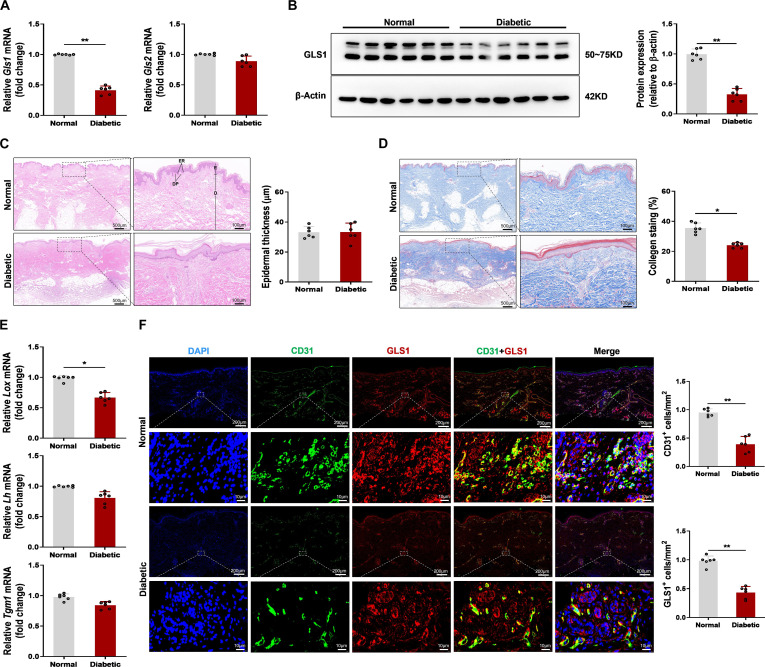 Figure 1
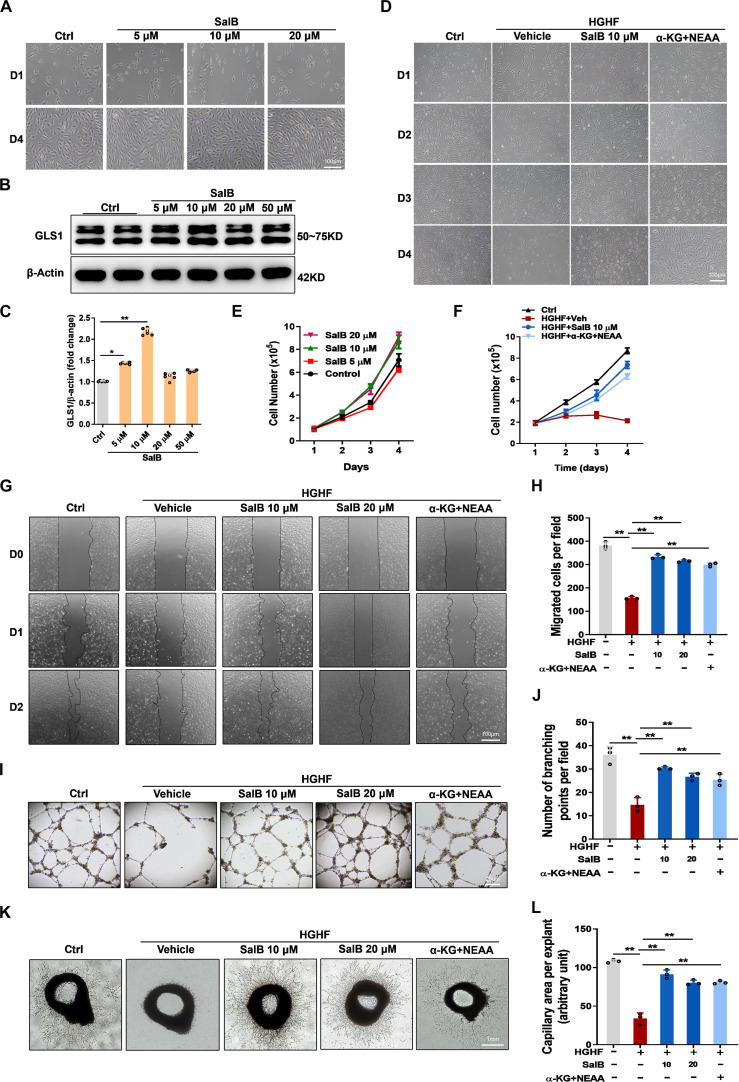 Figure 4
Peer Reviews
No public reviews on file for this paper yet. If you reviewed it on a platform where reviews are public (OpenReview, ICLR, NeurIPS, ICML), you can paste yours below so the community can read it here.
Videos
No videos yet. Explain this paper in a talk, walkthrough, or lecture? Add one.
Taxonomy
TopicsCancer, Hypoxia, and Metabolism · Angiogenesis and VEGF in Cancer · Peroxisome Proliferator-Activated Receptors
The authors have identified an error in the Research Article entitled “Defective Endothelial Glutaminolysis Contributes to Impaired Angiogenesis and Poor Ischemic Tissue Repair in Diabetes” [1].
In Fig. 1B: Following a thorough review of the manuscript, and in the interest of maintaining the integrity of the published work, we have provided the original, traceable blot images for Figure 1B to facilitate accurate correction and verification.
In Fig. 4I: The same image was inadvertently reused in both the HGHF+SalB 20 μM group and the HGHF+α-KG+NEAA group. This occurred due to an operational oversight involving repeated copying of image files, confusion between uploaded versions, and time-sensitive upload errors. We sincerely apologize for this unintentional error, which was purely technical in nature and does not reflect any intentional deviation. This incident does not affect the core data or analytical framework of the study, and the primary conclusions remain fully supported by the validated experimental findings.
The corrected figures are below, and the original HTML and PDF have been updated to reflect this change.
The reference list from the paper itself. Each links out to its DOI / PubMed record.