Data Analytics and Administrative Decision-Making in Nursing Management: A Systematic Review
Nathidathip Darach, Min Su Kim, Wasinee Wisesrith, Eileen G. Collins

TL;DR
This review explores how data analytics improves nurse managers' decisions, enhancing patient care and healthcare efficiency.
Contribution
It systematically evaluates the role of data analytics in nursing management decision-making across four analytics levels.
Findings
Data analytics improves administrative decisions in patient care, staffing, and crisis management.
Descriptive, predictive, and integrated analytics are most commonly used in nursing management.
Education and infrastructure are critical for effective data-driven nursing management.
Abstract
This systematic review aimed to investigate the impact of data analytics on nurse managers' administrative decision-making process and roles. The growing integration of data analytics in health care has accelerated the shift toward data-driven decision-making in nursing management, aiming to optimize patient care quality and enhance organizational performance within digital healthcare environments. Nurse managers play a pivotal role in leveraging data analytics to support evidence-based management, facilitating more informed, efficient, and strategic administrative decision-making. This systematic review was conducted in accordance with PRISMA guidelines. A comprehensive search strategy was employed to identify relevant studies published from 2019 through 2024 using four electronic databases—PubMed, CINAHL, MEDLINE, and Embase. A total of 2051 studies were screened, and 83 studies…
Genes, proteins, chemicals, diseases, species, mutations and cell lines named across the full text — each resolved to its canonical identifier and authoritative record.
Click any figure to enlarge with its caption.
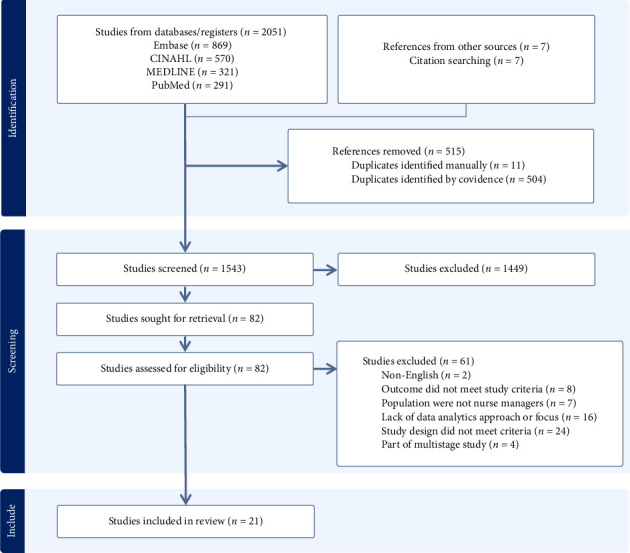 Figure 1
- —Chulalongkorn University
Peer Reviews
No public reviews on file for this paper yet. If you reviewed it on a platform where reviews are public (OpenReview, ICLR, NeurIPS, ICML), you can paste yours below so the community can read it here.
Videos
No videos yet. Explain this paper in a talk, walkthrough, or lecture? Add one.
Taxonomy
TopicsNursing Diagnosis and Documentation · Nursing education and management · Artificial Intelligence in Healthcare and Education
1. Introduction
The digital revolution has ushered in a new era of digital healthcare, characterized by the exploitation of the great potential of digital technologies to optimize patient care quality and improve healthcare organizational management since the early twenty-first century [1]. In this context, the health information system (HIS), a core component of digital health care, serves as a critical infrastructure in the modern healthcare ecosystem [2–4]. Data generated through HIS provide substantial value and a wealth of information in the form of big data for healthcare systems [5].
Recognizing its importance, the World Health Organization (WHO) framework recommends that HIS should contribute to producing intelligence outputs that provide information and analysis for decision-making. In turn, this can empower healthcare providers and policymakers to make informed, evidence-based decisions while considering both the potential limitations and benefits of HIS [4].
The COVID-19 pandemic has further accelerated the global expansion of digital advances in healthcare delivery [6]. Despite this evolving landscape, traditional analytical approaches remain insufficient to manage the vast volume and complexity of healthcare data, particularly in delivering essential information to support healthcare services as well as decision-making among providers. Consequently, the emergence of health data science—focused on the development and application of data analytics—is driving significant advances across the healthcare sector [7]. Integrating healthcare data to leverage data analytics, which involves systematically applying statistical analysis, big data, and computational techniques to extract actionable insights, aims at informing decision-making processes to enhance care quality and organizational performance [8]. Moreover, ongoing studies in the use of data analytics in healthcare settings have underscored its potential and precision in delivering the best available evidence—both internal (organizational) and external (scientific). These interconnected sources of evidence are critical for supporting evidence-informed decision-making in nursing management [9, 10].
Administrative decision-making (ADM) by nurse managers refers to a complex cognitive process involving rational and critical thinking, the use of the best available evidence, and clinical and managerial expertise to achieve optimal decisions for managerial purposes. This type of decision-making profoundly influences daily healthcare delivery. Effective decision-making requires application of effective strategies to achieve the best solutions to healthcare problems [11]. To conceptualize this decision-making process, Chisengantambu-Winters et al. [12] developed the decision-making dependency (DMD) model, which emphasizes contextual and personal factors influencing nurse managers' decisions; however, their model does not explicitly incorporate data- and information-driven processes. This omission constrains its relevance in the digital era, where electronic health records, analytics, and decision-support systems (DSS) are integral to evidence-based, technology-enabled decision-making. While Watson's [13] nurse leader decision-making within complex adaptive system model reflects the realities of today's dynamic healthcare environment—nonlinear, adaptive, and context-sensitive, with strategies shifting according to whether a situation is simple, complicated, complex, or chaotic—it provides limited methodological structure for empirical study. For these reasons, we chose to use Oetjen et al.'s [14] ADM model as a conceptual framework for our review. Although Oetjen et al.'s model was established nearly 2 decades ago, it highlights the role of information in guiding nurse managers' decision-making, an alignment that is inherent to data-driven healthcare systems. In this context, insights derived from data analytics have emerged as a valuable foundation for evidence-informed decision-making in nursing management. The ADM model includes a six-step process consisting of defining the problem, developing and ranking relevant criteria, collecting information, formulating and ranking solutions, jointly choosing the best solution(s) with the healthcare team, and enacting and monitoring the chosen solution(s). Especially given the transition to digital health care, this framework provides valuable insights into means of enhancing and simplifying the ADM process of nurse managers, particularly in maintaining a balance between human judgment and technological advances.
In the advancement of modern healthcare systems, nurse managers face critical challenges in integrating digital technologies to make timely and effective administrative decisions that encompass their wide range of roles and responsibilities [15, 16]. However, the integration of data analytics into nurse managers' ADM process presents both substantial challenges and transformative opportunities for addressing complex healthcare delivery problems [17]. By utilizing data analytics, this innovative practice can empower nurse managers to make informed decisions, supporting their multifaceted roles and enabling them to navigate healthcare complexities more effectively [16]. Moreover, these tools offer valuable support for decision-makers with limited management experience [18]. For nurse managers to utilize data analytics tools for targeted purposes, Stoumpos et al. [19] pointed out that appropriate analytical approaches need to be applied to deliver accurate and useful results. Therefore, a foundational understanding of various types of analytics and their limitations is essential to assess their implications effectively. However, the extent to which nurse managers are utilizing data analytics in nursing management and its impact on their decision-making processes remains underexplored.
Since 2019, researchers have shifted their focus from digital transformation and its applications in health care to its effective implementation [6, 19, 20]. Despite this trend, no review study has comprehensively examined the use of data analytics to support nursing management roles. A study by Moorhead [21] proposed 10 paths for nurse managers to implement data-driven care using the Nursing Outcomes Classification (NOC) and Nursing Interventions Classification (NIC) frameworks. These paths included, for example, identifying frequent patient problems, nursing interventions, and outcomes, use of clinical decision models that support clinical reasoning, and use of nursing data to determine staffing needs based on NIC or NOC [22]. While these guidelines provide valuable insights for improving patient-centered care and nursing interventions, their applicability may be limited in addressing the broader administrative and operational decision-making responsibilities of nurse managers, which extend beyond clinical needs alone. Similarly, Wieben et al. [23] presented data science applications with a focus on nursing practice indicators, and Clancy [24] evaluated various types of digital tools and technologies for nurse managers' use in improving nurse productivity. However, the limitations of these frameworks highlight the need for more robust approaches and customizable data solutions to enhance nurse managers' capacity to make optimal decisions across their management roles.
In this review, we systematically identified, appraised, and synthesized existing evidence to examine how nurse managers use data analytics tools and techniques in their ADM practices. Understanding the potential benefits and challenges of analytics, evidence-informed decision-making in nursing management can lead to improved decision-making processes and ultimately enhance the quality and efficiency of healthcare delivery.
2. Methods
2.1. Design
This systematic review was conducted and reported in accordance with the Preferred Reporting Items for Systematic Reviews and Meta-Analyses (PRISMA) 2020 guideline for systematic reviews [25].
2.2. Ethical Considerations
Ethical approval of this research was not required as data were retrieved and synthesized from previously published studies.
2.3. Search Strategies
A comprehensive search strategy was employed to identify relevant studies published from January 1, 2019, through December 15, 2024, in four electronic databases: PubMed, CINAHL, MEDLINE, and Embase. Manual searches of the reference lists of included journal articles were also conducted to identify additional relevant articles. The search strategy was structured using the Population, Intervention, Comparison, and Outcomes (PICO) framework. For example, PubMed's Medical Subject Headings (MeSH)—including “Nurse Administrators,” “Data Science,” and “Decision Making”—as well as supplementary keywords, such as “digital analytics,” were combined using Boolean operators (“AND,” “OR”) to optimize retrieval. To improve the search's sensitivity, keywords from the included studies were also used in the search process. All search terms and keywords were reviewed and confirmed by a health science librarian with expertise in search strategies.
2.4. Selection Criteria and Retrieval Strategies
Inclusion and exclusion criteria were applied to guide the selection of studies. These criteria were selected to ensure that the review captured a broad range of data analytics utilized for nursing management. Studies were included if they (1) impacted nurse managers' decision-making, (2) examined use of a data analytics at any level—potentially ranging from descriptive and diagnostic to predictive and prescriptive analytics—and related factors enhancing or associated with nursing management roles, (3) involved primary research or quality improvement project, (4) reported quantitative results, and (5) were peer-reviewed journal articles published in English. We elected to accept the definition of data analytics and advanced analytics implied or stated in each eligible study, and these definitions encompassed a variety of digital analytics tools, practices, and interventions used to support decision-making in healthcare settings. While this approach enabled us to capture the full scope of conceptualizations currently employed, it also introduced variability that should be considered when interpreting the findings.
Qualitative studies and gray literature were excluded, as were studies in which the primary population was not nurses or the outcome of interest was not associated with the utilization of data analytics for decision-making. Additionally, given the rapid advances in digital technologies and their exponential implementation in health care since 2019 (Dionisio et al., 2023; [19, 20]), only recent studies—those published in the past five years—were included to ensure that the evidence reported was up to date. Consequently, studies published before 2019 were excluded.
A total of 2051 studies were screened, the titles, abstracts, and search terms, according to the eligibility criteria, and 83 studies were eligible for full-text screening. Next, the full-text versions of potentially eligible articles were independently examined by two reviewers to exclude those that did not meet the eligibility criteria. The two reviewers discussed differences of opinion about study eligibility until a consensus was reached on the studies to be included in the review. The study selection process is summarized in the PRISMA flowchart in Figure 1.
2.5. Data Extraction and Synthesis
To maximize the accuracy of data extraction and synthesis, standardized strategies were applied, including establishing a structured data extraction form, extraction and verification of data by two independent reviewers (N.D. and M.S.K.), statistical assessment of heterogeneity, and use of Covidence data extraction software. An Excel data-charting table was used to extract data from the full texts selected for inclusion. The data extracted from each study included the author(s) and year, research aim, study design, setting and sample information, characteristic and level of data analytics used, impact on nurse managers' decision-making, and quality assessment scores. As an additional check to ensure study rigor, the eligibility criteria were reapplied to all included full-text articles during data extraction. The results of the included studies were synthesized using narrative synthesis, a process involving summarizing and explaining information in words; during data synthesis, tables were used to compare the study characteristics and the extracted data.
2.6. Quality Appraisal
The quality of the included studies was appraised using quality assessment tools specific to particular study designs. Joanna Briggs Institute (JBI) critical appraisal tools [26, 27] were applied for analytical cross-sectional, case–control, cohort, and randomized controlled trial (RCT) studies. In addition, the Strengthening the Reporting of Observational Studies in Epidemiology (STROBE) tool [28], guideline for good evaluation practice in health informatics (GEP-HI) [29], risk-of-bias tool for prediction models (PROBAST) [30], and the Quality Improvement Minimum Quality Criteria Set (QI-MQCS) [31] were applied for other studies. Two reviewers independently appraised each study using the tools' scoring and grading criteria (high quality/excellent/good practice, moderate quality/good, poor/fair, and very poor/unsatisfactory). Discrepancies between the two reviewers' scores were resolved through discussion and, if necessary, in consultation with a third reviewer.
3. Results
3.1. Study Characteristics
Twenty-one studies were included (Table 1). They were conducted in the United States (n = 10), South Korea (n = 4), China (n = 2), Qatar (n = 1), Canada (n = 1), Australia (n = 1), the Netherlands (n = 1), and Jordan (n = 1). The study settings included tertiary hospitals (n = 7), general hospitals (n = 5), specialized or university-affiliated hospitals (n = 4), Veterans Administration (VA) hospitals (n = 3), and an outpatient clinic (n = 1). In one study, participants were drawn from a national survey dataset.
Eight different study designs were represented. They included cross-sectional studies (n = 4), case–control studies (n = 2), an RCT (n = 1), cohort studies (n = 2), a prediction model study (n = 1), observational studies (n = 3), health informatics studies (n = 5), and quality improvement projects (n = 3).
The quality of the studies was appraised using eight different tools as shown in Table 2. In total, 19 studies were appraised as showing high-quality/excellent/good practice/met quality criteria, while two studies were found to be of moderate quality and posing risk of bias.
3.2. Data Analytics Characteristics
In health care, data analytics refers to the systematic application of statistical and computational methodologies to large and complex datasets, with the objective of deriving meaningful insights, identifying patterns, and generating actionable knowledge that informs clinical and ADM, improves patient outcomes, and enhances organizational performance [8].
Eligible studies were included based on their eligibilities. Specifically, we considered the level of data analytics described as an important criterion, recognizing that these levels represent different stages of data analytics maturity and application in practice.
As shown in Table 1, 21 studies displayed diverse characteristics and levels of data analytics intended to enhance ADM of nurse managers. Studies reflecting the intersection of data science principles and practical decision-making needs in nursing management were categorized into four levels of data analytics based on practical guidance for nurses and healthcare sectors [7, 53]: descriptive (n = 4), diagnostic (n = 2), predictive (n = 9), and prescriptive analytics (n = 1). In addition, we included a fifth category—integrated data analytics—that was addressed in some studies (n = 5).
3.2.1. Descriptive Analytics—Use of Data to Provide Information in Real Time
Four studies focusing on descriptive analytics aimed to enhance decision-making by providing real-time information and insights. Almagharbeh [32] investigated the use of AI-based DSS in critical care reporting improvements in patient care workflow with regard to time management and clinical decision-making. Baldwin et al. [33] assessed the coworker observation system (CORS), promoting a safe working environment. King et al. [45] demonstrated the use of real-time workforce data to proactively identify and mitigate nurse burnout. Moon [49] evaluated the nursing resources management information system (NRMIS), a resource allocation tool in a university hospital. This electronic reporting tool offered objective data and useful insights for flexible nurse resource allocation.
3.2.2. Diagnostic Analytics—Use of Data Collected From HIS to Identify and Generate Particular Information Patterns
Two studies examined methods to enhance decision-making transparency and operational insight in health care. Berkhout et al. [34] developed an algorithm using real-life datasets and synthetic data in an emergency unit to simulate nurse decision-making through visualization of decision logs. Duffield et al. [36] examined the effects of bed control adjustments and patient mix on nurses' workload within a tertiary hospital. Analysis of the ward-level administrative data was beneficial for informing staffing decisions and workload management. The methods examined in the two studies had common limitations, including dependence on specific data sources or developer expertise, that could affect their broader applicability.
3.2.3. Predictive Analytics—Integration of Historical Data Patterns to Predict Outcomes and Identify Initial Actions
Nine studies on predictive analytics offered insights into workload management, environmental factors, and risk prediction in nursing. For example, Campbell et al. [35] examined big data from electronic medication administration records in a U.S. hospital, identifying workload factors affecting near-miss medication errors to support personalized interventions for risk reduction. Guo et al. [38] used four machine learning algorithms to develop a decision tree model—a visual and logical model used in machine learning and decision-making—for job crafting analysis and nurse burnout prediction in Chinese hospitals, and Havaei et al. [40] employed machine learning methods to identify key work environment predictors of nurse mental health in Canada. Howard [41] investigated allostatic load metrics in a VA hospital to guide nurse staffing decisions. The study utilized signal detection of allostatic load derived from EMR data, which was generated based on a Troubled Outcome Risk (TOR) scale. As a final example, [42] developed a machine learning tool for pressure injury (PI) risk in South Korea.
3.2.4. Prescriptive Analytics—The Most Advanced Analytics Level, Use of Data to Generate Most Possible Outcomes and to Recommend Actions and Strategies Based on Predictions
One study involving prescriptive analytics focused on optimizing healthcare resources and decision-making processes. Ghayoomi et al. [37] utilized mathematical programming and queueing models to estimate maximum hospital capacity for COVID-19 cases in a 200-bed urban hospital model, providing tools for enhanced resource allocation.
3.2.5. Integrated Data Analytics—Integration of Two of the Analytics Functions
Among the five studies that integrated two levels of data analytics, Hadid et al.'s [39] utilized simulation-based optimization and clustering techniques to enhance scheduling efficiency at an outpatient chemotherapy center. This combination of predictive and prescriptive analytics reduced patient wait times and streamlined appointment management, showing significant improvements in operational efficiency. Kang and Kim [43] conducted a RCT to evaluate a clinical DSS (CDSS) for postembolization pain management across multiple hospitals, demonstrating its effectiveness in standardizing treatment approaches. Their predictive analytics provided risk prediction, while prescriptive analytics generated standardized care recommendations. Three studies integrating diagnostic and predictive analytics focused on data-driven strategies to improve healthcare management. Kohn et al. [46] assessed ward capacity data across multiple hospitals, providing predictive insights that supported resource allocation. Lindberg et al. [47] focused on identifying key factors in fall prevention, supporting proactive patient safety measures. Yan et al. [52] constructed a machine learning model to detect high-risk patients, offering predictive capabilities for nurse managers. However, their model's reliance on intraoperative data appeared to restrict its preoperative applications.
Overall, 21 studies reviewed demonstrated that data analytics have the potential to revolutionize ADM on the part of nurse managers. However, the reviewed studies shared several limitations, such as data retrieval from limited sources, restricted generalizability due to specific organization contexts, reliance on historical data, the use of unmeasured confounders that introduced potential biases affecting predictive accuracy, and overdependencies on experts or interdisciplinary health informatics teams.
4. Discussion
Data analytics in healthcare involves the systematic use of statistical and computational methods to transform data into actionable insights that inform decisions, improve patient outcomes, and enhance organizational performance [8]. In this systematic review, we aimed to gather the most recent evidence on nurse managers' utilization of data analytics and its impact on their ADM. Our inclusion of studies across varying levels of data analytics maturity was intentional, as it allowed us to reflect the full continuum of data analytic applications in nursing management. This heterogeneity highlights both the opportunities and challenges inherent in advancing from descriptive or diagnostic analytics toward more sophisticated predictive and prescriptive approaches that carry greater potential for supporting evidence-based decision-making.
To provide specific insights, the associations observed between data analytics and nursing management roles are discussed across four key dimensions below [16, 54–57]. Additionally, the impacts of data analytics—descriptive, diagnostic, predictive, prescriptive, and integrated—on these four dimensions of nursing management roles are presented in Table 3. Furthermore, the findings reveal the essential role of data analytics in supporting Oetjen et al.'s [14] the six-step ADM process among nurse managers, as illustrated in Table 4.
4.1. Improving Patient Care Quality
Several studies highlighted the impact of data analytics in enhancing patient care quality by providing data-driven insights into nurses' clinical performance. Nurse managers' administrative decisions—shaped by operational structures and resource allocation—play a critical role in creating an environment that supports effective clinical decision-making. The use of advanced monitoring and diagnostic tools enabled nurse managers to identify inefficiencies, streamline clinical workflows, and implement evidence-based interventions that directly improved patient outcomes. These tools also contributed to optimizing care protocols and promoted greater adherence to best clinical practices among nurses, ultimately elevating the overall standard of patient care.
4.2. Strategic Management
Data analytics was shown to be instrumental in strategic planning and long-term management within healthcare organizations. Big data integration facilitated the analysis of patterns and trends across large datasets, informing high-level decisions, such as budget allocation for nursing workforce management, policy development, and organizational performance tracking. On the whole, the strategic use of data analytics enabled proactive management and provided an evidence-informed approach to achieving organizational goals, especially in complex healthcare environments.
4.3. Nurse Staffing and Work Engagement
Descriptive, predictive, and prescriptive analytics were particularly valuable in managing nursing human resources as well as promoting healthy work environments. Tools that forecast patient admissions, staffing needs, role-related stressors, and nurse turnover empowered nurse managers to optimize workforce planning and guided them in devising strategies to improve staff engagement. Evidence-informed decision-making of nurse managers facilitated more precise deployment of nursing staff, balanced workloads, and improved scheduling, all of which are crucial in maintaining a supportive work environment and reducing staff burnout.
4.4. Nursing Management During Health Crises
The utility of digital analytics became especially apparent during health crises. During these events, having real-time data was critical for rapid response and resource management. Some studies highlighted use of analytics to monitor patient surges, allocate resources efficiently, and manage critical situations with agility. In crisis scenarios, nurse managers could leverage predictive models to anticipate challenges as well as prescriptive tools to streamline emergency protocols, enhancing the healthcare system's resilience and responsiveness.
This synthesis highlights recent findings across four key administrative areas where data analytics played a crucial role in enhancing nurse managers' decision-making. In the realm of patient care quality, nurse managers were equipped with evidence-based insights—both internal and external evidence—into nurses' clinical performance, allowing efficient interventions and enhancing care standards. As for strategic management, big data informed high-level decisions on budgeting, workforce planning, and policy formulation, creating a data-driven, proactive approach within healthcare organizations. In addition, nurse staffing and work engagement were optimized by using predictive analytics that assisted in workforce planning, workload balancing, and retention efforts, contributing to a supportive work environment. Finally, with respect to analytics-informed nursing management during health crises, use of real-time data supported prior simulation of emergency scenarios as well as agile responses and resource allocation, boosting overall system resilience.
Across the studies reviewed, data analytics demonstrated significant potential to enhance ADM among nurse managers. However, several barriers to implementing data analytics in diverse healthcare settings were consistently observed. These included the reliance on fragmented or limited data sources that can restrict data quality and generalizability of findings bound to specific organizational contexts. In addition, the presence of unmeasured confounders raised concerns regarding predictive validity. Moreover, the dependence on expert consultants or interdisciplinary informatics teams highlighted ongoing challenges in building sustainable, locally embedded analytic capacity within nursing management. To address these challenges, the need for end users' engagement through targeted training on digital literacy and competency development was also emphasized as essential to realizing the full potential of implementing data analytics in nursing administration practices.
5. Limitations and Strengths
Limitations are inherent to both the studies included and the review itself. First, the generalizability of findings is constrained by the predominant reliance on data from specific organizational contexts, as most studies focused on single-site settings or narrow populations. Additionally, the exclusion of publications in languages other than English, qualitative studies, gray literature, and articles published as part of mutistage studies may have inadvertently omitted insights regarding the experiential and contextual nuances of data analytics. Furthermore, excluding studies published before 2019 poses potential limitations, although rapid technological advancements may make earlier findings less applicable. Finally, uncertainties and variations regarding the definition and scope of data analytics tools across studies introduce challenges in drawing uniform conclusions. For example, some researchers offered no clear definition of the data analytics employed in their studies, forcing us to infer their nature as well as their level. In addition, some studies focused on the application of data analytics to improve patients' clinical outcomes; in such cases, we had to evaluate the relationship of such outcomes to nurse manager's decision-making.
However, this review has significant strengths that deserve mention. First, we include various study designs—ranging from cross-sectional studies and RCTs to health informatics applications—that provide a comprehensive understanding of how data analytics tools are employed across different healthcare settings. This diversity enhances the robustness of the review by capturing multiple perspectives on the impact of data analytics on nursing management. Other study strengths include its adherence to PRISMA guidelines and use of different quality appraisal tools tailored to particular study designs, both ensuring that the review's findings are grounded in rigorous evaluation.
6. Conclusion
This systematic review highlights the integral role of data analytics in supporting nurse managers' ADM by providing actionable insights across diverse nursing management roles. It encompasses diverse applications of data analytics across descriptive, diagnostic, predictive, and prescriptive analytics. Moreover, it demonstrates that use of data analytics holds considerable promise for improving decision-making to enhance patient care quality, as it can be applied to support strategic management, optimize staffing and work engagement, and guide nursing management during health crises. A number of significant challenges also emerged across the included studies, particularly variability in the analytic tools employed and limited organizational capacity to integrate advanced analytics into decision-making. Although such limitations are apparent in the studies reviewed, the potential benefits of integrating data analytics into nursing administration are also clearly visible.
7. Implications
The findings from this review underscore the growing role of data analytics in data-driven health care and have profound implications for nursing management, education, and policy. Data analytics enable nurse managers to optimize their ADM. Given the need for digital competencies, integration of targeted education and training into nursing curricula and continuous professional development for nurse managers are crucial to bridging digital literacy gaps and ensuring that nurse managers are equipped to effectively leverage analytics tools. At the policy level, policymakers should prioritize investments in analytics infrastructure and support systems to ensure interoperability, accessibility, user-centric design, and seamless integration into existing infrastructures and workflows. Future research should explore the longitudinal impact and broader applicability of data analytics across diverse settings, including resource-constrained environments, and should address technical and other obstacles to these tools' legitimacy. Ultimately, we believe that data analytics merits widespread adoption to enhance healthcare systems in settings with both abundant resources and resource limitations globally.
The reference list from the paper itself. Each links out to its DOI / PubMed record.
- 1Schwab K. The Fourth Industrial Revolution 2016 Cologny
- 2Serbanati L. D. Ricci F. L. Mercurio G. Vasilateanu A. Steps Towards a Digital Health Ecosystem Journal of Biomedical Informatics 201144462163610.1016/j.jbi.2011.02.0112-s 2.0-7996056356121362497 · doi ↗ · pubmed ↗
- 3Viswanadham N. Ecosystem Model for Healthcare Platform Sādhanā 2021464 p. 18810.1007/s 12046-021-01708-y · doi ↗
- 4World Health Organization (WHO) Support Tool to Strengthen Health Information Systems: Guidance for Health Information System Assessment and Strategy Development 20242 nd https://www.who.int/europe/publications/i/item/9789289061148
- 5Harjumaa M. Saraniemi S. Pekkarinen S. Lappi M. SimiläH. Isomursu M. Feasibility of Digital Footprint Data for Health Analytics and Services: An Explorative Pilot Study BMC Medical Informatics and Decision Making 2016161 p. 13910.1186/s 12911-016-0378-02-s 2.0-8499440705327829413 PMC 5112682 · doi ↗ · pubmed ↗
- 6Dionisio M. De Souza Junior S. J. Paula F. Pellanda P. C. The Role of Digital Transformation in Improving the Efficacy of Healthcare: A Systematic Review The Journal of High Technology Management Research 2023341 p. 10044210.1016/j.hitech.2022.100442 · doi ↗
- 7Sarker I. H. Data Science and Analytics: An Overview From Data-Driven Smart Computing, Decision-Making and Applications Perspective SN Computer Science 202125 p. 37710.1007/s 42979-021-00765-8PMC 827447234278328 · doi ↗ · pubmed ↗
- 8Arowoogun J. O. Babawarun O. Chidi R. Adeniyi A. O. Okolo C. A. A Comprehensive Review of Data Analytics in Healthcare Management: Leveraging Big Data for Decision-Making World Journal of Advanced Research and Reviews 20242121810182110.30574/wjarr.2024.21.2.0590 · doi ↗