Substance use patterns among individuals with problematic pornography use: A scoping review
Cerina Dubois, Elizabeth C. Danielson, Tim Schwirtlich, Molly Beestrum, Dean T. Eurich, Susmita Chandramouleeshwaran, Susmita Chandramouleeshwaran

TL;DR
This review explores the link between problematic pornography use and substance use, finding a need for more consistent research and standardized measures.
Contribution
This is one of the first scoping reviews to examine substance use patterns in individuals with problematic pornography use.
Findings
Alcohol, cocaine use, and smoking were positively correlated with problematic pornography use.
There is a lack of standardization in measuring problematic pornography use across studies.
Only 8 cross-sectional studies were eligible for the review, highlighting a gap in the literature.
Abstract
Pornography consumption is a highly prevalent behavior in developed countries, with studies indicating that up to 70% of men and 40% of women have viewed pornography within the past year. Substance use in individuals with problematic pornography use (PPU) is an area that warrants further investigation due to the potential for its compounded negative effects including risk for addiction and potential negative effects on mental and emotional health. This scoping review examines substance use patterns and associations among individuals with PPU; and to summarize the different operationalizations of PPU. This is one of the first reviews to evaluate the empirical research on this relationship. Four primary databases were used to conduct the search: MEDLINE (PubMed), Embase, CINAHL, and PsycINFO, up to December 4, 2024. Included studies investigated the association between substance use and…
Genes, proteins, chemicals, diseases, species, mutations and cell lines named across the full text — each resolved to its canonical identifier and authoritative record.
Click any figure to enlarge with its caption.
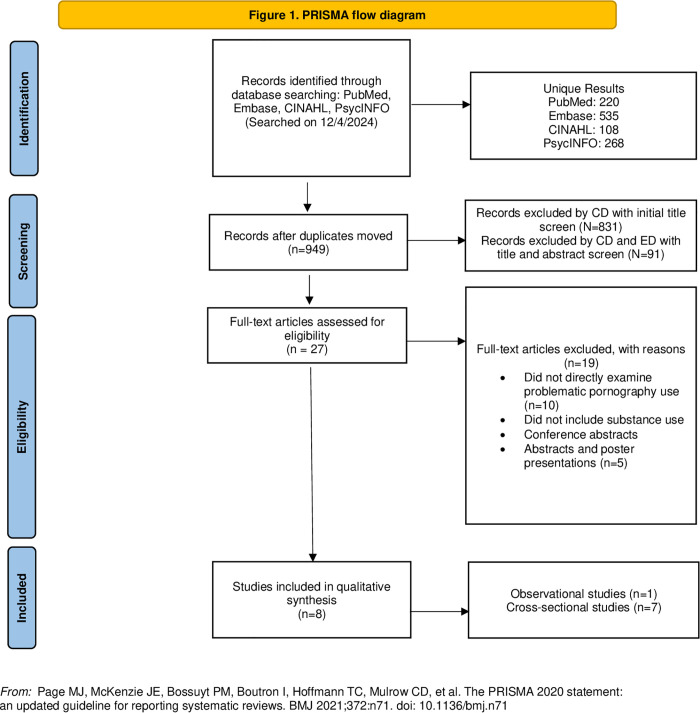 Fig 1
Fig 1Peer Reviews
No public reviews on file for this paper yet. If you reviewed it on a platform where reviews are public (OpenReview, ICLR, NeurIPS, ICML), you can paste yours below so the community can read it here.
Videos
No videos yet. Explain this paper in a talk, walkthrough, or lecture? Add one.
Taxonomy
TopicsSexuality, Behavior, and Technology · Impact of Technology on Adolescents · Sex work and related issues
Introduction
Over 2.5 million people visit pornography websites every 60 seconds [1]. In a recent United States (US) study, 42% of youth between the ages of 10–17 had viewed pornography - with up to 68% of adolescents reporting lifetime exposure to pornography [2]. In the adult US population, up to 11% of males and 3% of females reported feeling like they were addicted to pornography and 1 in 8 males using pornography expressed needing professional help due to compulsive use [3]. With rising internet access and screen time, the prevalence of problematic pornography use (PPU) has also increased [3,4]. The intersection of substance use and behavioral addictions is an emerging area of interest in public health. Among behavioral addictions, specifically addictive digital behaviors, the overconsumption of pornography has become an increasing public health problem [5].
In the literature, PPU is typically defined as an individual’s inability to control the use of pornography, leading to detrimental health consequences [6] such as negative impacts on sexual development in adolescence, difficulty controlling sexual impulses, significant disruptions in one’s personal life (e.g., impact on sexual relationships and psychological health) [1,5]. PPU has also been associated with a higher likelihood of developing anxiety, stress, depression, and suicidal ideation [7]. Although PPU is not clinically recognized as a stand-alone behavioral disorder (in the Diagnostic and Statistical Manual fifth Editions (DSM-5-TR)), it was recently included as one of the impulse control manifestations under the Compulsive Sexual Behaviour Disorder (CSBD) under the 11^th^ edition of the International Statistical Classification of Diseases and Related Health Problems [8].
In addition, substance use among adolescents and young adults continues to be a public health concern, particularly after the COVID-19 pandemic [9]. Both PPU and substance use (and subsequent substance use disorders) can lead to significant disruptions in daily functioning and overall quality of life [10]. Indeed, PPU may operate similarly to substance use behaviors by stimulating similar pathways in the brain’s reward system, which can lead to dependency and escalating consumption [11]. Thus, substance use in individuals with PPU is an area that warrants further investigation due to the potential for its compounded negative effects. As PPU is frequently associated with impulsivity, dysfunction in mental health, and other psychiatric symptoms [12], these underlying risk factors may exacerbate substance use patterns and potentially, an individual’s treatment outcomes [13]. Notably, several studies indicate CSBD shares core elements with substance use disorders (SUD); and that these core elements may lead to a higher likelihood of developing a SUD or have co-occurring PPU [14]. Although associations between CSBD and substance use have been reported, a review on the association between substance use and PPU remains absent.
By summarizing and characterizing substance use patterns in PPU individuals, the findings from this review can inform the development of effective treatment approaches to reduce the prevalence and impact of PPU and SUDs, especially for vulnerable adolescent populations. Hence, the objective of this scoping review is to examine substance use patterns and associations among individuals with PPU or chronic pornography use, hereafter referred to as PPU. Notably, given the early stage of this research and clinical attention, this scoping review will also capture the different operationalizations of PPU in the existing literature.
Materials and methods
For this review, the Preferred Reporting Items for Scoping Reviews (PRISMA-ScR) checklist (S1 File) was used. Pilot searches were completed on an iterative basis (to ensure we captured all operationalizations of PPU) starting early 2024 and the final search terms were finalized in December 2024. This included peer-reviewed, empirical studies published on and before December 4, 2024. Included studies focused on substance use for individuals reporting any type of problematic pornography use or chronic pornography use and the Center for Disease and Control (CDC)’s defined substances (see section below).
Protocol and Registration: The following scoping review has been registered to the Open Science Framework (OSF) - https://doi.org/10.17605/OSF.IO/86X34
Problematic Pornography Use (PPU): PPU or compulsive pornography use is characterized by an individual’s inability to control the use of pornography, leading to detrimental health effects [8,15]. Pornography is typically described as content that showcases sexual material with the main goal of sexually arousing or stimulating the viewer. This can encompass various forms such as visual images, videos, texts, or other media (online or printed). Detrimental health effects of PPU can include both mental and physical effects [16]. Effects include anxiety, depression, and low self-esteem. PPU has been reported to alter the brain’s award system and can result in decreased sensitivity to pleasure and dopamine [17]. PPU can negatively impact relationships by reducing intimacy and its overuse has been associated with sexual dysfunction [3]. Although PPU is not officially recognized as a disorder in the DSM-5, it is a manifestation of CSBD, which include compulsive use, loss of control, tolerance, and withdrawal symptoms [18]. Individuals with PPU struggle with co-occurring disorders such as depression, anxiety, and substance misuse [5].
For this scoping review, PPU is differentiated from the DSM-5 Compulsive Sexual Behavior Disorder (CSBD) (ICD-11), which is a persistent pattern of failure to control intense, repetitive sexual impulses or urges, resulting in repetitive sexual behavior. Although CSBD could include PPU, this review is not examining substance use trends in individuals with only noted CBSD - as CSBD includes a wide range of sexual behaviors; whereas PPU could be considered a subtype of CSBD, focusing solely on the use of pornographic material. In addition, this review is not examining substance use trends in individuals with internet addiction (same reasons as CSBD).
Substance Use: The CDC’s definition of substance use was used, which refers to the consumption of various substances including alcohol, cannabis, hallucinogens, inhalants, opioids (prescription and illegal), sedatives/hypnotics/anxiolytics, stimulants, tobacco (nicotine), and other (unknown substances) [19]. Substance use can also include any method of intake, whether consumed, inhaled, injected, or otherwise absorbed into the body. Types of substance use include alcohol, tobacco (cigarettes, cigars, smokeless tobacco), illicit drugs (heroin, cocaine), cannabis, vaping, and prescription drugs. Substances can be used experimentally, recreationally, for medical purposes, and can also be used problematically (in the case of substance use disorders).
Inclusion criteria
This included studies that investigated the association of substance use with forms of problematic pornography use, chronic pornography use, or PPU. Included studies examined substance use and its association of PPU as an exposure, outcome, dependent/independent variable, or as a confounder. Since there is no diagnostic definition of PPU in the DSM-5, we included all types of chronic use or problematic use (S1 File). It is acknowledged that Compulsive Sexual Behavior Disorder (CSBD) may overlap with behaviors that are often seen in PPU including a pattern of intense and repetitive sexual thoughts, urges, or behaviors that are difficult to control. For this scoping review, we only included evidence that specifically examined “pornography use” rather than “sexual behavior” (which can encompass pornography use). Included research studied adolescents [12–17] or adults (18+).
For study types, all evidence available including longitudinal studies, clinical interventions, case studies, self-reported outcomes, screening systems, assessment strategies, and follow-up intervention programs, were included. Systematic reviews, literature reviews, clinical reviews, and scoping reviews were also included. This review only included English language studies or those that may have been translated from their original language. The search did not include a limited timeline or geographical region. Studies also included those that examined trends on substance use for individuals who reported chronic, problematic, or uncontrolled pornography use.
Exclusion criteria
Studies that did not explicitly state both substance use (which includes any of the above mentioned types of use) and pornography use, were excluded. Excluded studies were animal studies, expert opinion pieces, blogs, editorials, and grey literature from conference proceedings, meeting abstracts, and dissertation theses. Articles that examined addiction in the form of social media, internet use, mobile phone use, online gaming, online gambling (not specific to pornography) were excluded. In addition, excluded articles also were those that solely focused on sex addiction, hypersexuality, and CSBD.
Information sources
A subject expert librarian, MB, independently chose the search terms for the scoping review. Subsequently, CD and ED were secondary reviewers of these search terms. The most recent search was executed on December 4, 2024 without date limitations.
Search strategy
Four primary databases were used to conduct the search: MEDLINE (PubMed), Embase, CINAHL, and PsycINFO. The Embase Drug library was selected to capture all generic and standard drug names of medical cannabis that are currently available. The full search terms used can be found in B.
A pilot search was conducted by MB on September 14, 2024, to identify key MeSH terms/words that ensured inclusion of all types of “substance use” and “pornography use.” The pilot results were then shared with CD who then independently screened the pilot 100 articles via title and abstract review to determine consistency in screening inclusion and exclusion criteria. MB then released the rest of the articles for CD to conduct the title and abstract screening. CD then shared with ED a list of articles that filled the inclusion criteria.
Screening process
CD independently screened the titles for each study. The title/abstract screening was conducted via Rayyan to ensure consistency in inclusion/exclusion of articles. The screening protocol included reading the title and abstract followed by answering a list of eligibility questions (S2 File). The results were shared with ED via Rayyan. Both ED and CD conducted an independent screen of abstract and full-text screening. If the title/abstract did not answer the screening questions, the citation was included for the full-text screening process. For included article, CD and ED reviewed the references to capture any missed relevant article from the search. Any discrepancies were discussed between ED and CD to come to consensus on the final number of included articles.
Data charting and synthesis
Data extraction from the final list of included studies was carried out independently by TS using Microsoft Excel. TS extracted the data, and then CD and ED reviewed the extracted data tables. Once consensus was reached for the final list of articles, TS extracted the data into tables. The synthesis of the final list of articles in the review was completed by CD, which was then reviewed by ED.
Data items
Data items included the first author, year, type of study, location/country, sample size, sociodemographic information about the population, intervention or exposure (if applicable), comparison/control, study outcomes, substance use captured, substance use measures, statistical methods, main findings of associations between substance use and PPU, as well as definition and operationalization of PPU.
Results
Study selection
After de-duplication, 949 articles were included for initial title and abstract screening. Next, 27 articles were included for full-text screening. After full-text screening, we had a remaining 8 studies included in qualitative synthesis (Fig 1).
PRISMA flow diagram.
Study and participant characteristics
Sample size ranged from 172 to 1272 participants, Table 1. Studied populations were individuals with substance use disorders (n = 3) [12,14,20], adolescent and young adult students (n = 2) [16,21], veterans (n = 2) [22,23] and sexual minorities (n = 1) [18]. The mean age of participant groups ranged from approximately 15–40 years - with standard deviations of less than 10 years. The groups predominantly consisted of male participants (60–86%), with one male-only study of US veterans [23]; and one study with a majority of female undergraduate students [16]. Two studies examined specifically US veterans [22,23]. The origins of studies were diverse, including the United States [12,22,23], Canada [16], Poland [18], Italy [20], India [21], and Germany [14].
Table 1: Study characteristics.
Study design
All 8 included studies followed a cross-sectional observational design, characterizing a single group of individuals; or comparing groups at a single point in time stratified by various groupings based on exposure, outcome, or comparators (Table 1). For most studies (6 of 8), pornography use was an outcome or variable of interest [12,14,16,18,22,23]; and in the other 2 studies, pornography use was a covariate [20,21]. Half included control groups based on an outcome such as substance or alcohol use disorder [14,22], smoking [21], cannabis [16], other drugs [14,20], and PPU [12]. All studies employed multiple forms of statistical comparative analysis, including chi-square tests, t-tests, correlation analyses, and regression analyses.
Type of substance use measured
Substance type varied across studies and included: alcohol [12,14,16,22,23], smoking [21], cocaine [20], substance use disorder [14,23], cannabis use disorder [16], and drug use [14,18] (Table 2). Alcohol was the most frequently studied substance type (5 of 8) [12,14,16,20,22,23]. Alcohol use disorder or dependence (AUD) was measured in two studies.[22,23]. Golder et al. (2024) [14] was the only study that examined polysubstance use and assessed whether the individual used at least one of the following substances: alcohol, cannabis, cocaine, amphetamine, opioids, hallucinogens, ecstasy, benzodiazepines, and ketamines. Lewczuk et al. (2014) [18] was the only study that measured ‘chemsex’ drugs, which included psychoactive substances to prolong, enhance, or sustain sexual activity. This included methamphetamine, mephedrone, GHB/GBL (gamma-hydroxybutyrate/gamma-butyrolactone), or ketamine.
Table 2: Synthesis of results and measures of substance use.
Pornography operationalization and measures
Across the included studies, no consistent or standard definition of PPU was used (Table 3). Although pornography is not considered a stand-alone DSM-5 recognized disorder, the term, 'pornography addiction' was used in several studies. All studies captured PPU through some form of a self-reported questionnaire. The most common definition of PPU was as a behavioral habit leading to negative consequences and distress, often accompanied by control or impulse difficulties. Of the four studies following this definition, two studies [22,23] utilized the Problematic Pornography Use Scale (PPUS), while the other two [12,18] employed the Brief Pornography Screen (BPS). The PPUS is a 12-item instrument that uses a 6-point Likert scale, referencing a previous 12-month time frame. As indicated in the name, the BPS is a shorter version for screening pornography use within the last six months on a 5-item, 3-point Likert scale.
Table 3: Operationalization of problematic pornography use.
Golder et al. (2024) [14] measured pornography use disorder (PUD), characterized as the combination of CSBD and PPU within the last six months, with a short version of the Problematic Pornography Consumption Scale (PPCS-6). It is a 6-item questionnaire with a 7-point Likert scale, where PPU is defined as a cumulative score of 20 or greater, in combination with a CSBD-19 score of 50 or greater. The remaining three studies did not further specify their measured concept of “PPU”. Moreover, the three studies utilized self-designed items [20,21] or adapted items from an internet gaming disorder measurement instrument [14] as part of their questionnaire, attributed to retrieving quantitative PPU scores.
Alcohol use
Alcohol use was measured using: the Alcohol Use Disorder Identification Test (AUDIT), the Alcohol Use Disorder Associated Disabilities Interview Schedule‐IV (AUDADIS‐IV), and the Behavioral and Symptom Identification Scale (BASIS-24). One study used BASIS-24, however, alcohol was listed within subcategories of drug use [12]. In the 2 studies that utilized AUDIT [14,16], both reported non-significant correlations between AUDIT and internet pornography addiction (p > 0.05); however, Harper et al.(2016) [16] found statistically significant correlations between AUDIT and frequency of pornography use. In the two studies that utilized AUDADIS-IV, Moisson et al. (2019) [22] reported a significant association between AUD and PPU (t-test: -2.20, p = 0.03). Conversely, Shirk et al. (2021) [23] reported a positive (but not significant) association between AUD and PPU (t-test: 1.81, p = 0.07). Lastly, Stefanovics et al. (2024) [12] reported a significant association between alcohol/drug use and PPU (t-test: 4.02, p < 0.0001).
All other substances & PPU
Smoking: Bagchi et al. (2014) [21] specifically examined smoking and PPU. Using a self-reported questionnaire, the study reported a statistically significant association between smoking and pornography addiction (OR: 3.1; p < 0.0001).
Cocaine: Baroni et al. (2019) [20] examined the correlation between cocaine use and pornography addiction. The use of various substances was measured through a Likert 5-point scale in a self-reported questionnaire. In this case, cocaine was the only substance that was reported to have a statistically significant positive correlation with pornography addiction (p < 0.001).
Substance Use Disorder (SUD): Golder et al. (2024) [14] examined SUD in relation to PPU, in which SUD was clinically diagnosed based on the AUDIT scores, nicotine dependence scores, and the Inventory of Drug-Taking Situations – in concurrence with a clinical interview. The study found non-significant group differences in PPU between those with SUD versus controls (p = 0.14). However, individuals in the control group had unexpectedly significantly higher scores on the PPCS-6 (frequency of problematic pornography consumption) than those with SUD (p = 0.003). On the other hand, Shirk et al. (2021) [23] could not report any results for the association between SUD and PPU due to too small of a sample size.
Cannabis Use Disorder (CUD): Harper et al. (2016) [16] examined CUD in relation to PPU, in which CUD was measured through the Cannabis Use Disorders Identification Test-revised (CUDIT-R). The study found a non-significant correlation between CUDIT-R and internet pornography addiction (p > 0.05); however, a significant correlation was found between CUDIT-R and the frequency of pornography use.
Sexualized Drug Use: Lewczuk et al. (2014) [18] was the only study to examine sexualized drug use or “chemsex” substances with PPU. The measure of PPU was captured through one survey question that asked about how often in the past 12 months the individual had engaged in sexual activities under the influence of psychoactive substances to make sexual activity easier or last longer. The study did not find a significant correlation for the frequency of sexualized drug use on PPU symptoms (p > 0.05).
Discussion
This scoping review examined the association between PPU and substance use. Despite an increasing trend of PPU in individuals across the globe, this review identified only 8 studies that directly examined the relationship between substance use and PPU, identifying a notable gap in the literature. This limited number of studies available suggests that the intersection between PPU and substance use remains under studied. A large proportion of the studies (5 studies) examined alcohol and PPU, from which 2 reported a statistically significant correlation [12,22]; and 3 not significant [14,16,23]. Smoking and cocaine use were also reported to be significantly associated with PPU [20,21]. However, in the Golder et al. (2024) study [14], individuals in the control group had unexpectedly statistically significantly higher scores on the PPCS-6 (higher problematic pornography consumption) than individuals with SUD (p = 0.0003). The researchers attributed these results to underreporting due to potential stigma, differences in relationship status, differing treatment response, differing living environments, and underestimation of specific behaviors related to pornography use. Likewise, another study found insignificant correlations with PPU in relation to CUD and sexualized drug use. From these differing results, mechanisms between PPU and substance use may be more complex and differ pending the type of substance use.
Although both substance use and pornography use are both prevalent public health issues with potential negative health impacts, empirical research surrounding PPU is still in its infancy, especially when compared to more established areas of research such as substance use disorders. Due to preliminary findings and limited research studies, the classification of PPU continues to be a challenge. Furthermore, there is currently no standardized measure of what constitutes 'problematic' pornography use and a lack of validated instruments to assess PPU across diverse populations. As observed in this review, existing studies rely on self-report surveys, which can be influenced by shame, guilt, and stigma, which may lead to underreporting of PPU and acknowledgement of having symptoms of PPU.
This scoping review observed that PPUS was the most frequently used scale in the literature [12,22,23]. However, the review found significant variation in the definitions of PPU, including the use of the terms: ‘PUD’, ‘chronic pornography use’, and ‘pornography addiction’. In terms of operationalization, at least 3 different scales were used (i.e., PPCS-6, PPUS, and BPS) to measure PPU - with different diagnostic criteria. Furthermore, the overlap with the operationalizations of IP (IP-CRIT) and CSBD resulted in challenges in interpreting and synthesizing the results across the 8 cross-sectional studies. Indeed, the absence of standardized diagnostic criteria or a best-practice tool in this field hinders the development of a cohesive body of research, which may complicate comparisons across studies.
This scoping review has several implications for research and practice. With the advent of the internet and accessibility to explicit content, the concept of PPU has garnered recent attention. Particularly, in the adolescent population, some studies have indicated that over 90% of young men and a significant proportion of young women regularly view internet pornography and are exposed to pornography at a young age [5]. The 8 cross-sectional studies in this scoping review showed consensus that PPU and substance use often do co-occur, which may suggest that there may be shared underlying mechanisms of addiction, coping strategies, and impulsivity with both behaviors. Both PPU and substance use are associated with negative mental health outcomes, including anxiety, depression, and impaired cognitive function [24]. Given this overlap between PPU and substance use, integrated intervention programs that address both conditions simultaneously could be more effective. Addressing the above gaps warrants ongoing efforts to standardize terminology, classification of PPU, and measurement tools so that researchers can build a robust body of evidence that supports individuals who struggle with both substance use and PPU.
This is the first scoping review to examine the literature on substance use in individuals with PPU. However, the scoping review has several limitations. The review only included 8 cross-sectional studies, which restricted the inferences and conclusions made from the findings. Notably, small sample sizes highly limited the generalizability of the results, and the cross-sectional design did not allow us to examine any causal relationships between PPU and substance use. As mentioned, the variability of how PPU and substance use were captured across studies also contributed to the challenges in cross-comparison and synthesis of the results. Hence, future longitudinal studies should employ are warranted to understand the temporal dynamics and causative factors that link these behaviors.
Conclusions
This scoping review explored the relationship between PPU and substance use. The review included 8 cross-sectional studies, in which both the operationalizations of PPU and results in its associations with substance use, were mixed in assessing the correlation between PPU and substance use. Future research should focus on standardizing the definition of PPU and conduct longitudinal studies to better understand the causal mechanisms between substance use and PPU.
Supporting information
S1 FileList of Eligibility Questions.(DOCX)
S2 FileSearch Terms.(DOCX)
S3 FilePRISMA P Checklist.(DOCX)
The reference list from the paper itself. Each links out to its DOI / PubMed record.
- 1Irizarry R, Gallaher H, Samuel S, Soares J, Villela J. How the Rise of Problematic Pornography Consumption and the COVID-19 Pandemic Has Led to a Decrease in Physical Sexual Interactions and Relationships and an Increase in Addictive Behaviors and Cluster B Personality Traits: A Meta-Analysis. Cureus. 2023;15(6):e 40539. doi: 10.7759/cureus.40539 37342297 PMC 10277752 · doi ↗ · pubmed ↗
- 2Jhe GB, Addison J, Lin J, Pluhar E. Pornography use among adolescents and the role of primary care. Fam Med Community Health. 2023;11(1).10.1136/fmch-2022-001776 PMC 985322236650009 · doi ↗ · pubmed ↗
- 3Ince C, Albertella L, Liu C, Tiego J, Fontenelle LF, Chamberlain SR, et al. Problematic pornography use and novel patterns of escalating use: A cross-sectional network analysis with two independent samples. Addict Behav. 2024;156:108048. doi: 10.1016/j.addbeh.2024.108048 38761685 PMC 7616041 · doi ↗ · pubmed ↗
- 4Sharpe M, Mead D. Problematic Pornography Use: Legal and Health Policy Considerations. Curr Addict Rep. 2021;8(4):556–67. doi: 10.1007/s 40429-021-00390-8 34518793 PMC 8426110 · doi ↗ · pubmed ↗
- 5Privara M, Bob P. Pornography Consumption and Cognitive-Affective Distress. J Nerv Ment Dis. 2023;211(8):641–6.37505898 10.1097/NMD.0000000000001669 PMC 10399954 · doi ↗ · pubmed ↗
- 6Hatch HD, Hatch SG, Henderson E, Deichman C, Johnson D, Esplin C, et al. Examining the Problematic Pornography Use Model: A Quantitative Exploration of Dysregulated Pornography Use. J Sex Med. 2022;19(1):132–43. doi: 10.1016/j.jsxm.2021.11.001 34872843 · doi ↗ · pubmed ↗
- 7Altin M, De Leo D, Tribbia N, Ronconi L, Cipolletta S. Problematic pornography use, mental health, and suicidality among young adults. Int J Environ Res Public Health. 2024;21(9).10.3390/ijerph 21091228 PMC 1143226039338111 · doi ↗ · pubmed ↗
- 8Bőthe B, Nagy L, Koós M, Demetrovics Z, Potenza MN, International Sex Survey Consortium, et al. Problematic pornography use across countries, genders, and sexual orientations: Insights from the International Sex Survey and comparison of different assessment tools. Addiction. 2024;119(5):928–50. doi: 10.1111/add.16431 38413365 · doi ↗ · pubmed ↗