Muscle Fibers, Free Amino Acids, and Enhanced Mitochondrial Function Explain the Unique Meat Quality of Tibetan Pigs
Hao Li, Jie Wu, Yizhi Luo, Zekai Yao, Xinxin Li, Yebiao Ji, Baohong Li, Haiyun Xin, Bin Hu, Sutian Wang, Leiyan Cheng, Ying Wang, Ming Yang, Zhenfang Wu, Jie Yang, Enqin Zheng, Fanming Meng

TL;DR
Tibetan pigs have better meat quality due to more amino acids, finer muscle fibers, and enhanced mitochondrial function, which may help them adapt to high altitudes.
Contribution
The study identifies a molecular link between hypoxia adaptation and meat quality through mitochondrial proteins and amino acids.
Findings
Tibetan pork had 34 mg/100g more free amino acids, including higher levels of sweet-tasting alanine and threonine.
Tibetan pigs showed 250% higher muscle fiber density and 30% smaller fiber diameter, contributing to finer meat texture.
Proteomics revealed 57 upregulated mitochondrial proteins, including 11 from electron transport chain complexes.
Abstract
The mechanistic underlying the favorable meat quality of Tibetan pigs has not been fully elucidated. This study integrated flavor chemistry, histomorphology, and proteomics to explore the structural and molecular features of their meat. Longissimus dorsi samples from Tibetan and Duroc pigs (n = 6 each biological replicates) were quantitatively analyzed for amino acid profiling, histological assessment, and proteomic characteristic. Statistical approaches included weighted correlation network analysis, t-tests, and functional enrichment. Tibetan pork contained 34 mg/100g more total free amino acids, notably sweet-tasting Ala (+49.2%) and Thr (+32.2%). Muscle fiber density was >250% higher and diameter > 30% smaller, indicating finer texture. Proteomics revealed 149 upregulated proteins, including 57 mitochondrial differentially expressed proteins (DEPs)—11 of which belonged to electron…
Genes, proteins, chemicals, diseases, species, mutations and cell lines named across the full text — each resolved to its canonical identifier and authoritative record.
Click any figure to enlarge with its caption.
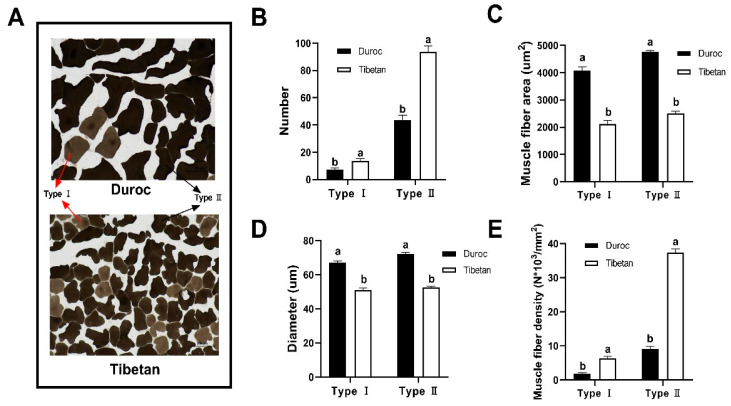 Figure 1
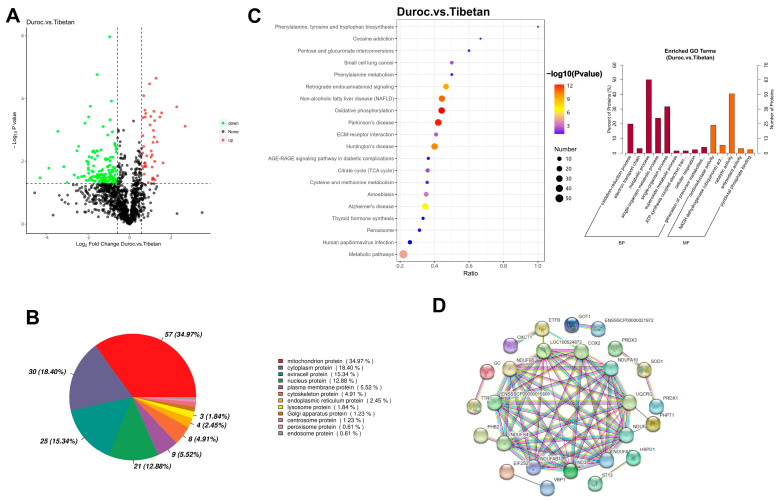 Figure 2
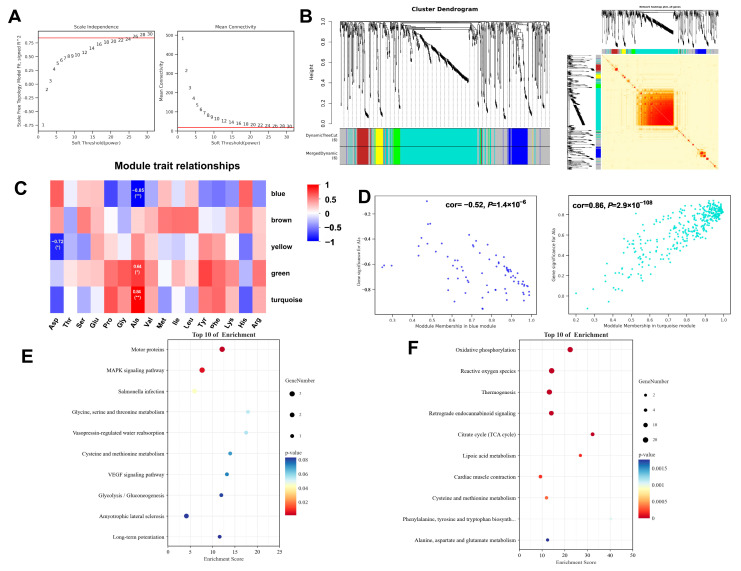 Figure 3
Peer Reviews
No public reviews on file for this paper yet. If you reviewed it on a platform where reviews are public (OpenReview, ICLR, NeurIPS, ICML), you can paste yours below so the community can read it here.
Videos
No videos yet. Explain this paper in a talk, walkthrough, or lecture? Add one.
Taxonomy
TopicsMeat and Animal Product Quality · Animal Nutrition and Physiology · Biochemical effects in animals