Calling Phenology of Two Frog Species in South Korean Rice Paddies Using Automated Call Detection
Soyeon Chae, Jinu Eo, Yikweon Jang

TL;DR
This study tracks frog calling patterns in South Korean rice paddies over five years to understand how they respond to weather and farming.
Contribution
The study provides new insights into species-specific calling phenology and the effectiveness of automated acoustic monitoring in agroecosystems.
Findings
Dryophytes japonicus has a short, synchronized calling peak in early summer, strongly influenced by temperature.
Pelophylax nigromaculatus calls earlier and longer, with activity affected by both temperature and humidity.
Automated acoustic monitoring proved effective for long-term biodiversity observation in agricultural wetlands.
Abstract
Amphibians are sensitive to changes in their surroundings, and the phenology of breeding calls can reflect how they respond to weather and farming practices. We studied two common frog species in South Korean rice paddies over five years using sound recorders. This made it possible to track calling activity over long periods without disturbing the animals. Dryophytes japonicus showed a short and synchronized calling peak in early summer, while Pelophylax nigromaculatus began earlier in spring and continued calling for longer, although at lower levels. Temperature was the main factor driving calling in both species, with the D. japonicus showing especially strong responses. Humidity also played a role, particularly for the P. nigromaculatus, which called more actively when conditions were moist. These results reveal how frogs adapt their reproductive behavior to agricultural wetland…
Genes, proteins, chemicals, diseases, species, mutations and cell lines named across the full text — each resolved to its canonical identifier and authoritative record.
Click any figure to enlarge with its caption.
 Figure 1
 Figure 2
 Figure 3
 Figure 4
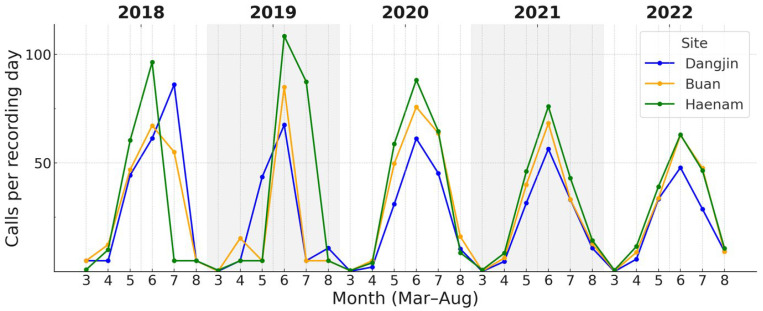 Figure 5
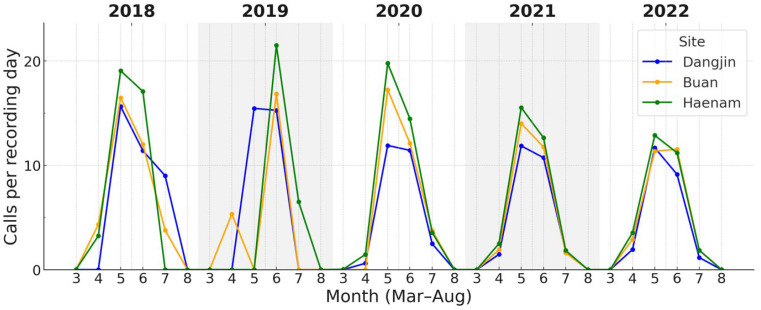 Figure 6
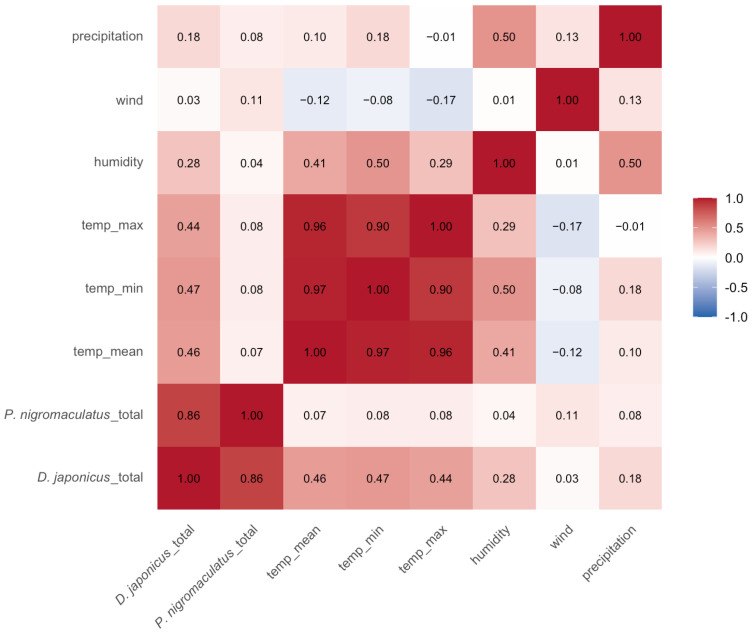 Figure 7
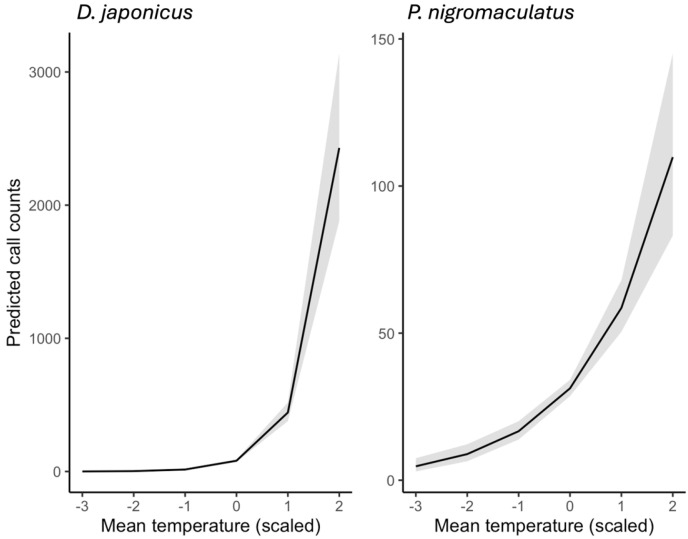 Figure 8
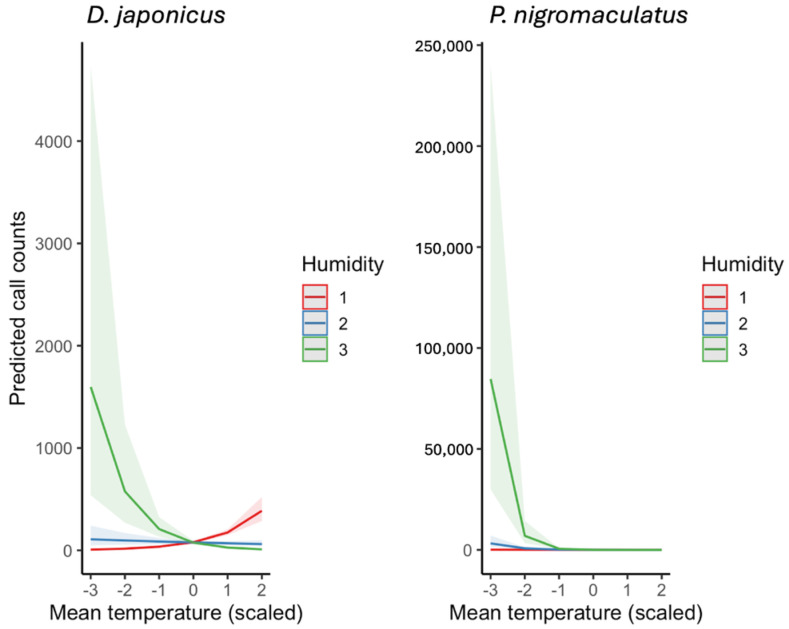 Figure 9
Peer Reviews
No public reviews on file for this paper yet. If you reviewed it on a platform where reviews are public (OpenReview, ICLR, NeurIPS, ICML), you can paste yours below so the community can read it here.
Videos
No videos yet. Explain this paper in a talk, walkthrough, or lecture? Add one.
Taxonomy
TopicsAnimal Vocal Communication and Behavior · Amphibian and Reptile Biology · Animal Behavior and Reproduction