A Systematic Review of Wearable Sensors in Rett Syndrome—What Physiological Markers Are Informative for Monitoring Disease States?
Jatinder Singh, Georgina Wilkins, Athina Manginas, Samiya Chishti, Federico Fiori, Girish D. Sharma, Jay Shetty, Paramala Santosh

TL;DR
This review examines how wearable sensors can help monitor Rett syndrome by identifying useful physiological markers for tracking disease states.
Contribution
The study systematically reviews wearable sensor applications in Rett syndrome and identifies key physiological markers for disease monitoring.
Findings
Wearable sensors combined with machine learning can predict sleep patterns and clinical severity in Rett syndrome.
Increased electrodermal activity, HRmax%, and HR/LF ratio are potential markers for disease states.
More research is needed on wearable sensors for epilepsy and gastrointestinal issues in Rett syndrome.
Abstract
Rett syndrome (RTT) presents with a wide range of symptoms spanning various clinical areas. Capturing symptom change as the disorder progresses is challenging. Wearable sensors offer a non-invasive and objective means of monitoring disease states in neurodevelopmental disorders. The goal of this study was to conduct a systematic literature review to critically appraise the literature on the use of wearable sensors in individuals with RTT. The PRISMA criteria were used to search four databases without time restriction and identified 226 records. After removing duplicates, the titles and abstracts of 184 records were screened, 147 were excluded, and 37 were assessed for eligibility. Ten (10) articles remained, and a further two were included after additional searching. In total, 12 articles were included in the final analysis. The sample size ranged from 7 to 47 subjects with an age range…
Genes, proteins, chemicals, diseases, species, mutations and cell lines named across the full text — each resolved to its canonical identifier and authoritative record.
Click any figure to enlarge with its caption.
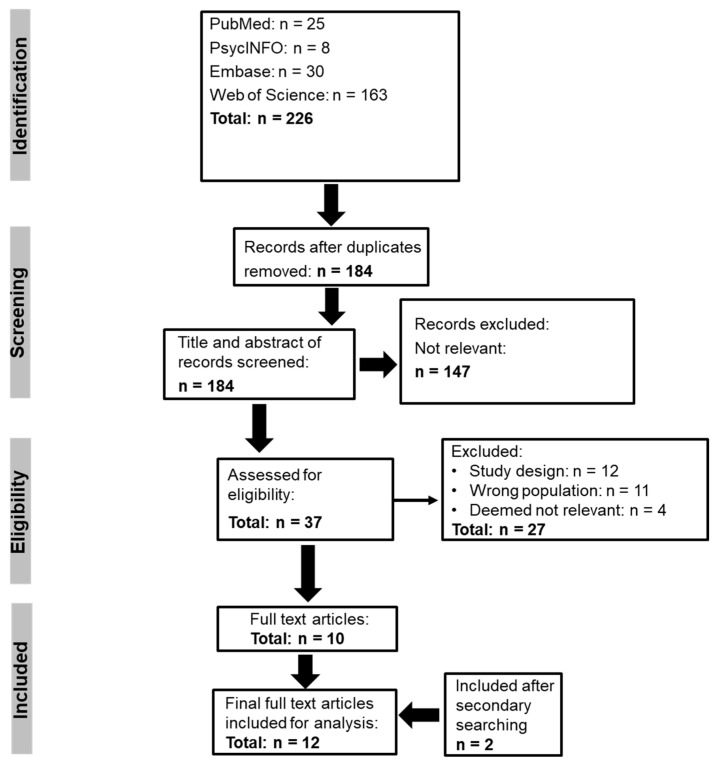 Figure 1
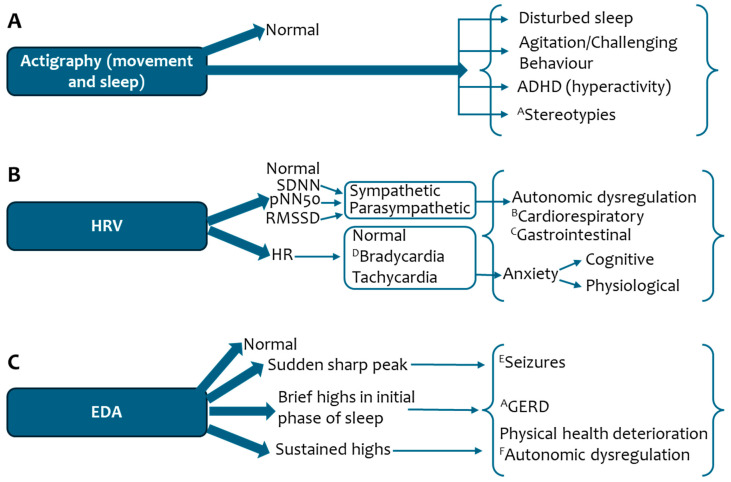 Figure 2
Peer Reviews
No public reviews on file for this paper yet. If you reviewed it on a platform where reviews are public (OpenReview, ICLR, NeurIPS, ICML), you can paste yours below so the community can read it here.
Videos
No videos yet. Explain this paper in a talk, walkthrough, or lecture? Add one.
Taxonomy
TopicsGenetics and Neurodevelopmental Disorders · Restless Legs Syndrome Research · Neurological disorders and treatments