Multimodal Fusion for Trust Assessment in Lower-Limb Rehabilitation: Measurement Through EEG and Questionnaires Integrated by Fuzzy Logic
Kangjie Zheng, Fred Han, Cenwei Li

TL;DR
This study shows that combining brain activity and self-reported trust with fuzzy logic improves trust assessment during lower-limb rehabilitation.
Contribution
A novel multimodal trust assessment method using EEG and questionnaires fused via fuzzy logic is proposed for rehabilitation.
Findings
EEG-based scores showed higher dynamic sensitivity but greater dispersion compared to questionnaires.
The fused method achieved stronger behavioral correlation and higher classification consistency.
Multimodal fusion mitigated the limitations of isolated assessment methods.
Abstract
This study aimed to evaluate the effectiveness of a multimodal trust assessment approach that integrated electroencephalography (EEG) and self-report questionnaires compared with unimodal methods within the context of lower-limb rehabilitation training. Twenty-one mobility-impaired participants performed tasks using handrails, walkers, and stairs. Synchronized EEG, questionnaire, and behavioral data were collected. EEG trust scores were derived from the alpha-beta power ratio, while subjective trust was assessed via questionnaire. An adaptive neuro-fuzzy inference system was used to fuse these into a composite score. Analyses included variance, correlation, and classification consistency against behavioral ground. Results showed that EEG-based scores had higher dynamic sensitivity (Spearman’s ρ = 0.55) but greater dispersion (Kruskal–Wallis H-test: p = 0.001). Questionnaires were more…
Genes, proteins, chemicals, diseases, species, mutations and cell lines named across the full text — each resolved to its canonical identifier and authoritative record.
Click any figure to enlarge with its caption.
 Figure 1
 Figure 2
 Figure 3
 Figure 4
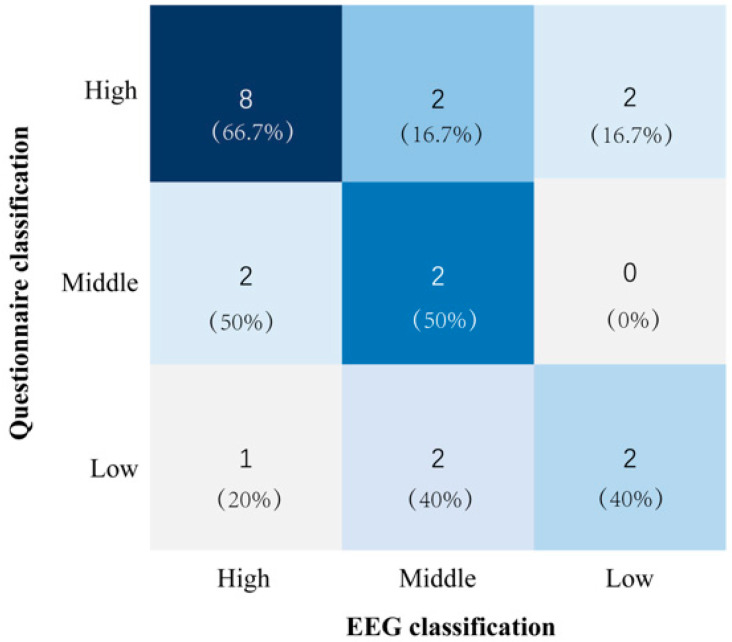 Figure 5
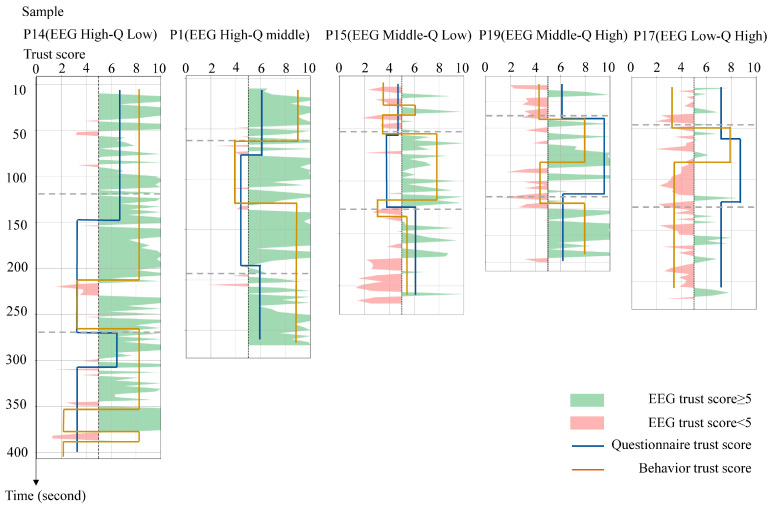 Figure 6
Peer Reviews
No public reviews on file for this paper yet. If you reviewed it on a platform where reviews are public (OpenReview, ICLR, NeurIPS, ICML), you can paste yours below so the community can read it here.
Videos
No videos yet. Explain this paper in a talk, walkthrough, or lecture? Add one.
Taxonomy
TopicsEEG and Brain-Computer Interfaces · Traumatic Brain Injury Research · Stroke Rehabilitation and Recovery