Advances of Long Non-Coding RNA in Perennial Plants: Development and Stress Responses
Yayu Guo, Danni Guo, Yunqing Wang, Jinhuan Yin, Guijun Liu, Huimin Xu

TL;DR
This paper reviews how long non-coding RNAs influence growth and stress responses in perennial plants.
Contribution
The paper provides a systematic summary of lncRNA classification and regulation in woody plants, highlighting recent advances and challenges.
Findings
lncRNAs regulate plant growth and development through multiple signaling pathways.
Recent studies show lncRNAs play roles in perennial plant responses to abiotic and biotic stresses.
The paper identifies current challenges in lncRNA research for plant ontogeny and stress responses.
Abstract
Long non-coding RNAs (lncRNAs), which have RNA transcripts over 200 nucleotides long and do not usually code for proteins, play an important role in plant growth and development, by interacting with multiple signaling pathways and participating in the regulation of fundamental biological processes. This review systematically summarizes the classification and regulatory mechanisms of plant lncRNAs, with a focus on recent advances in research on their regulatory roles in woody plant growth, development, and responses to abiotic and biotic stresses. Additionally, we discuss the current challenges in lncRNA research on plant ontogeny and stress responses, aiming to provide a theoretical foundation for future studies on lncRNAs in perennial plants.
Genes, proteins, chemicals, diseases, species, mutations and cell lines named across the full text — each resolved to its canonical identifier and authoritative record.
Click any figure to enlarge with its caption.
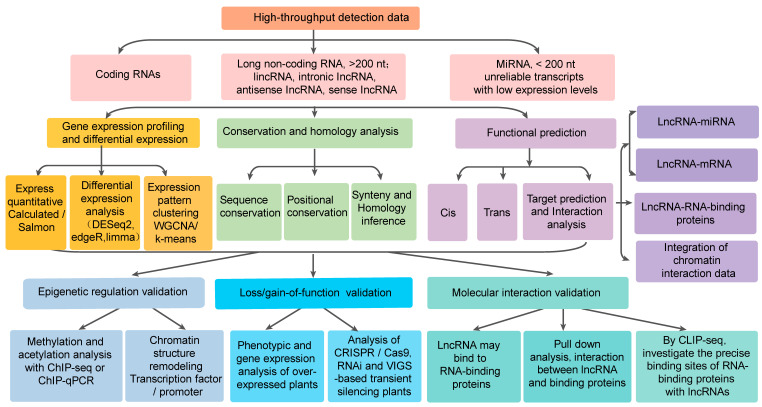 Figure 1
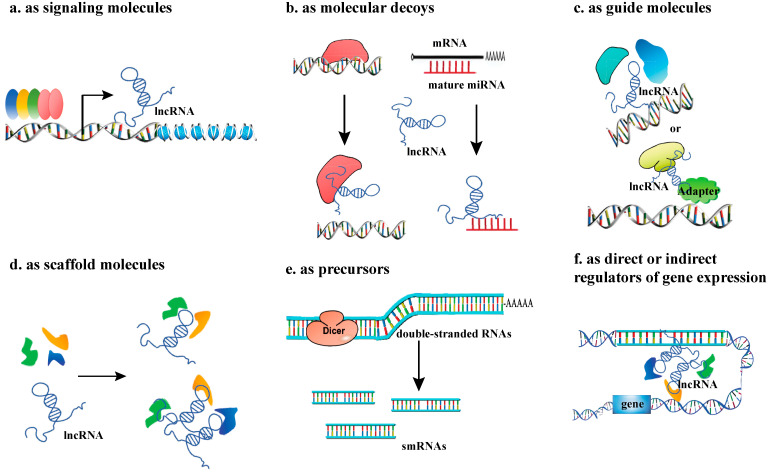 Figure 2
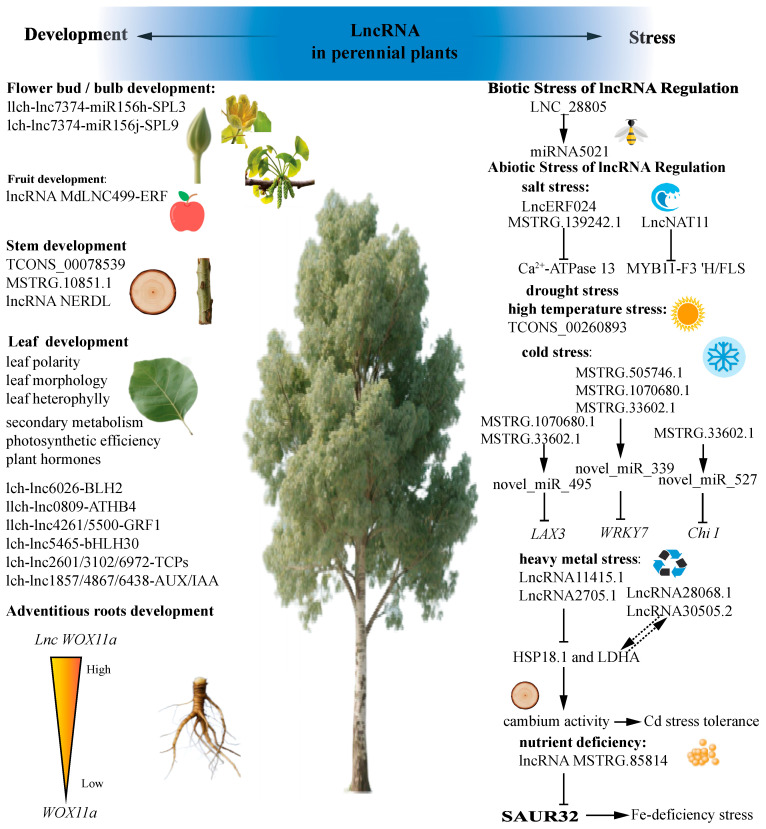 Figure 3
Peer Reviews
No public reviews on file for this paper yet. If you reviewed it on a platform where reviews are public (OpenReview, ICLR, NeurIPS, ICML), you can paste yours below so the community can read it here.
Videos
No videos yet. Explain this paper in a talk, walkthrough, or lecture? Add one.
Taxonomy
TopicsPlant Molecular Biology Research · Cancer-related molecular mechanisms research · Tree Root and Stability Studies