Understanding the Real Needs and Expectations of French Patients with Amelogenesis Imperfecta Through Facebook Content: A Qualitative Thematic Analysis
Aurelie Mailloux, Jérôme Dinet, Jules Filloux, Yann Lanuel

TL;DR
This study explores the needs and experiences of French patients with amelogenesis imperfecta through analysis of a Facebook group, revealing insights into their healthcare challenges and community support.
Contribution
The study provides the first systematic analysis of French AI patients' needs using Facebook group content, revealing new insights into their psychological and practical challenges.
Findings
Two main discourse trends were identified: individual experiences and collective narratives.
Four thematic classes emerged: healthcare access, genetic implications, dental symptoms, and community advocacy.
The Facebook group supports emotional well-being, peer exchange, and empowerment among AI patients.
Abstract
Background and Objectives: Facebook groups have become support spaces for people with rare diseases such as amelogenesis imperfecta (AI). While their potential for revealing patient needs is recognized, no systematic analysis has been conducted in France. This study aims to better understand the psychological and practical needs of French AI patients by analyzing interactions within a dedicated Facebook group. Methods: A semantic and thematic analysis was conducted on 881 texts (39,647 words) from the French Facebook group Amelogenesis Imperfecta. A custom tool, TEXTRA©, and IRaMuTeQ© software were used for analysis, including similarity analysis (lexical co-occurrences), Descending Hierarchical Classification (DHC), Correspondence analysis to reveal discourse structures. Results: Correspondence analysis revealed two main discourse trends: individual experiences (symptoms, treatment…
Genes, proteins, chemicals, diseases, species, mutations and cell lines named across the full text — each resolved to its canonical identifier and authoritative record.
Click any figure to enlarge with its caption.
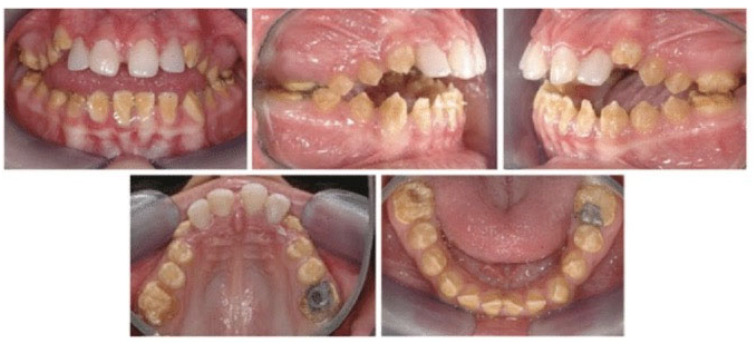 Figure 1
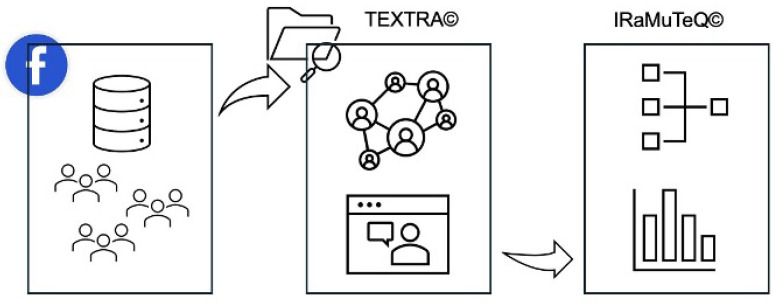 Figure 2
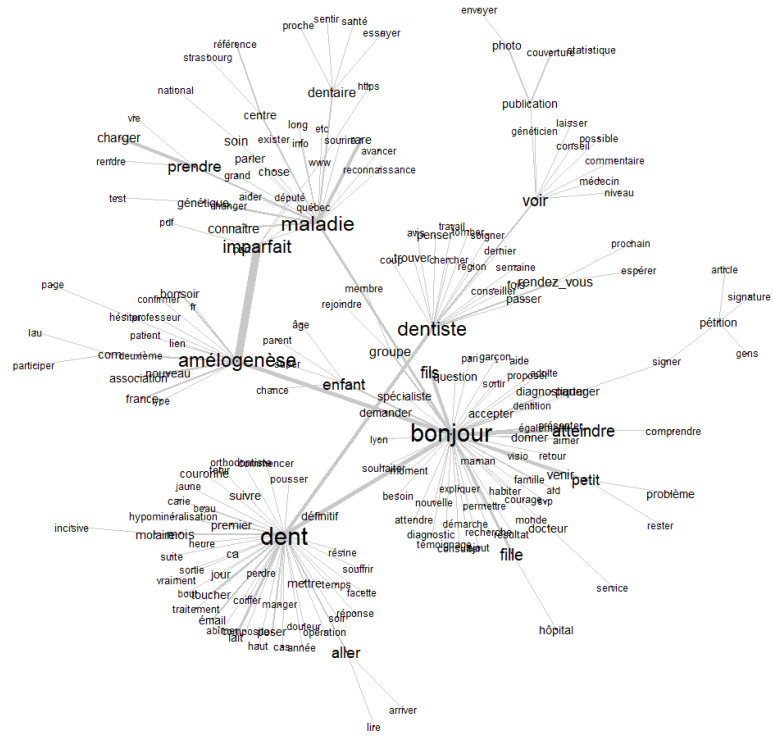 Figure 3
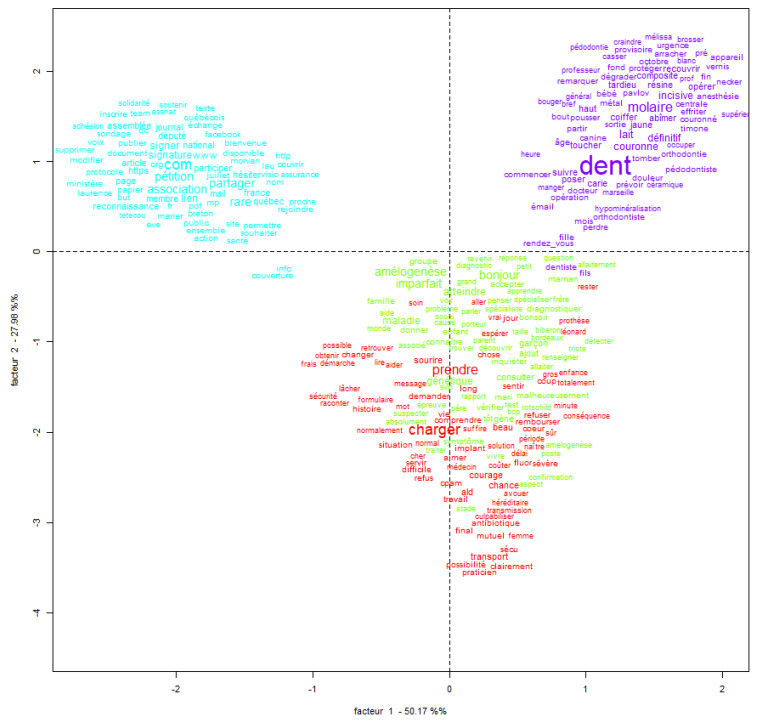 Figure 4
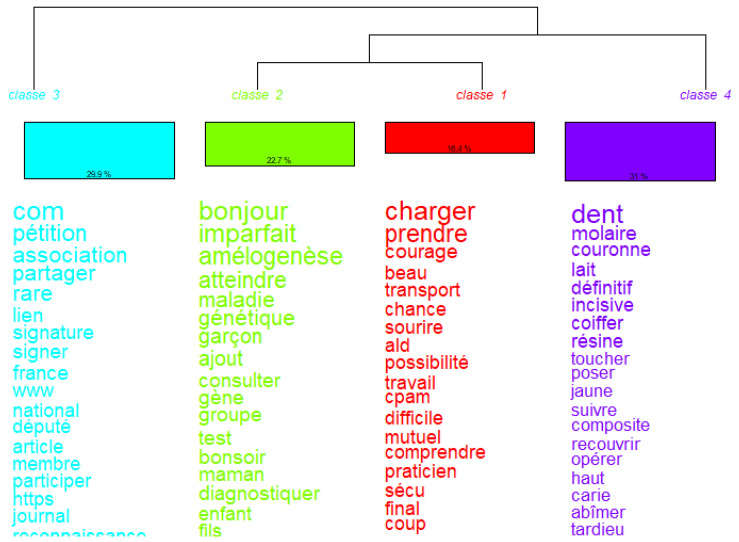 Figure 5
Peer Reviews
No public reviews on file for this paper yet. If you reviewed it on a platform where reviews are public (OpenReview, ICLR, NeurIPS, ICML), you can paste yours below so the community can read it here.
Videos
No videos yet. Explain this paper in a talk, walkthrough, or lecture? Add one.
Taxonomy
TopicsBone and Dental Protein Studies · Oral microbiology and periodontitis research · dental development and anomalies