The Role of Mitochondria in Obstructive Sleep Apnea: Implications for the Upper Airway Muscles
Karla Carlos, Gilmar Fernandes do Prado, Celia Harumi Tengan

TL;DR
This review explores how mitochondrial dysfunction in upper airway muscles contributes to obstructive sleep apnea and suggests antioxidant strategies as potential treatments.
Contribution
The paper synthesizes current knowledge on mitochondrial involvement in upper airway muscle dysfunction in obstructive sleep apnea.
Findings
Mitochondrial dysfunction increases reactive oxygen species and oxidative stress in obstructive sleep apnea.
Chronic intermittent hypoxia impairs mitochondrial function, worsening upper airway muscle performance.
Antioxidant strategies may help mitigate the effects of mitochondrial damage in this condition.
Abstract
Obstructive sleep apnea is a common but underdiagnosed sleep-related breathing disorder characterized by recurrent episodes of upper airway obstruction during sleep, leading to intermittent episodes of hypoxia and systemic consequences. Anatomical and ventilatory control factors are well-established contributors, but less is known about how mitochondria influence upper airway muscle function in this condition. As central regulators of muscle performance and cellular adaptation to hypoxia, mitochondria are particularly vulnerable to dysfunction under chronic intermittent hypoxia. Mitochondrial dysfunction increases production of reactive oxygen species, predisposing to oxidative stress, that further impairs mitochondrial function. This review focuses on the mitochondrial involvement in obstructive sleep apnea, specifically synthesizing findings on the impact on upper airway muscles. The…
Genes, proteins, chemicals, diseases, species, mutations and cell lines named across the full text — each resolved to its canonical identifier and authoritative record.
Click any figure to enlarge with its caption.
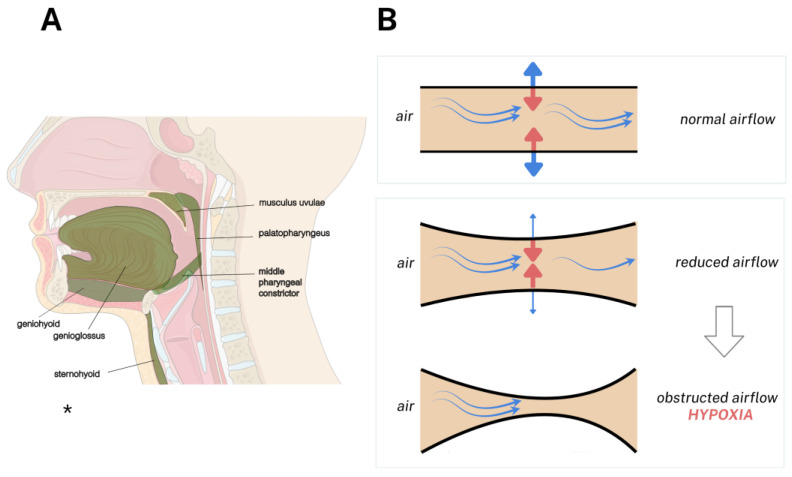 Figure 1
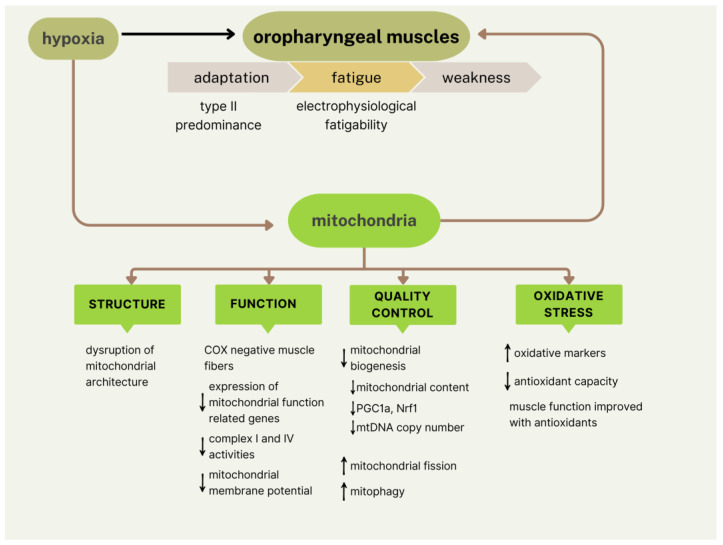 Figure 2
Peer Reviews
No public reviews on file for this paper yet. If you reviewed it on a platform where reviews are public (OpenReview, ICLR, NeurIPS, ICML), you can paste yours below so the community can read it here.
Videos
No videos yet. Explain this paper in a talk, walkthrough, or lecture? Add one.
Taxonomy
TopicsObstructive Sleep Apnea Research · Neuroscience of respiration and sleep · Cardiovascular and exercise physiology