The Usefulness of Basic Laboratory Analyses in Diagnostics of Inherited Metabolic Diseases in Children
Patryk Lipiński, Anna Doroba

TL;DR
This paper reviews how basic lab tests can help pediatricians diagnose inherited metabolic diseases in children.
Contribution
The paper provides a comprehensive review and easy-to-use algorithms for interpreting basic lab results in the context of inherited metabolic diseases.
Findings
Basic laboratory analyses can provide early clues for diagnosing inherited metabolic diseases.
Abnormal lab results are discussed alongside clinical manifestations to guide differential diagnosis.
Selective screening and specialized testing remain essential for confirming IMD diagnoses.
Abstract
Pediatricians play a crucial role in the early diagnosis and management of inherited metabolic diseases (IMDs). The diagnosis of IMD is based on the principle of selective screening, often requiring highly specialized testing, including biochemical and molecular analyses. The aim of this comprehensive review was to provide pediatricians with the usefulness of basic laboratory analyses in diagnostic process of IMD. The abnormal results of basic laboratory analyses were thoroughly discussed in the context of clinical manifestations of IMDs. Easy-to-use algorithms were implemented to ensure an appropriate differential diagnosis.
Genes, proteins, chemicals, diseases, species, mutations and cell lines named across the full text — each resolved to its canonical identifier and authoritative record.
Click any figure to enlarge with its caption.
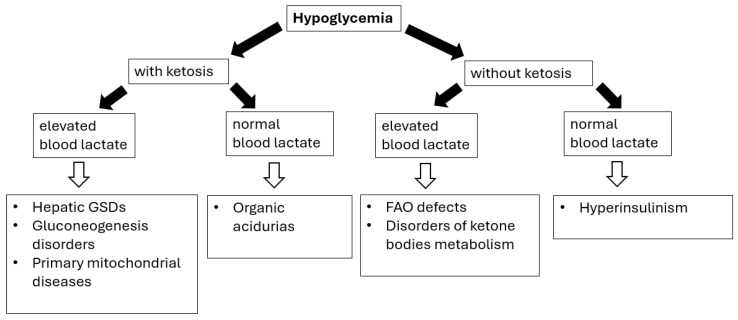 Figure 1
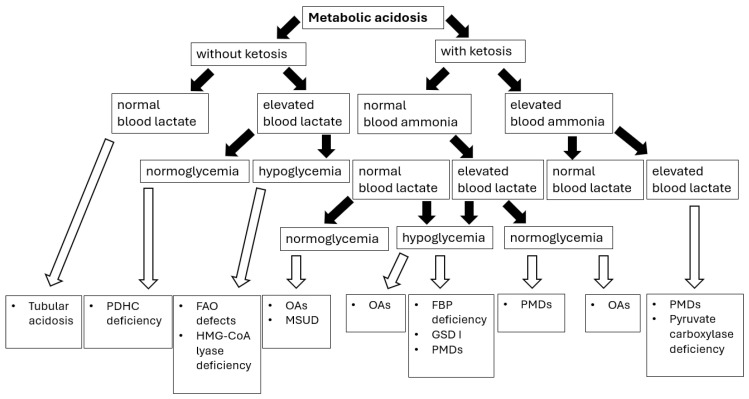 Figure 2
Peer Reviews
No public reviews on file for this paper yet. If you reviewed it on a platform where reviews are public (OpenReview, ICLR, NeurIPS, ICML), you can paste yours below so the community can read it here.
Videos
No videos yet. Explain this paper in a talk, walkthrough, or lecture? Add one.
Taxonomy
TopicsMetabolism and Genetic Disorders · Glycogen Storage Diseases and Myoclonus · Genomics and Rare Diseases