TFAM Loss Induces Oxidative Stress and Divergent Phenotypes in Glioblastoma Metabolic Subtypes
Stella G. Cavalcante, Roseli da S. Soares, Miyuki Uno, Maria J. F. Alves, Ricardo C. Cintra, Paula R. Sola, Christiane Y. Ozaki, Antonio M. Lerário, Sueli M. Oba-Shinjo, Suely K. N. Marie

TL;DR
This study shows that TFAM loss affects glioblastoma cells differently depending on their metabolic subtype, influencing growth, stress, and movement.
Contribution
The paper reveals TFAM as a subtype-specific regulator in glioblastoma, with distinct effects on GPM and MTC subtypes.
Findings
TFAM loss in GPM-type cells increases proliferation and ROS production while reducing motility.
TFAM loss in MTC-type cells triggers antioxidant pathways and minimal phenotypic changes.
TFAM overexpression reduces proliferation in GPM-type cells but not in MTC-type cells.
Abstract
Mitochondrial transcription factor A (TFAM) is essential for mitochondrial DNA (mtDNA) maintenance and function, but its role in glioblastoma (GBM) remains largely unexplored. Analysis of patient astrocytomas and TCGA datasets has revealed progressive TFAM downregulation with increasing malignancy, with the lowest expression in glycolytic/plurimetabolic (GPM) subtypes. Functional and transcriptomic profiling of mesenchymal GBM cell lines showed that TFAM silencing in GPM-type U87MG cells enhanced proliferation, S-phase entry, reactive oxygen species (ROS) production, and adhesion, while reducing motility. These changes were correlated with upregulation of LDHC and TRAF2 and downregulation of androgen receptor-linked motility genes and LOXL2. By contrast, TFAM loss in mitochondrial (MTC)-type A172 cells caused minimal phenotypic alterations, associated with elevated SOD1 expression and…
Genes, proteins, chemicals, diseases, species, mutations and cell lines named across the full text — each resolved to its canonical identifier and authoritative record.
Click any figure to enlarge with its caption.
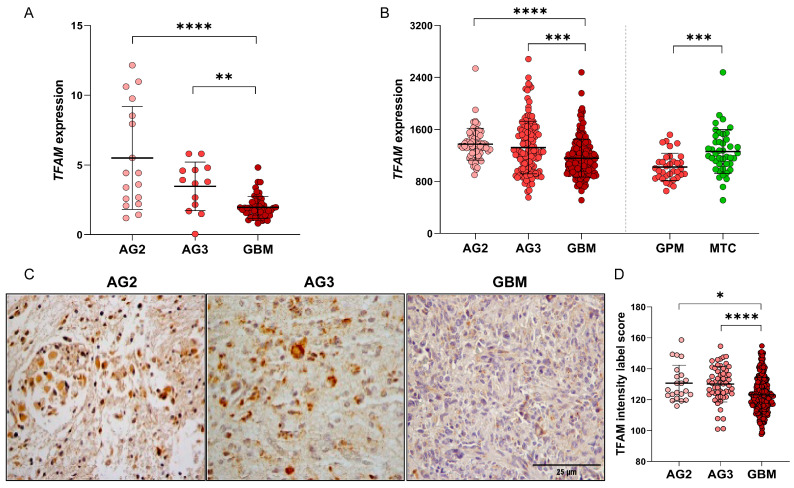 Figure 1
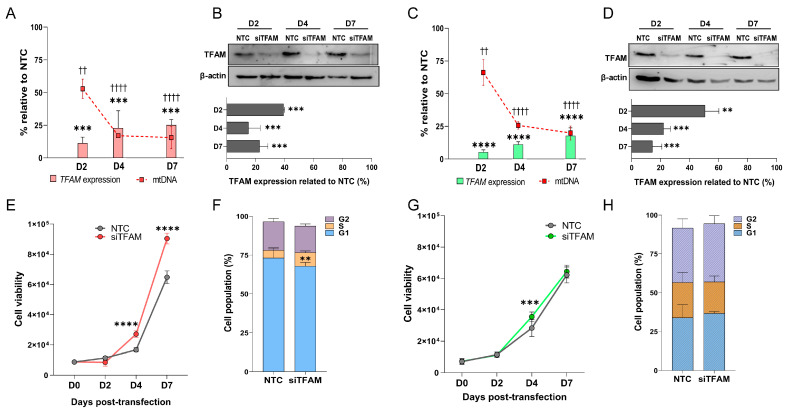 Figure 2
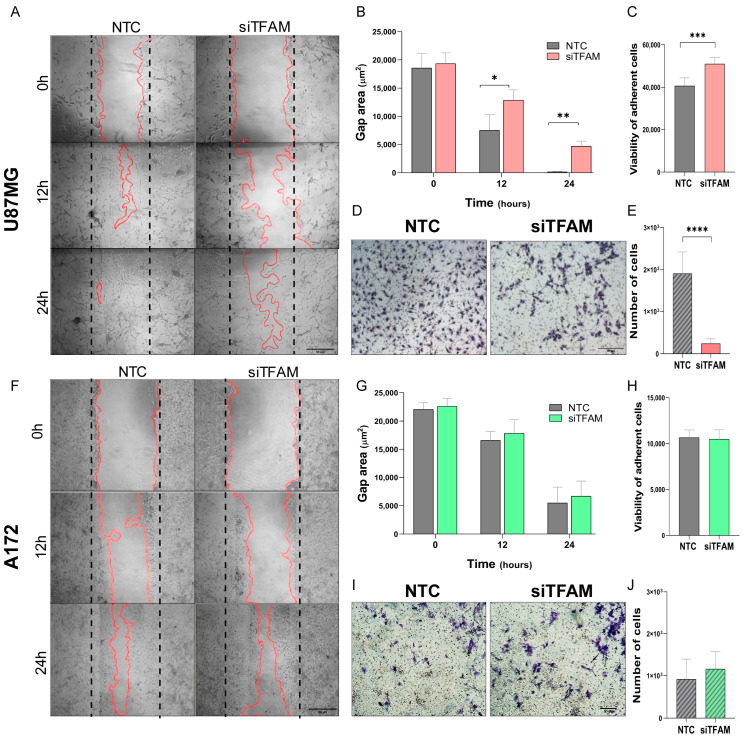 Figure 3
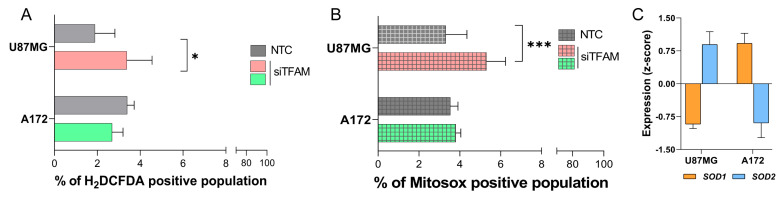 Figure 4
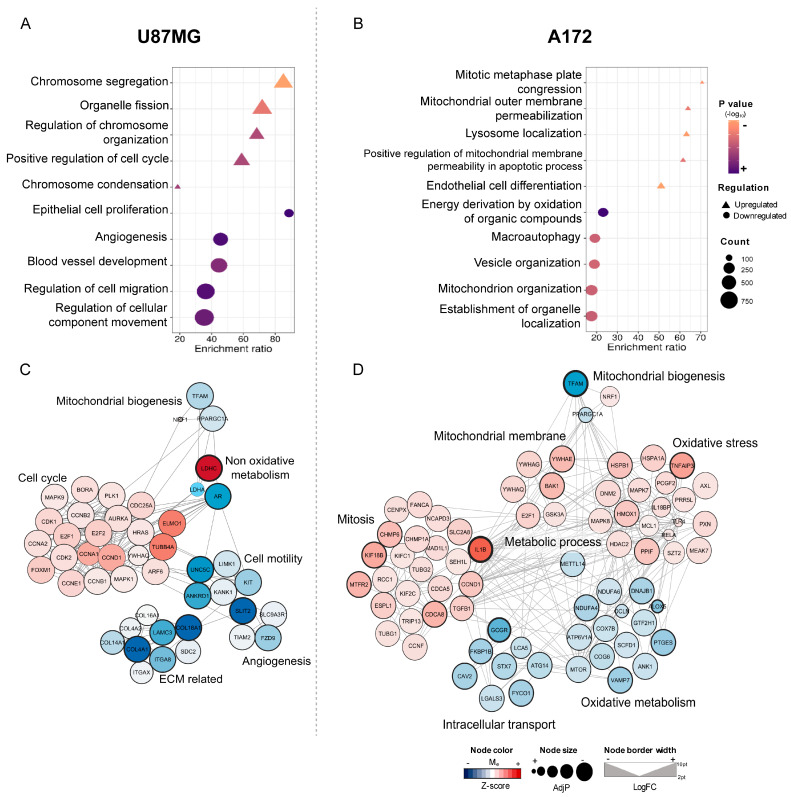 Figure 5
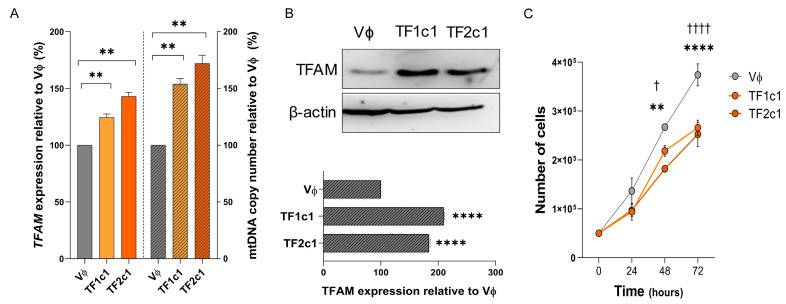 Figure 6
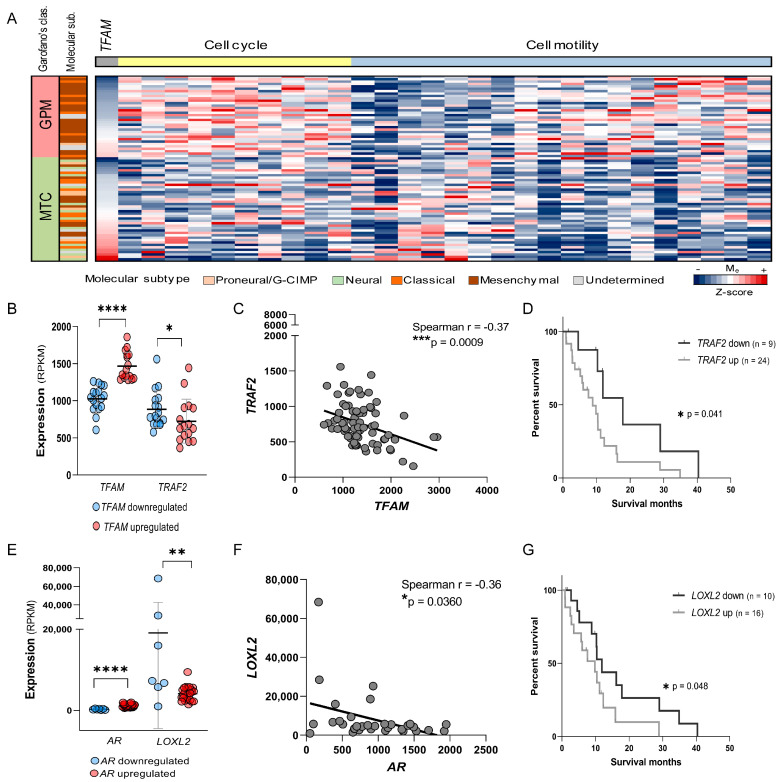 Figure 7
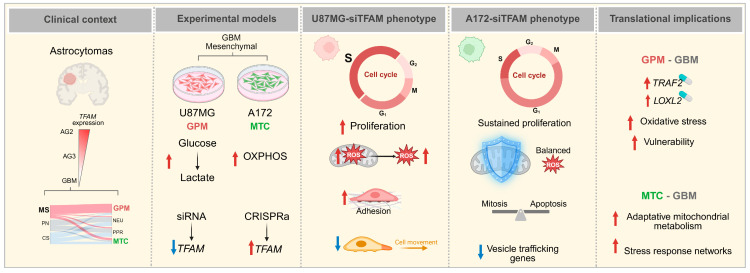 Figure 8
Peer Reviews
No public reviews on file for this paper yet. If you reviewed it on a platform where reviews are public (OpenReview, ICLR, NeurIPS, ICML), you can paste yours below so the community can read it here.
Videos
No videos yet. Explain this paper in a talk, walkthrough, or lecture? Add one.
Taxonomy
TopicsMitochondrial Function and Pathology · Cancer, Hypoxia, and Metabolism · ATP Synthase and ATPases Research