PF4 Autoantibody Complexes Cause Activation of Integrins αIIbβ3 and αvβ3 and Possible Subsequent Thrombosis and Autoimmune Diseases
Yoko K. Takada, Chun-Yi Wu, Yoshikazu Takada

TL;DR
This paper shows how PF4 autoantibodies can activate integrins and potentially lead to thrombosis and autoimmune diseases, especially when PF4 levels are high.
Contribution
The study identifies how PF4 autoantibodies activate integrins and suggests anti-inflammatory agents like neuregulin-1 and ivermectin may suppress these effects.
Findings
PF4 autoantibody RTO induces integrin activation, while KKO does not.
A PF4 mutant (4E) acts as a dominant-negative antagonist of integrin activation.
Neuregulin-1 and ivermectin suppress integrin activation caused by PF4/anti-PF4 complexes.
Abstract
Previous studies suggest that multiple inflammatory chemokines (e.g., CCL5, CXCL12) bind to the allosteric site of integrins (site 2) and induce allosteric integrin activation and inflammatory signals. PF4 is abundantly present in platelet granules, but PF4 levels are very low in plasma. PF4 is released from damaged platelets and is markedly increased in plasma (>1000×) in pathological conditions. PF4 (tetramer) is an inhibitory chemokine, and the specifics of PF4 signaling are unclear. Docking simulation predicted that PF4 monomer binds to site 2, but PF4 by itself did not induce allosteric integrin activation. Anti-PF4 mAbs KKO and RTO generate complexes with PF4 tetramer and monomer, respectively. We discovered that the PF4/RTO complex induced potent integrin activation, but the PF4/KKO complex did not. We hypothesize that inactive PF4 tetramer is converted by RTO to active monomer.…
Genes, proteins, chemicals, diseases, species, mutations and cell lines named across the full text — each resolved to its canonical identifier and authoritative record.
Click any figure to enlarge with its caption.
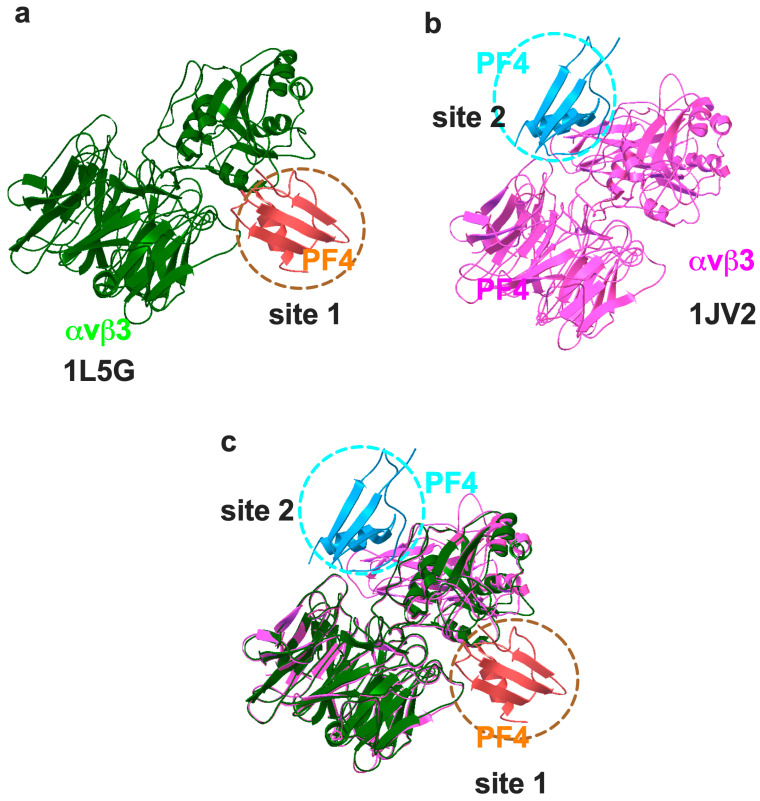 Figure 1
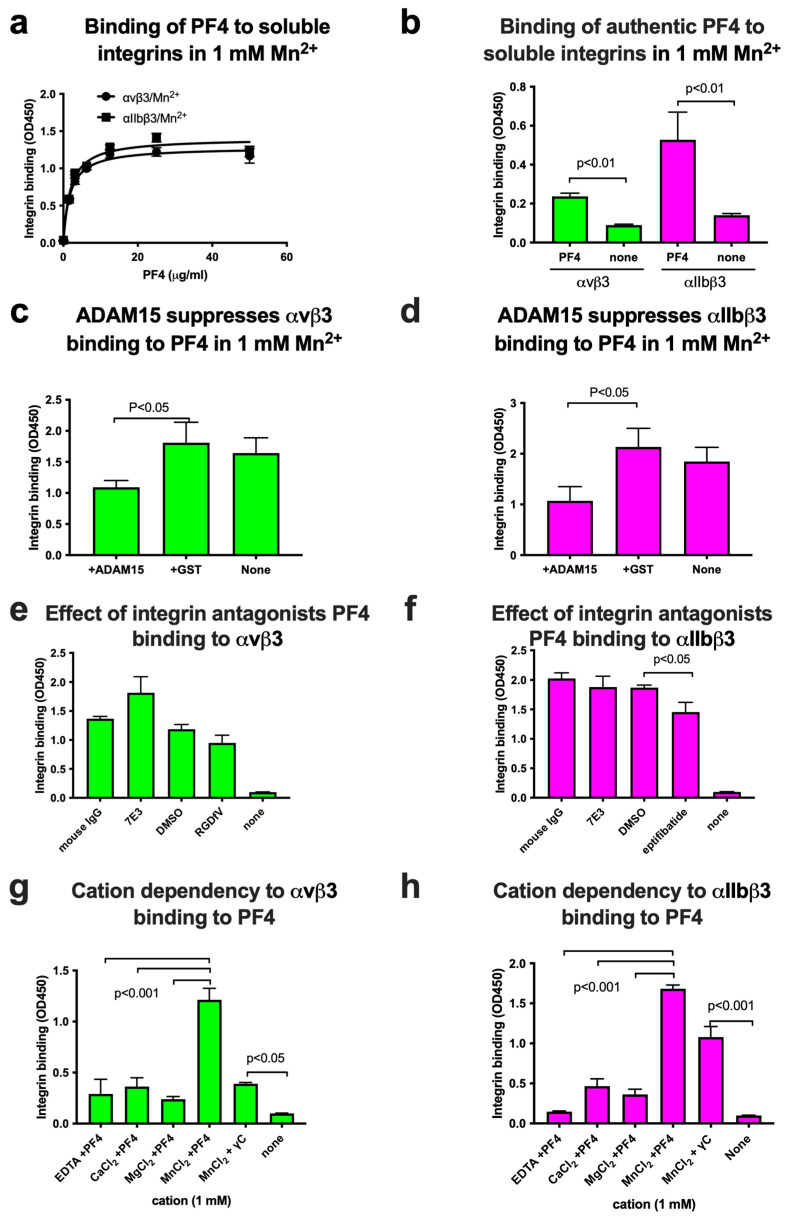 Figure 2
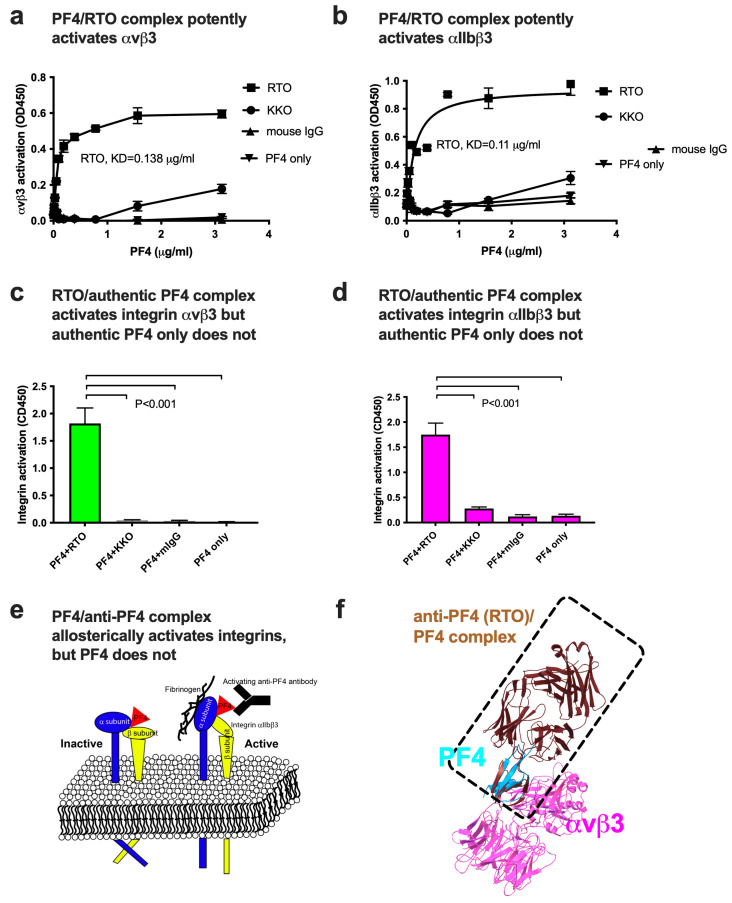 Figure 3
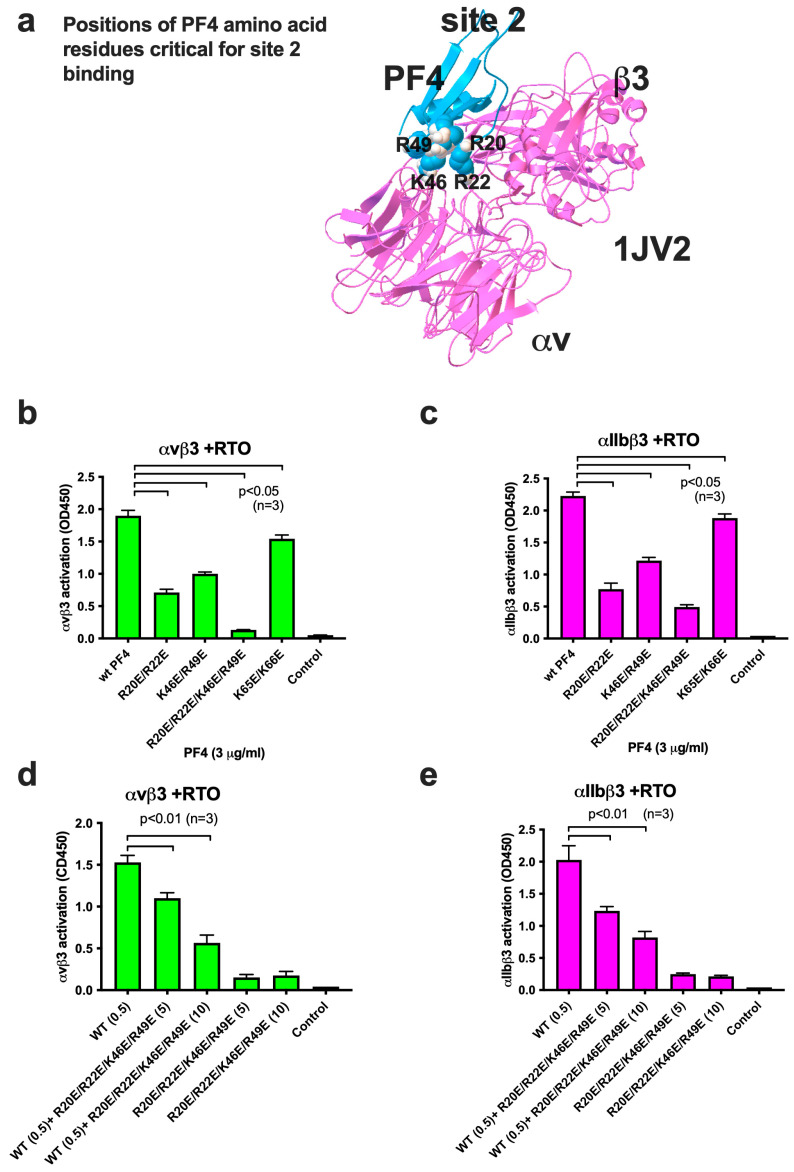 Figure 4
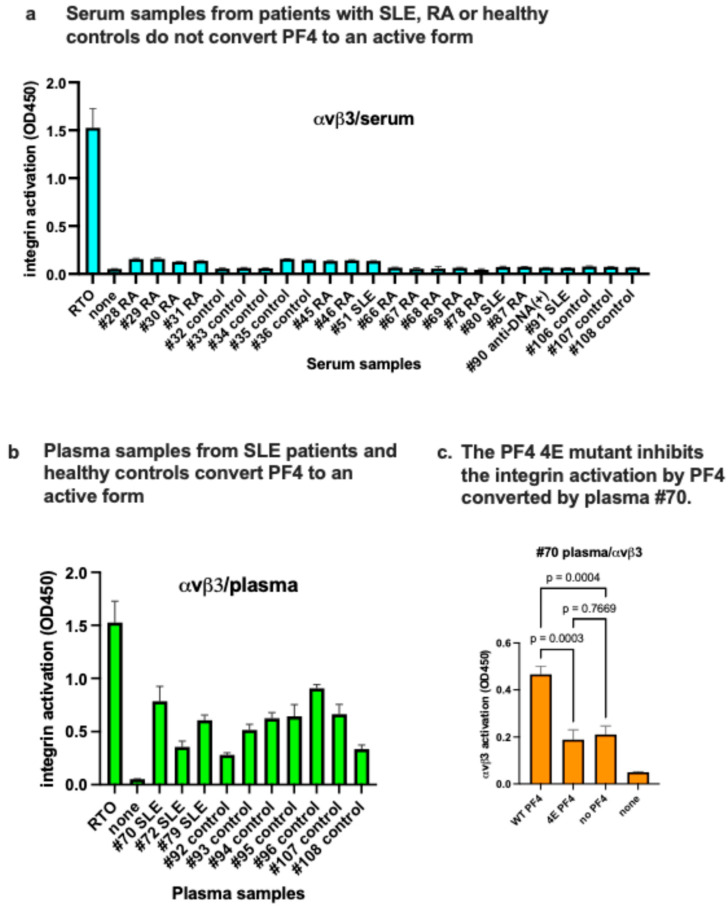 Figure 5
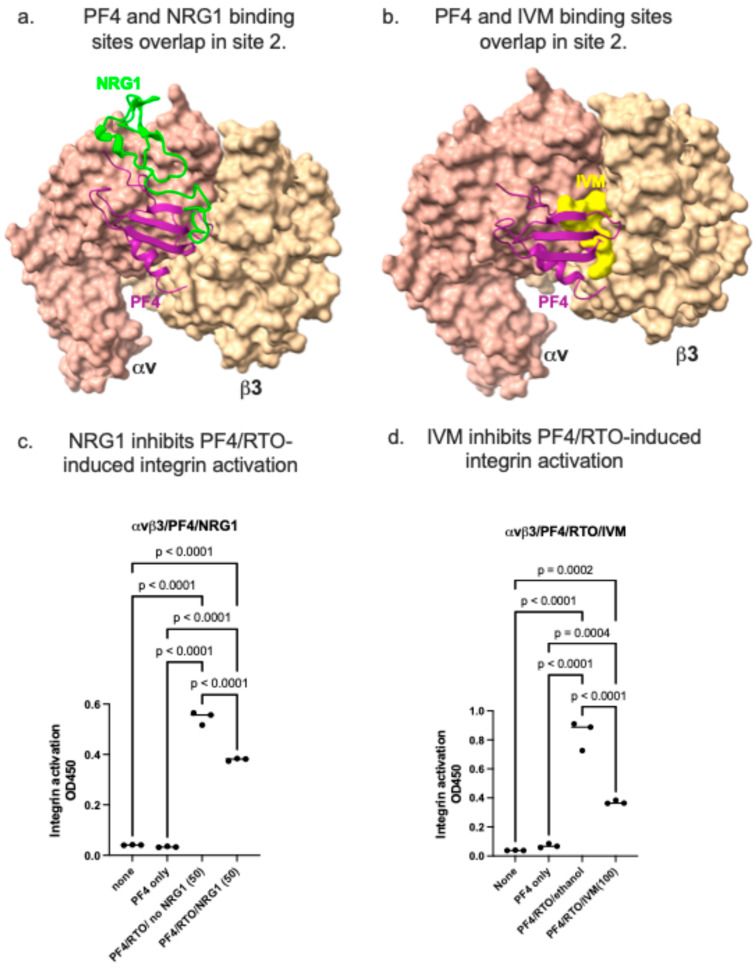 Figure 6
Peer Reviews
No public reviews on file for this paper yet. If you reviewed it on a platform where reviews are public (OpenReview, ICLR, NeurIPS, ICML), you can paste yours below so the community can read it here.
Videos
No videos yet. Explain this paper in a talk, walkthrough, or lecture? Add one.
Taxonomy
TopicsCell Adhesion Molecules Research · Platelet Disorders and Treatments · Monoclonal and Polyclonal Antibodies Research