A Rapid, Reliable and Reproducible Protocol for DNA Degradation in Genetic Applications
Lena Ewers, Walther Parson

TL;DR
This paper introduces a quick and reliable method to create degraded DNA for genetic testing and research purposes.
Contribution
The study presents a novel, rapid protocol for generating reproducibly degraded DNA using UV-C irradiation.
Findings
UV-C irradiation effectively reduces DNA fragment size in a reproducible manner within five minutes.
The degradation pattern is suitable for mimicking naturally degraded DNA in biological samples.
Degradation-sensitive PCR and STR analysis confirmed the method's reliability and reproducibility.
Abstract
Degraded DNA is frequently encountered in biological samples due to mechanisms that favor the decomposition process and thus the fragmentation of DNA due to (extreme) environmental conditions. The reduced size of the DNA fragments may hamper the performance of genetic tests. This is why developmental evaluation and validation experiments of new markers and new technologies also involve the analysis of artificially degraded DNA. This study presents a method to reproducibly generate degraded DNA in only five minutes. Different concentrations and volumes of DNA extracted from blood were irradiated by UV-C light. This led to a gradual decrease in DNA fragment size that is typically targeted in genetic applications. An increase in DNA extract volume showed only little effect on the degradation performance; the starting DNA amount slightly shifted the observed degradation pattern. The process…
Genes, proteins, chemicals, diseases, species, mutations and cell lines named across the full text — each resolved to its canonical identifier and authoritative record.
Click any figure to enlarge with its caption.
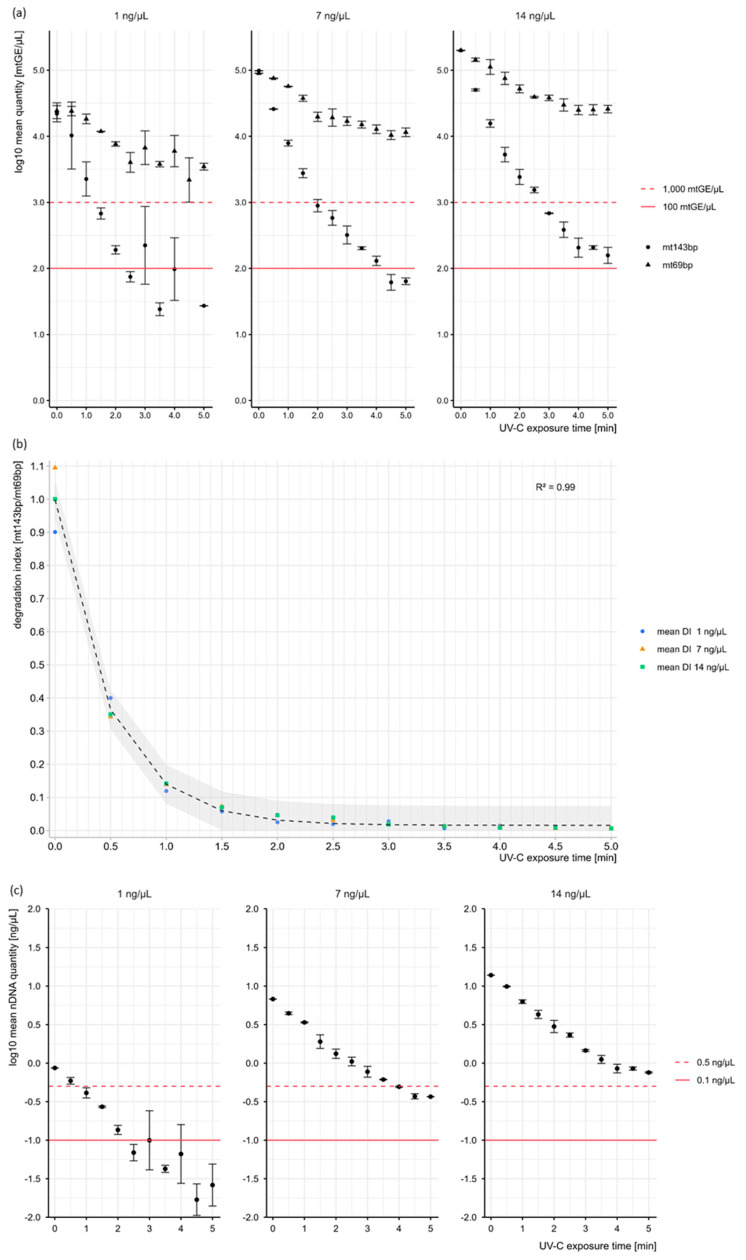 Figure 1
Peer Reviews
No public reviews on file for this paper yet. If you reviewed it on a platform where reviews are public (OpenReview, ICLR, NeurIPS, ICML), you can paste yours below so the community can read it here.
Videos
No videos yet. Explain this paper in a talk, walkthrough, or lecture? Add one.
Taxonomy
TopicsCarcinogens and Genotoxicity Assessment · Genetically Modified Organisms Research · Molecular Biology Techniques and Applications