Effects of Structured Physical Therapy on Spinal Alignment in Idiopathic Scoliosis: A 12-Month Prospective Study
Brigitte Osser, Csongor Toth, Carmen Delia Nistor-Cseppento, Iosif Ilia, Gyongyi Osser, Mariana Cevei, Cristina Aur, Roland Fazakas, Laura Ioana Bondar

TL;DR
A 12-month structured physical therapy program significantly improved spinal alignment in teens with mild scoliosis.
Contribution
Demonstrates long-term effectiveness of structured physiotherapy in idiopathic scoliosis management.
Findings
Mean Cobb angle decreased by 3.74° over 12 months (20.3% relative reduction).
Patients with milder baseline curves showed greater improvement than those with more severe curves.
Baseline severity was the only significant predictor of improvement in multivariable analysis.
Abstract
Background: Scoliosis, a three-dimensional spinal deformity, can impair posture, function, and quality of life. Conservative approaches such as structured physical therapy are widely used, but evidence from long-term, real-world settings remains limited. In this study, “structured” refers to a standardized, supervised program delivered three times per week, incorporating postural correction, Klapp-based positioning, core strengthening, flexibility training, and progressive intensity adjustments rather than ad hoc or unsupervised exercise. Methods: In this 12-month longitudinal study, 240 patients aged 15–19 years with idiopathic scoliosis (Cobb angle 15–25°) were enrolled; 222 completed the program and were included in analyses. All participants were near or beyond skeletal maturity, representing a population with low residual risk of curve progression. Spinal alignment was assessed by…
Genes, proteins, chemicals, diseases, species, mutations and cell lines named across the full text — each resolved to its canonical identifier and authoritative record.
Click any figure to enlarge with its caption.
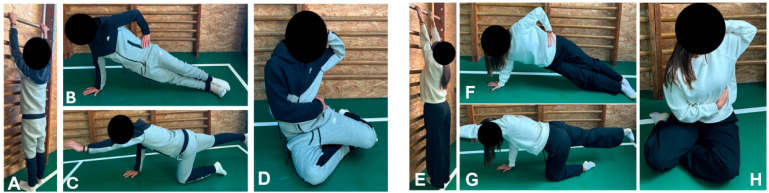 Figure 1
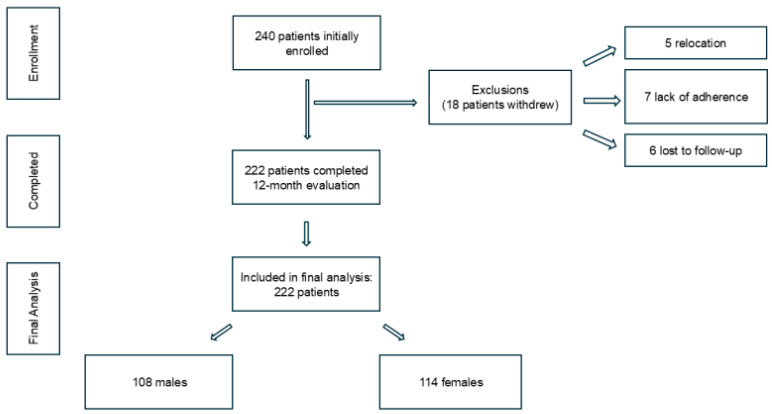 Figure 2
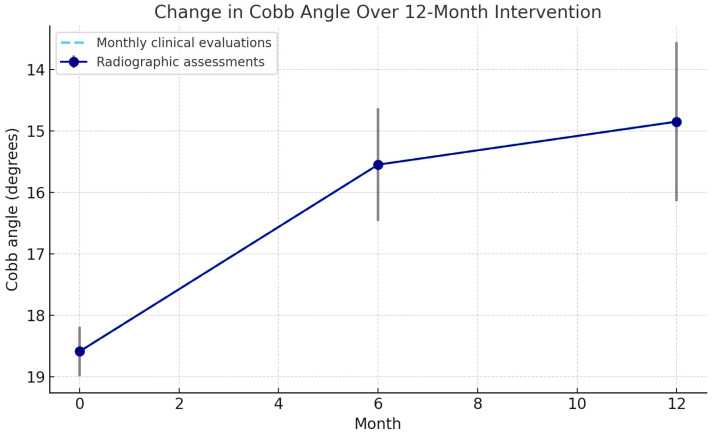 Figure 3
Peer Reviews
No public reviews on file for this paper yet. If you reviewed it on a platform where reviews are public (OpenReview, ICLR, NeurIPS, ICML), you can paste yours below so the community can read it here.
Videos
No videos yet. Explain this paper in a talk, walkthrough, or lecture? Add one.
Taxonomy
TopicsScoliosis diagnosis and treatment · Foot and Ankle Surgery · Hip disorders and treatments