Analysis of the Circulating miRNome Expression Profile in Saliva Samples After Neoadjuvant Chemoradiotherapy in a Rectal Cancer Study Population Using Next-Generation Sequencing
Kristóf Gál, Péter Dávid, Melinda Paholcsek, Márton Barabás, Endre Szilágyi, Krisztina Balogh, Dóra Solymosi, Szidónia Miklós, Johanna Mikáczó, Krisztina Trási, Emese Csiki, Mihály Simon, Péter Fauszt, Szilárd Póliska, Judit Remenyik, Árpád Kovács, Emese Szilágyi-Tolnai

TL;DR
The study identifies specific microRNAs in saliva that change after cancer treatment, which could help assess treatment effectiveness in rectal cancer patients.
Contribution
The novel contribution is the identification of salivary miRNAs as potential non-invasive biomarkers for evaluating tumor regression after chemoradiotherapy in rectal cancer.
Findings
37 miRNAs showed distinct expression differences between rectal cancer patients and healthy controls.
Five miRNAs were validated to have significantly increased salivary expression post-radiation (p < 0.05).
Three miRNAs (hsa-miR-203a-3p, hsa-miR-200a-5p, hsa-miR-361-5p) demonstrated strong discriminatory power for tumor regression grade (AUC > 0.7).
Abstract
Dysregulated microRNAs (miRNAs) have been implicated in the pathogenesis and progression of rectal adenocarcinoma. In this study, we aimed to identify miRNA alterations associated with the efficacy of neoadjuvant chemoradiotherapy in rectal cancer patients. High-throughput small RNA sequencing was performed to assess salivary miRNA expression profiles in 31 participants (11 rectal adenocarcinoma patients and 20 healthy volunteers). Paired saliva samples were collected from patients before and after chemoradiation. Tumor regression was classified according to the modified Ryan scheme into responders (tumor regression grade [TRG] 1–2, n = 10) and nonresponders (TRG3, n = 1). Bioinformatic integration of small non-coding RNA data revealed 37 miRNAs with distinct expression differences between patients and healthy controls. Furthermore, seven miRNAs showed significant alterations in…
Genes, proteins, chemicals, diseases, species, mutations and cell lines named across the full text — each resolved to its canonical identifier and authoritative record.
Click any figure to enlarge with its caption.
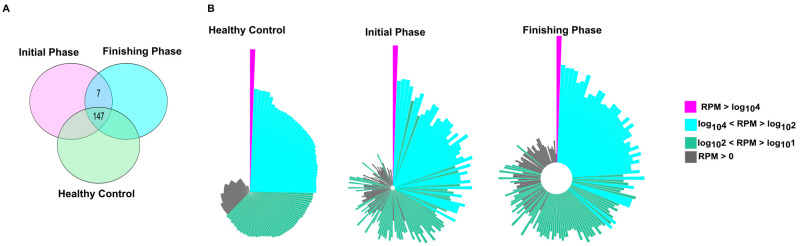 Figure 1
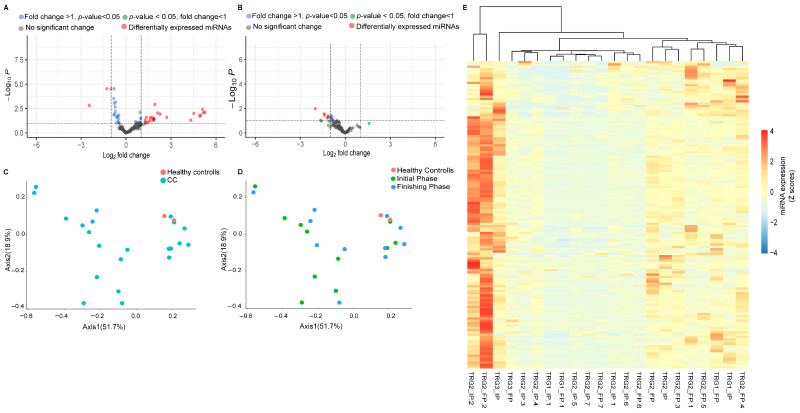 Figure 2
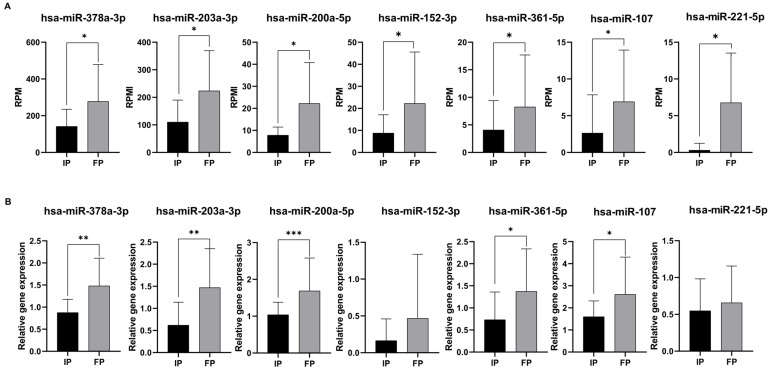 Figure 3
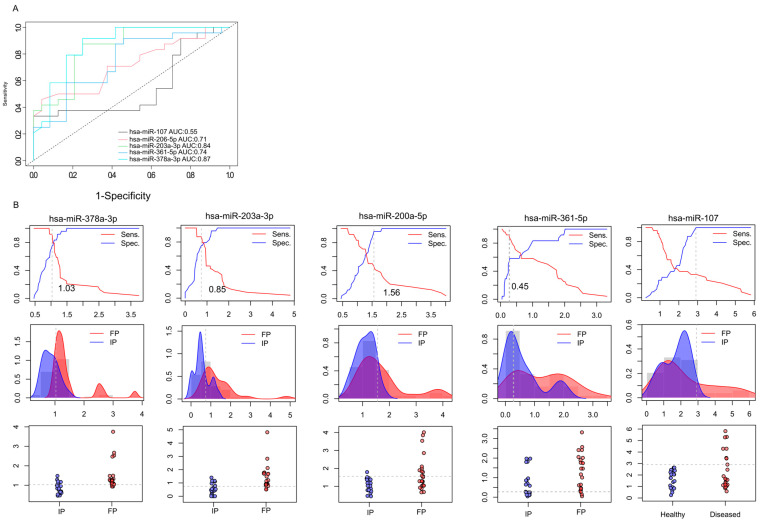 Figure 4
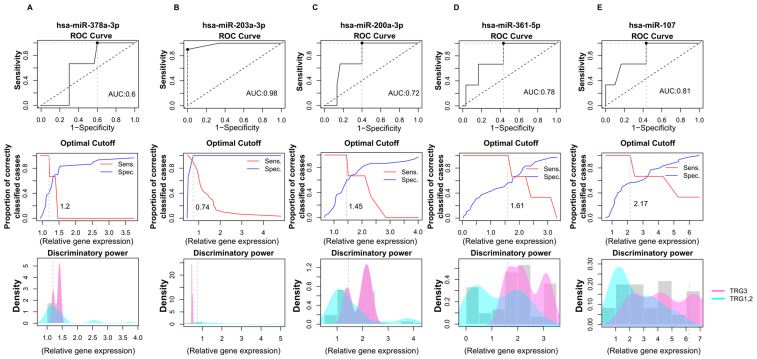 Figure 5
 Figure 6
Peer Reviews
No public reviews on file for this paper yet. If you reviewed it on a platform where reviews are public (OpenReview, ICLR, NeurIPS, ICML), you can paste yours below so the community can read it here.
Videos
No videos yet. Explain this paper in a talk, walkthrough, or lecture? Add one.
Taxonomy
TopicsMicroRNA in disease regulation · Salivary Gland Disorders and Functions · Cancer-related molecular mechanisms research