Artificial Intelligence Reveals Nature: Functional Parallels Between a Designed and a Natural Peptide
Jiashu Wang, Thomas David Daniel Kazmirchuk, Maryam Hajikarimlou, Mustafa Al-Gafari, Sarah Takallou, Houman Moteshareie, Frank Dehne, Bahram Samanfar, Mohan Babu, Taha Azad, Ashkan Golshani

TL;DR
A natural peptide from canola is found to function like an AI-designed peptide that targets the SARS-CoV-2 virus.
Contribution
The study shows AI-designed peptides can help identify natural peptides with similar antiviral functions.
Findings
A natural peptide from Brassica napus shows high functional similarity to an AI-generated peptide targeting SARS-CoV-2 RBD.
The natural peptide binds to the RBD region and disrupts its interaction with ACE2, similar to the AI-generated peptide.
Molecular docking and inhibition assays support the functional parallels between the two peptides.
Abstract
Natural peptides derived from plants have been an important source of medical substances for several decades. Due to their mechanism of action, chemical potential, and favourable side effect profile, these peptides represent a safer alternative to synthetic pharmaceutical treatments. In this study, we report the discovery of a natural peptide derived from the Brassica napus (Canola) proteome that exhibits high functional similarity to an artificial intelligence (AI)-generated peptide that is designed to bind to the severe acute respiratory syndrome coronavirus 2 (SARS-CoV-2) spike 1 (S1) protein receptor-binding domain (RBD) region. The results of a series of experiments including molecular docking simulations, as well as binding and inhibition assays suggest that the natural peptide exhibits functions similar to those of the AI-generated peptide in binding to the RBD region and…
Genes, proteins, chemicals, diseases, species, mutations and cell lines named across the full text — each resolved to its canonical identifier and authoritative record.
Click any figure to enlarge with its caption.
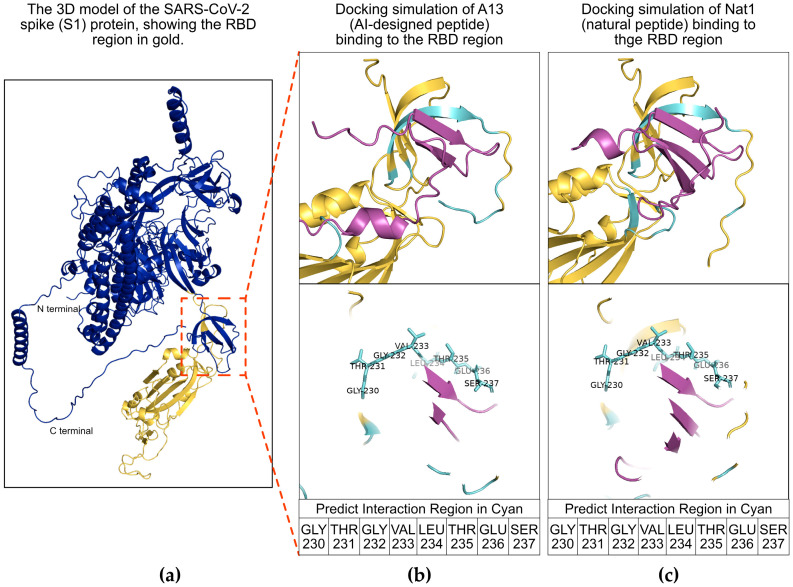 Figure 1
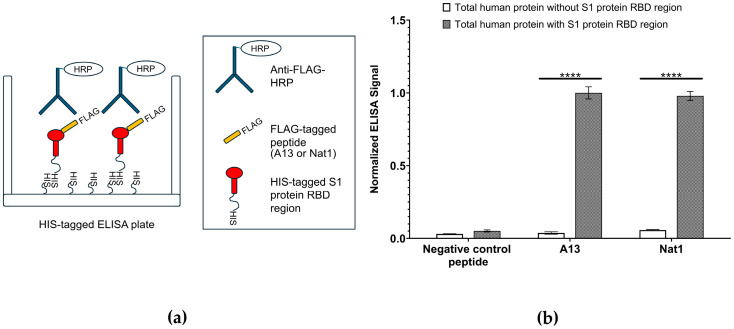 Figure 2
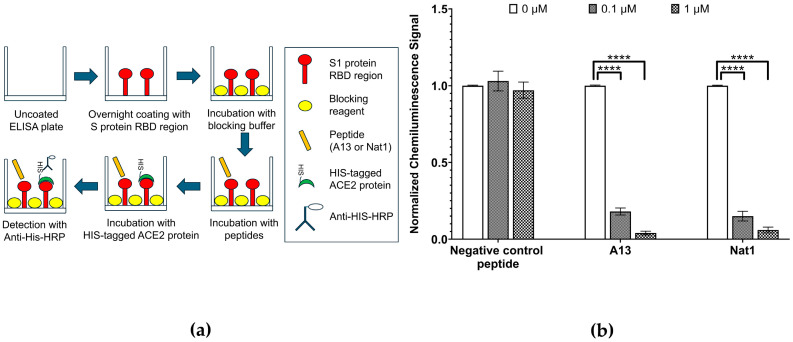 Figure 3
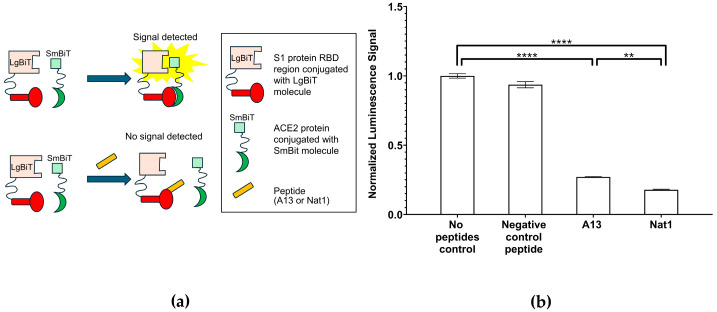 Figure 4
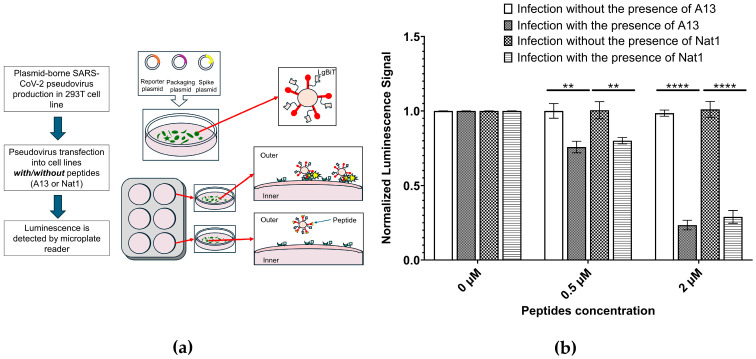 Figure 5
Peer Reviews
No public reviews on file for this paper yet. If you reviewed it on a platform where reviews are public (OpenReview, ICLR, NeurIPS, ICML), you can paste yours below so the community can read it here.
Videos
No videos yet. Explain this paper in a talk, walkthrough, or lecture? Add one.
Taxonomy
TopicsProtein Hydrolysis and Bioactive Peptides · Computational Drug Discovery Methods · Machine Learning in Bioinformatics