Epigenetic Clock Analysis of Sex Chromosome Aneuploidies
Joshua Zhang, Jordan Teoli, Benjamin Rey, Cristina Vieira, Jean‐François Lemaitre, Ingrid Plotton, Gabriel A. B. Marais, Steve Horvath

TL;DR
This study explores how sex chromosome aneuploidies affect epigenetic aging using DNA methylation clocks, finding that 47,XXY individuals show slower aging in newer clocks.
Contribution
The study is the first to compare multiple DNA methylation clocks in sex chromosome aneuploidies to assess differential aging effects.
Findings
Next-generation clocks show lower age acceleration in 47,XXY compared to typical karyotypes.
Skin & Blood clock indicates higher age acceleration in 47,XXY and 47,XYY.
47,XXY individuals have higher naïve CD8+ T cells, suggesting reduced immunosenescence.
Abstract
Sex differences in lifespan are pervasive in nature and in humans, yet the contribution of sex chromosomes to DNA methylation–linked aging remains incompletely defined. We leveraged human sex chromosome aneuploidies to test whether X and Y chromosome dosage influences epigenetic aging, quantified with DNA methylation (DNAm) clocks. In whole blood from individuals with karyotypes 46,XX (female) and 46,XY, 47,XXY, 47,XYY (male), we measured epigenetic age and age acceleration using a first‐generation clock (Skin & Blood) and two next‐generation clocks (GrimAge and DunedinPACE), and examined the components underlying GrimAge. Next‐generation clocks indicated lower epigenetic age acceleration and a slower pace of aging in 47,XXY versus 46,XY. In GrimAge, a weighted sum of DNAm surrogates, higher DNAmLeptin (negatively weighted) and lower DNAmPACKYRS (positively weighted smoking proxy) in…
Genes, proteins, chemicals, diseases, species, mutations and cell lines named across the full text — each resolved to its canonical identifier and authoritative record.
Click any figure to enlarge with its caption.
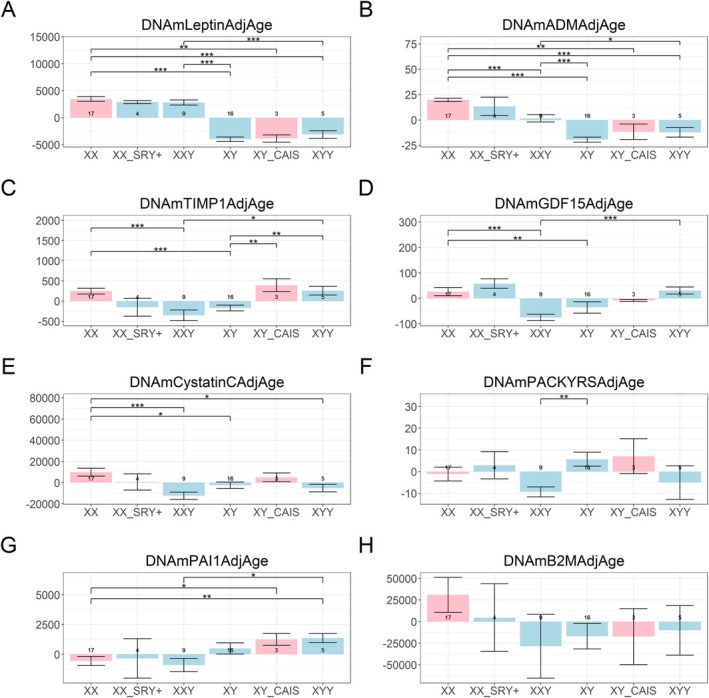 Figure 1
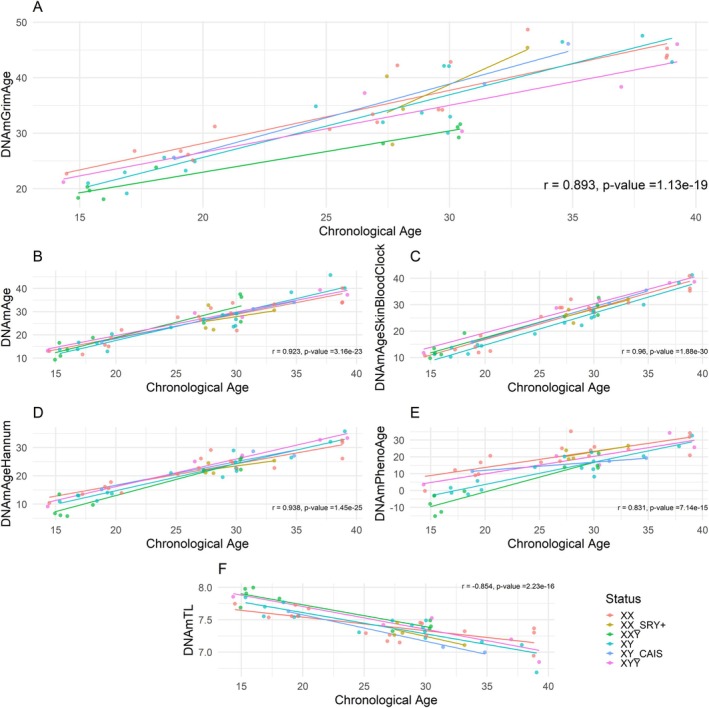 Figure 2
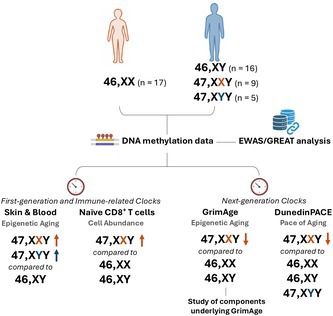 Figure 3
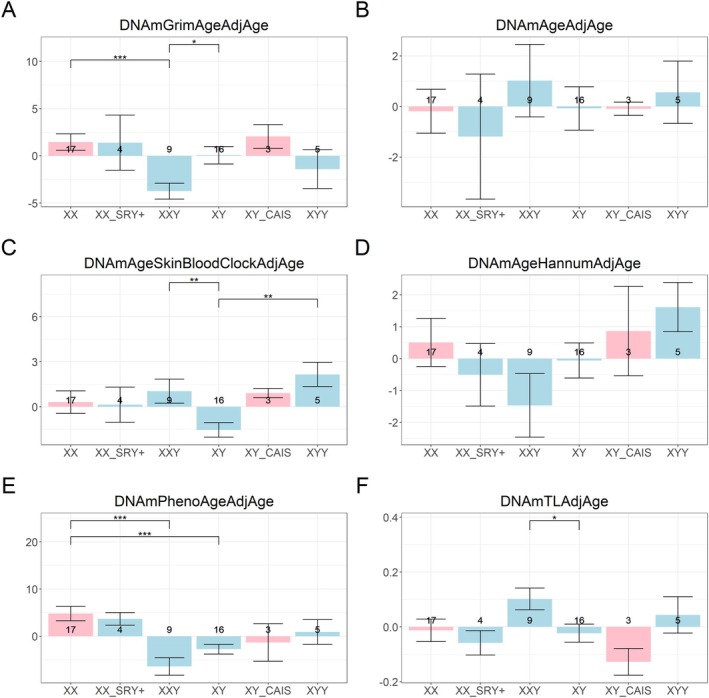 Figure 4
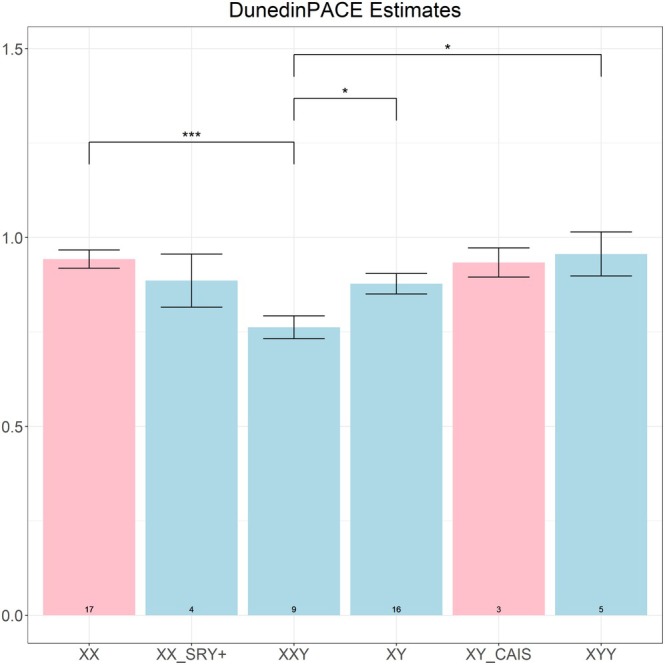 Figure 5
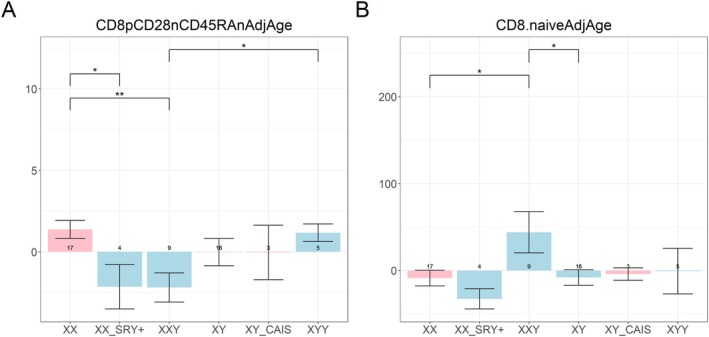 Figure 6
Peer Reviews
No public reviews on file for this paper yet. If you reviewed it on a platform where reviews are public (OpenReview, ICLR, NeurIPS, ICML), you can paste yours below so the community can read it here.
Videos
No videos yet. Explain this paper in a talk, walkthrough, or lecture? Add one.
Taxonomy
TopicsEpigenetics and DNA Methylation · Genetics and Neurodevelopmental Disorders · Genetic Syndromes and Imprinting