Decoding heart failure subtypes with neural networks via differential explanation analysis
Mariano Ruz Jurado, David Rodriguez Morales, Elijah Genetzakis, Fatemeh Behjati Ardakani, Lukas Zanders, Ariane Fischer, Florian Buettner, Marcel H Schulz, Stefanie Dimmeler, David John

TL;DR
This paper introduces a new method using neural networks and explainable AI to identify genes linked to different types of heart failure, offering insights into their molecular mechanisms.
Contribution
A novel method to identify differentially explained genes (DXGs) using neural networks and XAI for heart failure subtype analysis.
Findings
DXGs outperform traditional methods in identifying heart failure subtype-specific pathways.
The method provides new insights into molecular mechanisms underlying different types of heart failure.
The approach enhances interpretability of neural networks in single-cell transcriptomics.
Abstract
Single-cell transcriptomics offers critical insights into the molecular mechanisms of heart failure (HF) with reduced or preserved ejection fraction. However, understanding these mechanisms is hindered by the growing complexity of single-cell data and the difficulty in unmasking meaningful differential gene signatures among HF types. Machine learning, particularly deep neural networks (NNs), address these challenges by learning transcriptional patterns, reconstructing expression profiles and effectively classifying cells but often lacks interpretability. Recent advances in explainable AI (XAI) offer tools to clarify model decisions. Yet pinpointing differentially regulated genes with these tools remains challenging. We introduce a novel method to identify differentially explained genes (DXGs) based on importance scores derived from custom-built NNs. We highlight the superiority of DXGs…
Genes, proteins, chemicals, diseases, species, mutations and cell lines named across the full text — each resolved to its canonical identifier and authoritative record.
Click any figure to enlarge with its caption.
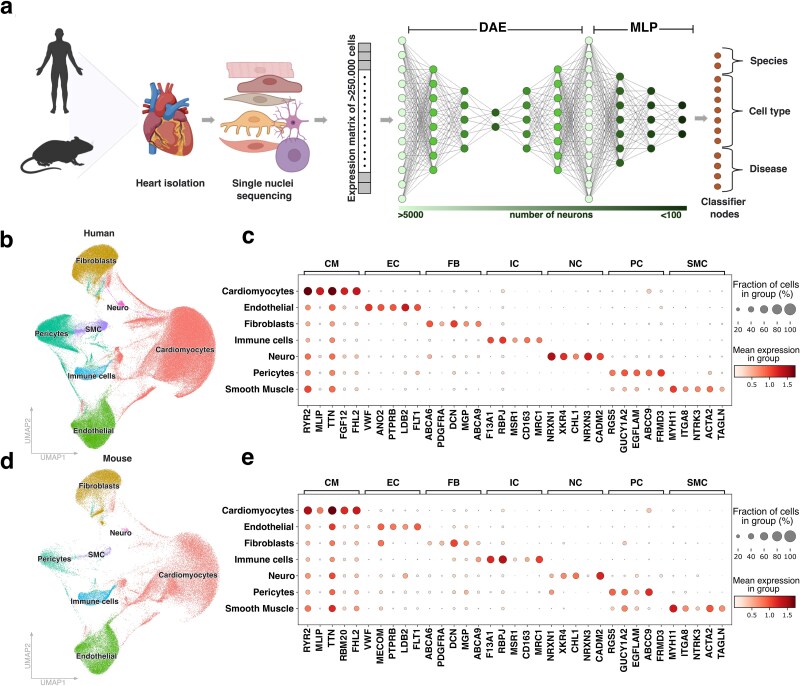 Figure 1
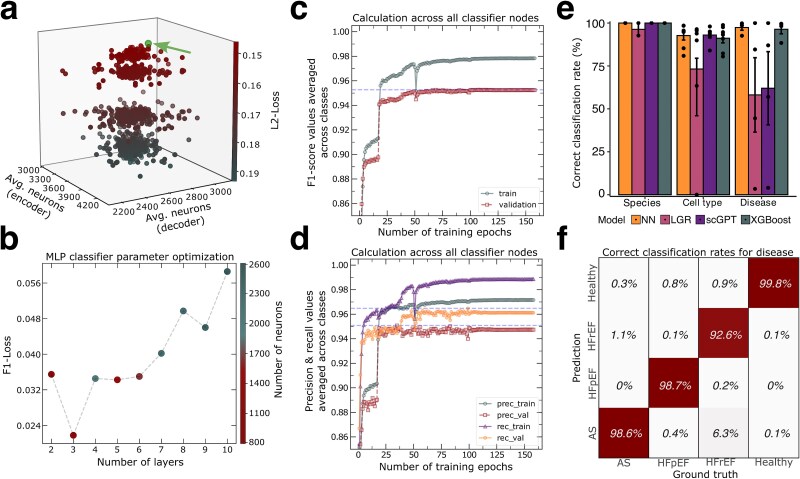 Figure 2
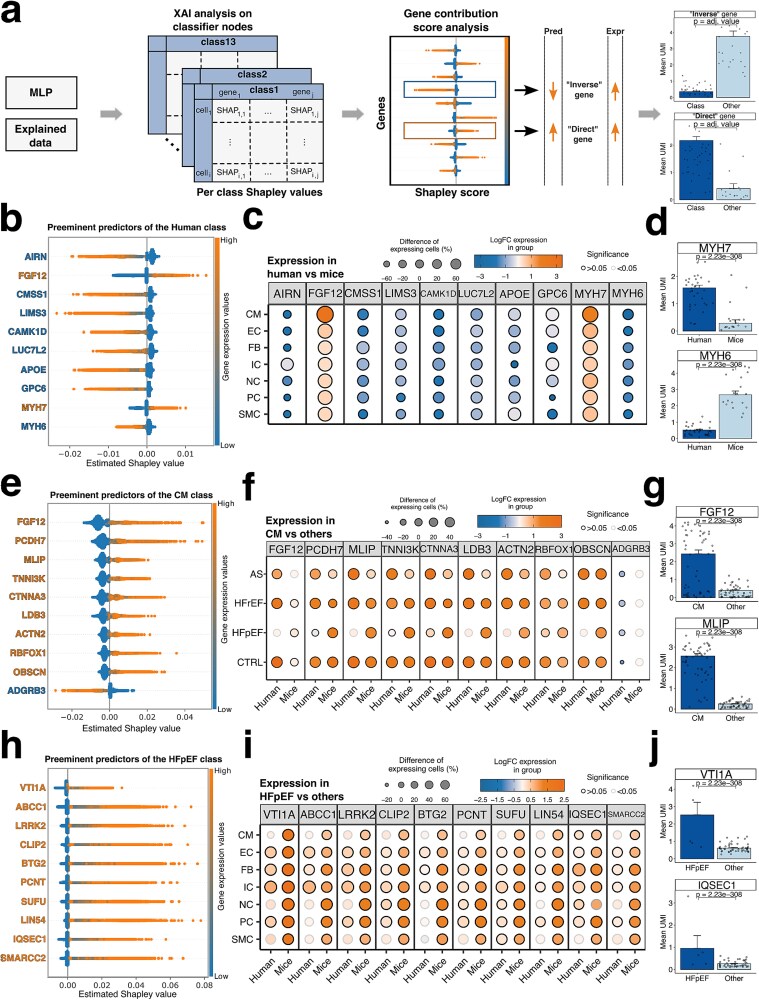 Figure 3
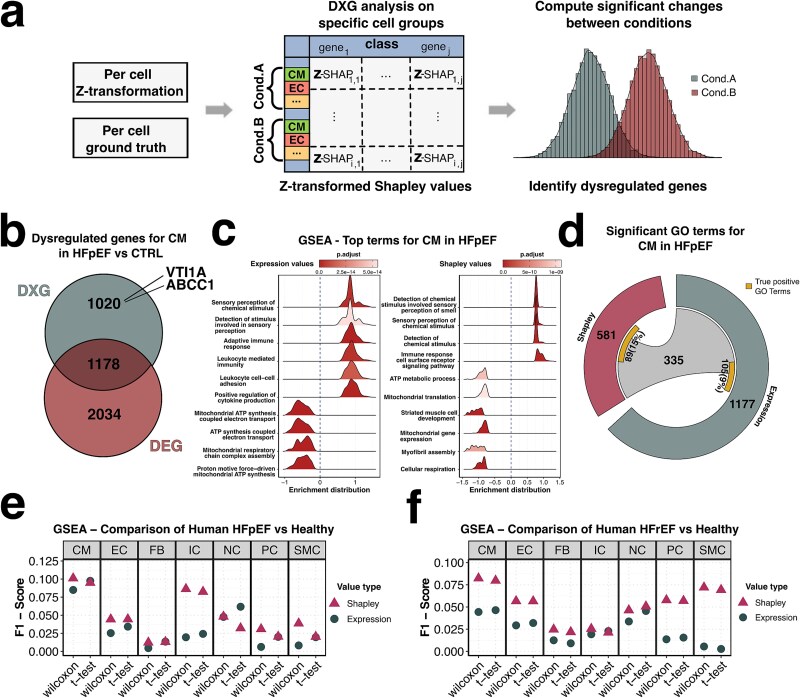 Figure 4
Peer Reviews
No public reviews on file for this paper yet. If you reviewed it on a platform where reviews are public (OpenReview, ICLR, NeurIPS, ICML), you can paste yours below so the community can read it here.
Videos
No videos yet. Explain this paper in a talk, walkthrough, or lecture? Add one.
Taxonomy
TopicsSingle-cell and spatial transcriptomics · Cardiac Fibrosis and Remodeling · Bioinformatics and Genomic Networks