Genomic prediction in a small barley population can benefit from training on related populations
Cathrine Kiel Skovbjerg, Pernille Sarup, Ellen Margrethe Wahlström, Jens Due Jensen, Lotte Olesen, Jihad Orabi, Just Jensen, Guillaume P Ramstein, Ahmed Jahoor

TL;DR
This study shows that using data from related barley populations can improve predictions in new breeding programs, especially in the early stages.
Contribution
The study introduces a method to enhance genomic prediction accuracy in small barley populations by leveraging data from related populations.
Findings
Prediction accuracy in a new barley breeding program improved when data from external populations were included in early stages.
Multivariate models performed worse than univariate models for multipopulation genomic prediction when data were sparse.
Multipopulation genomic prediction was most beneficial in the initial phases of new breeding programs.
Abstract
Genomic prediction (GP) has shown to be a valuable tool for genetic improvement in breeding programs but requires large training populations in order to build robust models. This is difficult to obtain for newly established breeding programs. Here, we aimed to overcome this challenge by combining datasets from 4 different barley breeding programs, utilizing up to 12 years of data to increase prediction accuracy in a more recently established 6-rowed winter (6RW) barley breeding program. By allowing data to accumulate in a breeding program as the years progress, we investigated when GP accuracy in 6RW benefitted from external populations. To do this, we focused on several parameters: training population size, choice of model for multipopulation GP (univariate versus multivariate), the key trait under investigation (grain yield, plant height, or rust resistance), and genetic distance…
Genes, proteins, chemicals, diseases, species, mutations and cell lines named across the full text — each resolved to its canonical identifier and authoritative record.
Click any figure to enlarge with its caption.
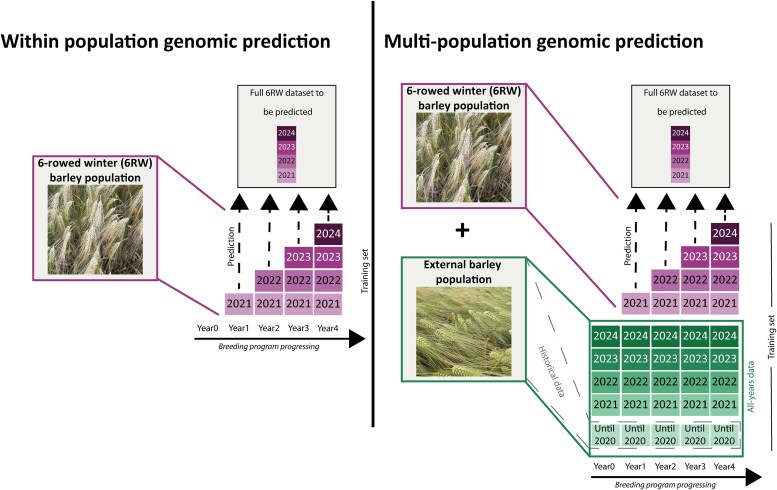 Figure 1
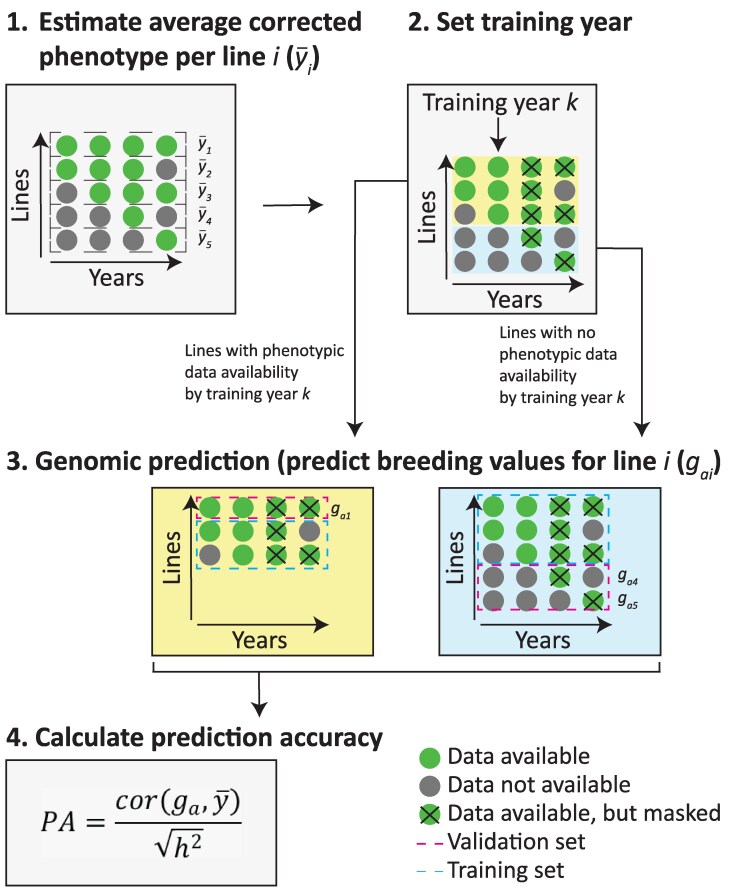 Figure 2
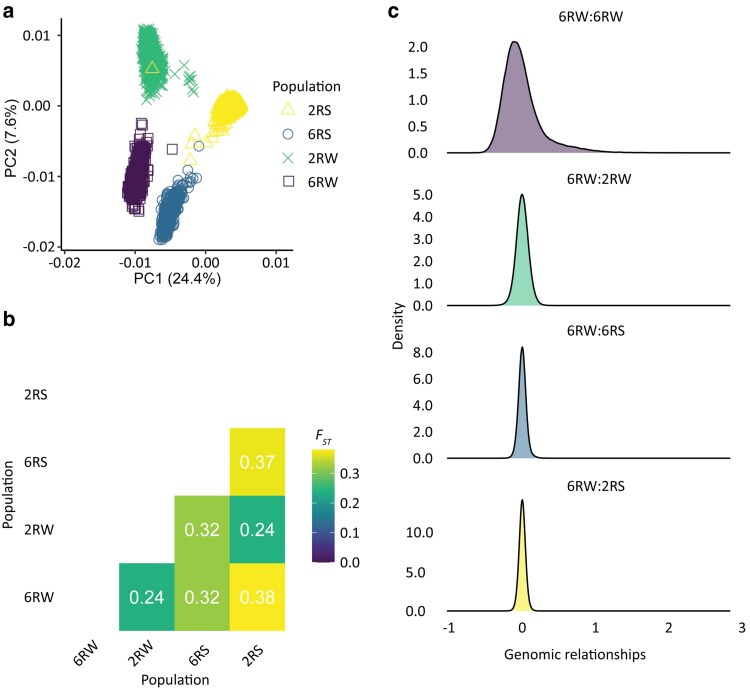 Figure 3
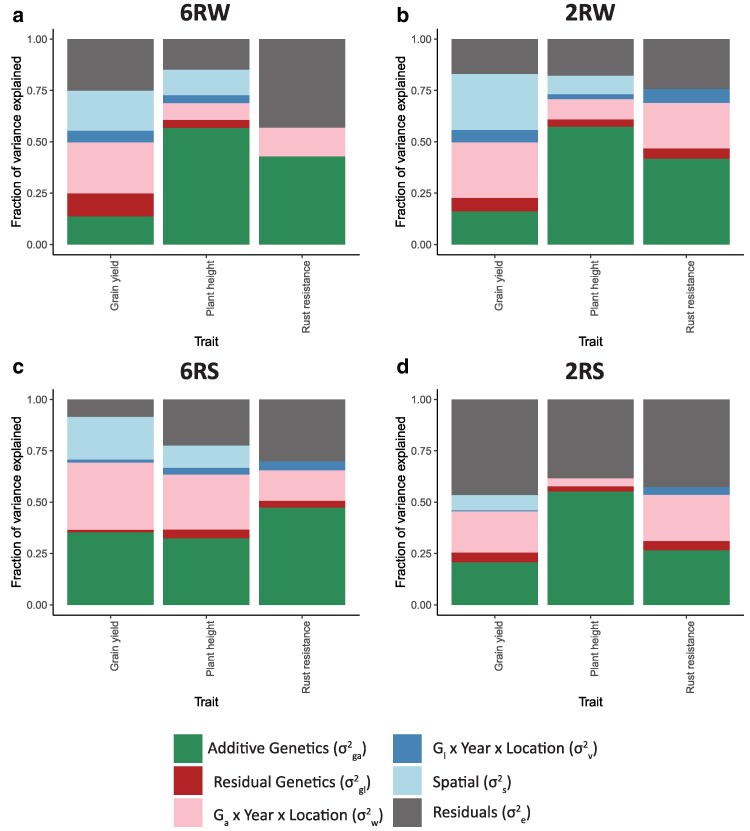 Figure 4
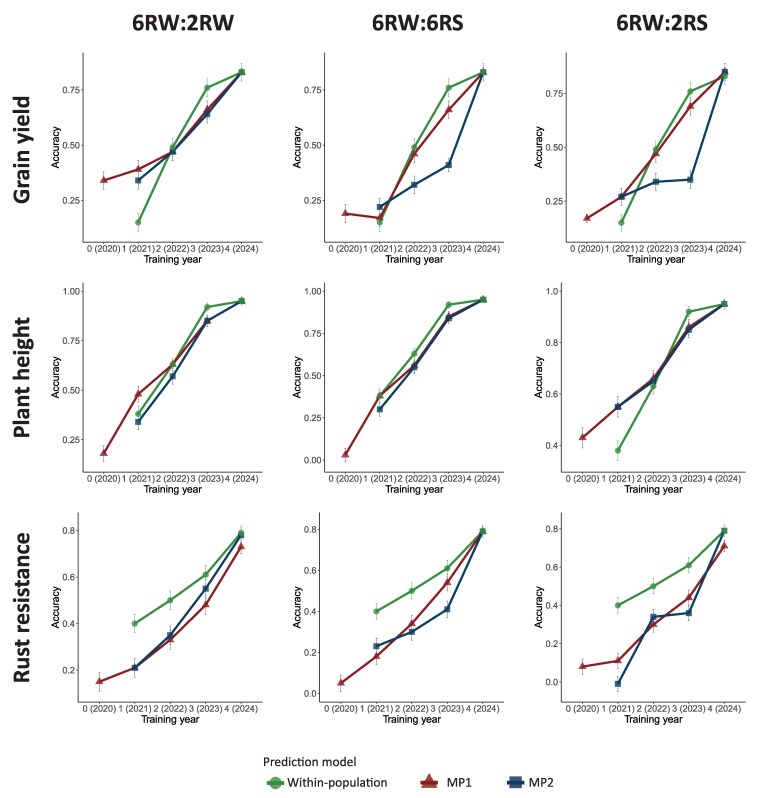 Figure 5
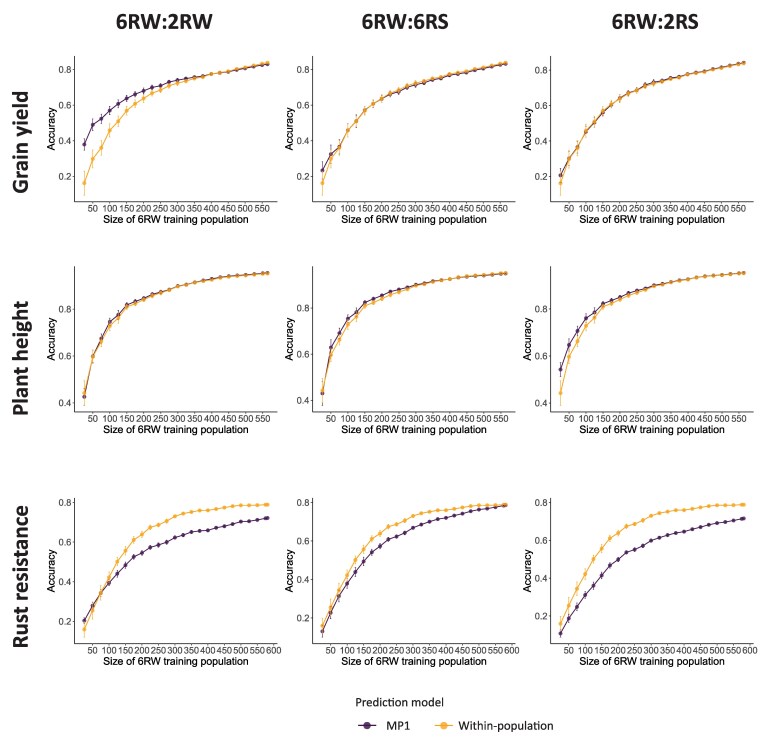 Figure 6
Peer Reviews
No public reviews on file for this paper yet. If you reviewed it on a platform where reviews are public (OpenReview, ICLR, NeurIPS, ICML), you can paste yours below so the community can read it here.
Videos
No videos yet. Explain this paper in a talk, walkthrough, or lecture? Add one.
Taxonomy
TopicsGenetic and phenotypic traits in livestock · Genetic Mapping and Diversity in Plants and Animals · Genetics and Plant Breeding