Early structural valve deterioration of a pulmonary position Inspiris Resilia valve requiring redo pulmonary and tricuspid valve replacement
Akito Inoue, Ryohei Ushioda, Hidenobu Akamatsu, Tasuku Kawarabayashi, Jeonga Lee, Jun Maruoka, Kentaro Shirakura, Yuki Setogawa, Ryo Okubo, Hiroyuki Miyamoto, Aina Hirofuji, Shogo Takahashi, Daisuke Takeyoshi, Shingo Kunioka, Hiroyuki Kamiya

TL;DR
A woman needed redo valve surgery due to early failure of a pulmonary valve, suggesting larger valves may prevent future issues.
Contribution
The paper highlights the potential benefit of using larger prostheses to prevent early structural valve deterioration.
Findings
Early structural valve deterioration was observed in a 19 mm Inspiris Resilia valve.
Redo surgery with larger valves improved outcomes and preserved future treatment options.
Tricuspid and pulmonary valve dysfunction led to severe regurgitation requiring intervention.
Abstract
We report a 50-year-old woman with pulmonary and tricuspid valve regurgitation who required redo pulmonary and tricuspid valve replacement (PVR, TVR). At age 8, she underwent right ventricular outflow tract reconstruction for pulmonary stenosis, and at 44 years she had PVR with a 19 mm Inspiris Resilia bioprosthesis and tricuspid annuloplasty with a 28 mm Physio ring. Three years later, she presented with palpitations and syncope. Echocardiography revealed severe tricuspid regurgitation and moderate pulmonary regurgitation due to dysfunction of a prosthetic leaflet. Redo PVR with a 29 mm Inspiris Resilia valve and TVR with a 27 mm Mitris valve was performed. Early structural valve deterioration of the initial Inspiris prosthesis was suspected. Our experience suggests that using a larger prosthesis may mitigate early degeneration and preserve the option of future transcatheter PVR.
Genes, proteins, chemicals, diseases, species, mutations and cell lines named across the full text — each resolved to its canonical identifier and authoritative record.
Click any figure to enlarge with its caption.
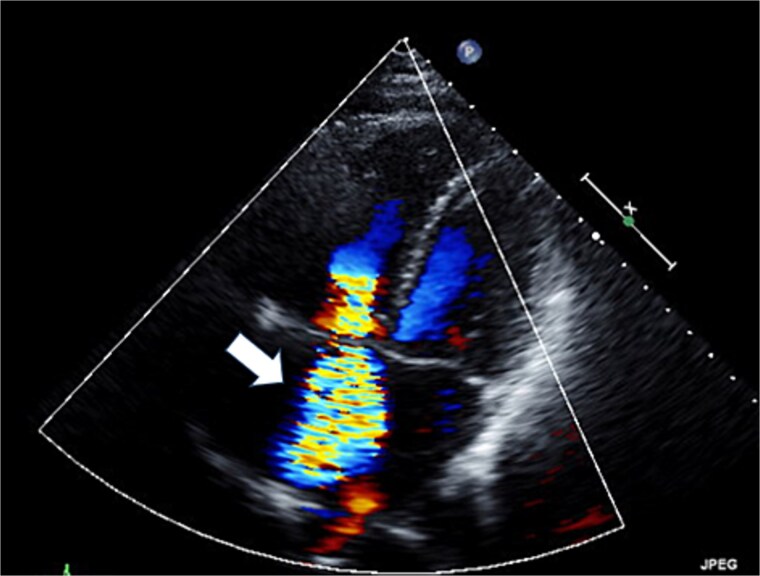 Figure 1
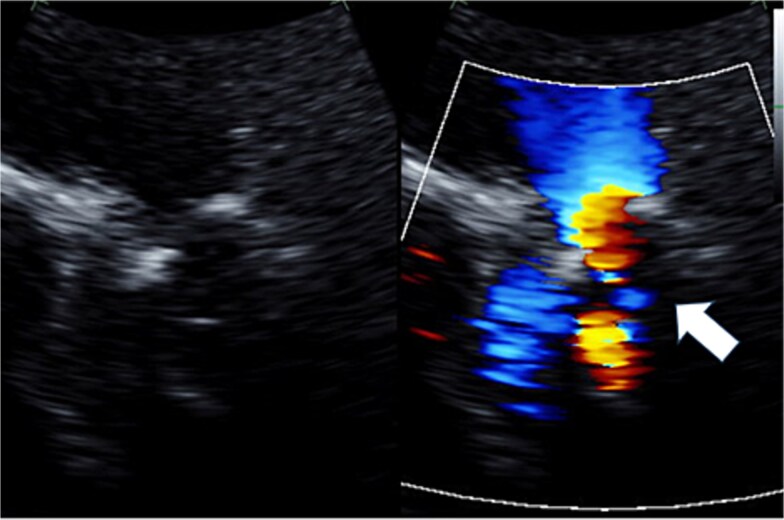 Figure 2
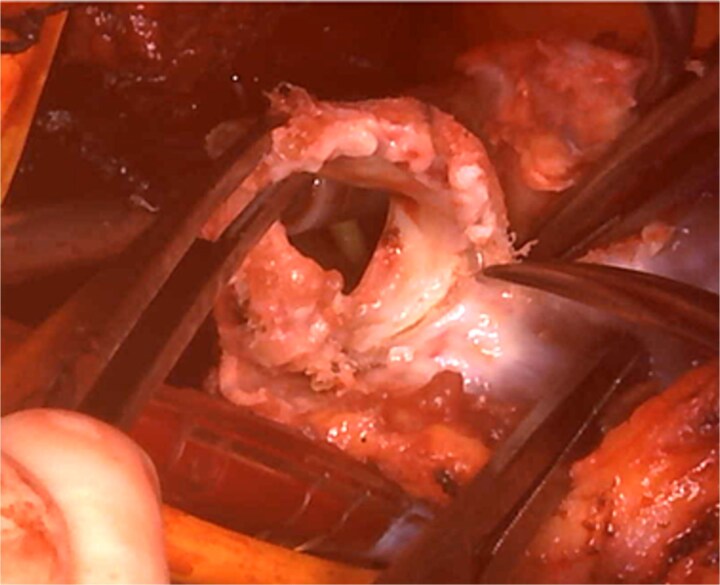 Figure 3
Peer Reviews
No public reviews on file for this paper yet. If you reviewed it on a platform where reviews are public (OpenReview, ICLR, NeurIPS, ICML), you can paste yours below so the community can read it here.
Videos
No videos yet. Explain this paper in a talk, walkthrough, or lecture? Add one.
Taxonomy
TopicsCongenital Heart Disease Studies · Cardiac Valve Diseases and Treatments · Aortic Disease and Treatment Approaches