Association Between Stem Anteversion and Femoral Rotation in Endoprosthetic Proximal Femoral Replacement: Insights from Two Different Prosthetic Designs
Tomotaka Yoshida, Hyonmin Choe, Yutaka Nezu, Yusuke Kawabata, Keiju Saito, Masanobu Takeyama, Akira Shiga, Shintaro Fujita, Naotsugu Nakajima, Naomi Kobayashi, Ken Kumagai, Hiroyuki Ike, Yutaka Inaba

TL;DR
This study compares two prosthetic systems for femoral replacement and their effects on stem placement angles and patient outcomes.
Contribution
The study identifies differences in stem anteversion and femoral rotation between two prosthetic designs and their impact on postoperative quality of life.
Findings
The Global Modular Replacement System showed less variability in anatomical stem anteversion compared to the Kyocera system.
Anatomical stem anteversion was negatively correlated with femoral rotation, while femoral rotation was positively correlated with functional stem anteversion.
Musculoskeletal Tumor Society scores correlated with functional stem anteversion and femoral resection length but not with anatomical stem anteversion alone.
Abstract
Background/Objective: Endoprosthetic proximal femoral replacement is a reconstructive procedure for preserving ambulatory function following tumor resection. Different prosthetic systems for endoprosthetic proximal femoral replacement may result in different stem placement techniques, especially regarding the anteversion angle of the stem. The aim of this study was to evaluate femoral rotation and stem anteversion following endoprosthetic proximal femoral replacement using two different prosthetic systems, and to investigate their influence on postoperative quality of life. Methods: We retrospectively reviewed 30 patients who underwent endoprosthetic proximal femoral replacement at our institution between 2008 and 2022. The evaluated parameters included patient demographics, anatomical and functional stem anteversion, femoral rotation, femoral resection length, implant type, and…
Genes, proteins, chemicals, diseases, species, mutations and cell lines named across the full text — each resolved to its canonical identifier and authoritative record.
Click any figure to enlarge with its caption.
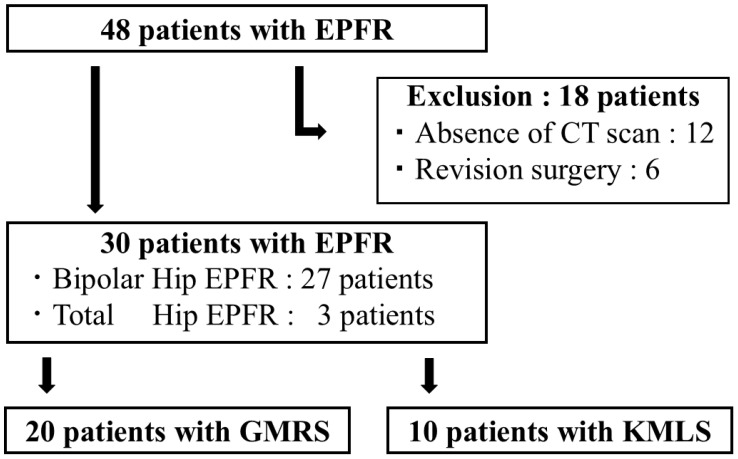 Figure 1
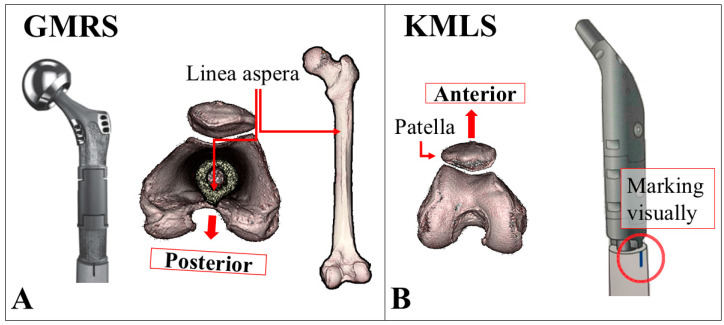 Figure 2
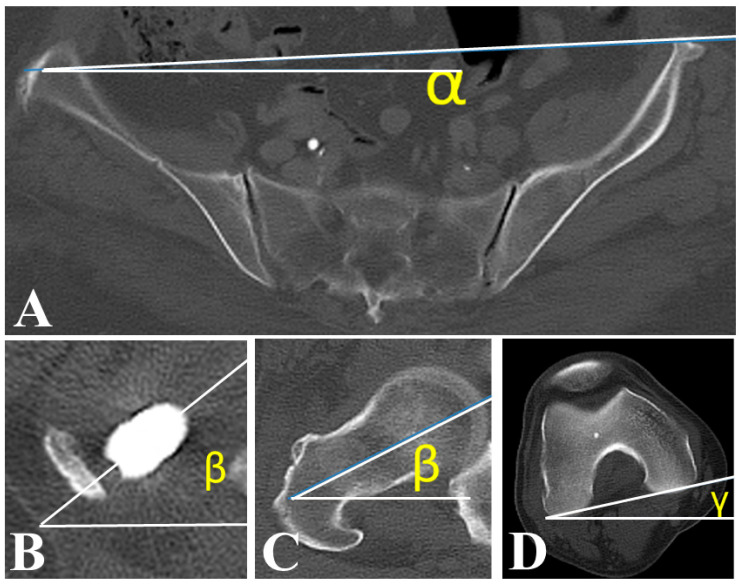 Figure 3
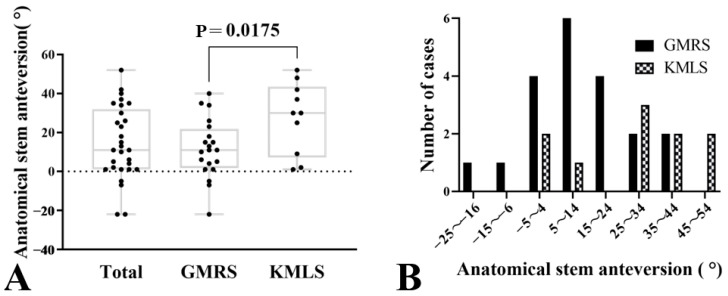 Figure 4
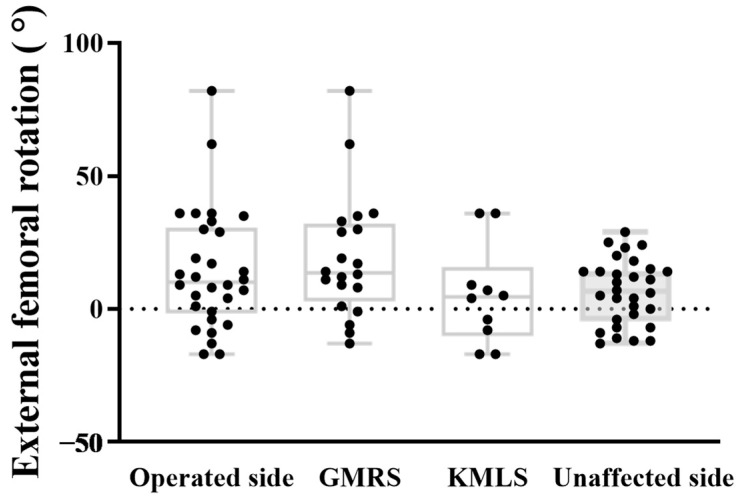 Figure 5
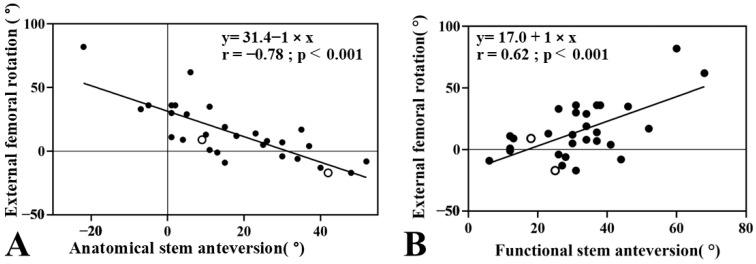 Figure 6
Peer Reviews
No public reviews on file for this paper yet. If you reviewed it on a platform where reviews are public (OpenReview, ICLR, NeurIPS, ICML), you can paste yours below so the community can read it here.
Videos
No videos yet. Explain this paper in a talk, walkthrough, or lecture? Add one.
Taxonomy
TopicsOrthopaedic implants and arthroplasty · Sarcoma Diagnosis and Treatment · Total Knee Arthroplasty Outcomes