Fifty Shades of PSMA-Avid Rib Lesions: A Comprehensive Review
Amirreza Shamshirgaran, Mohammad Hadi Samadi, Michael Saeed, Sara Harsini, Pegah Sahafi, Ghasemali Divband, Gholamreza Mohammadi, Narjess Ayati, Ramin Sadeghi, Alessio Rizzo, Giorgio Treglia, Emran Askari

TL;DR
This paper reviews how to distinguish cancerous from non-cancerous rib lesions seen in prostate cancer scans, aiming to improve accurate diagnosis and treatment decisions.
Contribution
The paper introduces a clinical decision tree to differentiate benign from metastatic rib lesions in prostate cancer using PSMA imaging characteristics.
Findings
Solitary rib lesions in low-risk patients are often benign, especially in anterior/lateral rib regions.
Metastatic lesions are more likely to be multiple, show cortical destruction on CT, and occur in high-risk patients.
18F-PSMA-1007 is more prone to unspecific uptake in ribs compared to 68Ga-PSMA-11.
Abstract
Prostate cancer often spreads to the bones, and the ribs are a frequent site of suspicious findings on advanced scans. New imaging methods are very sensitive, but they sometimes show spots in the ribs that look like cancer even when they are not. This creates uncertainty for doctors and patients, since a mistaken diagnosis of rib metastasis can change treatment decisions and lead to unnecessary therapies. Our review gathers the current knowledge about these rib findings and explains how to tell apart true cancer from harmless changes, such as old fractures or other benign conditions. By highlighting patterns related to scan intensity, lesion number, location, patient risk, and follow-up results, we suggest a practical approach to interpretation. This guidance may help clinicians avoid false alarms, ensure accurate staging, and make treatment more personalized for men with prostate…
Genes, proteins, chemicals, diseases, species, mutations and cell lines named across the full text — each resolved to its canonical identifier and authoritative record.
Click any figure to enlarge with its caption.
 Figure 1
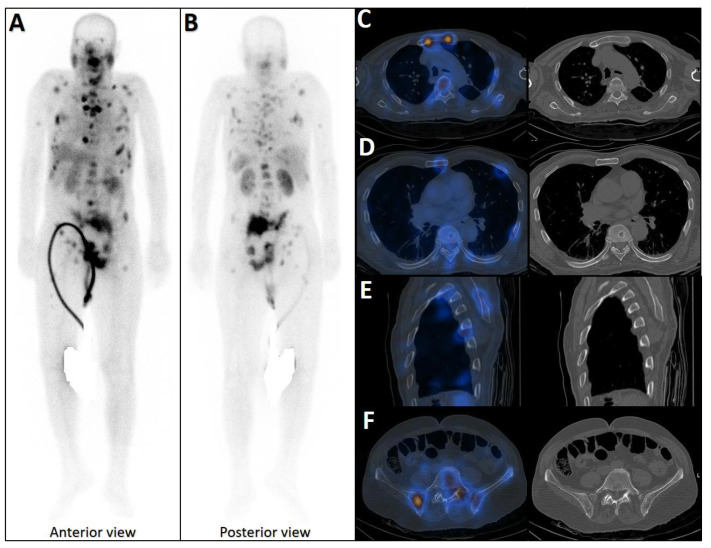 Figure 2
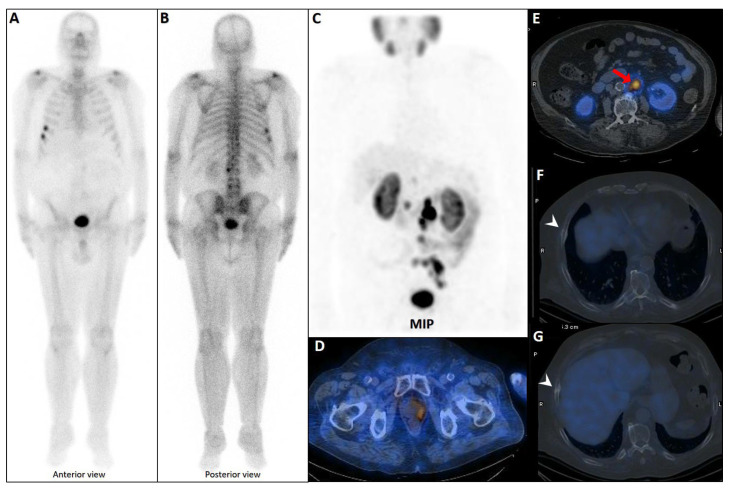 Figure 3
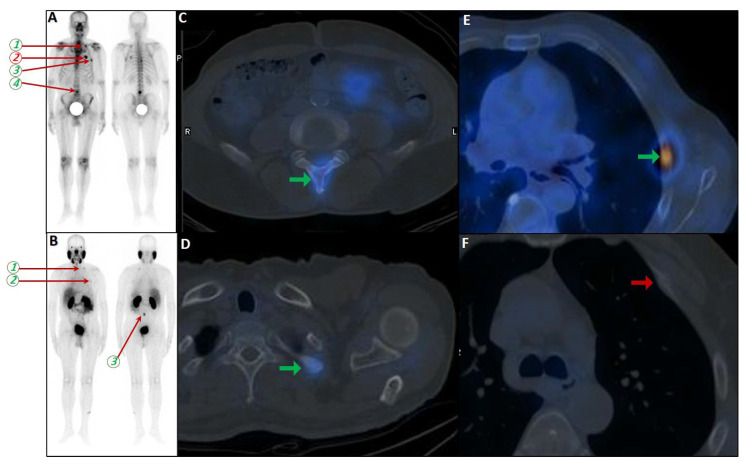 Figure 4
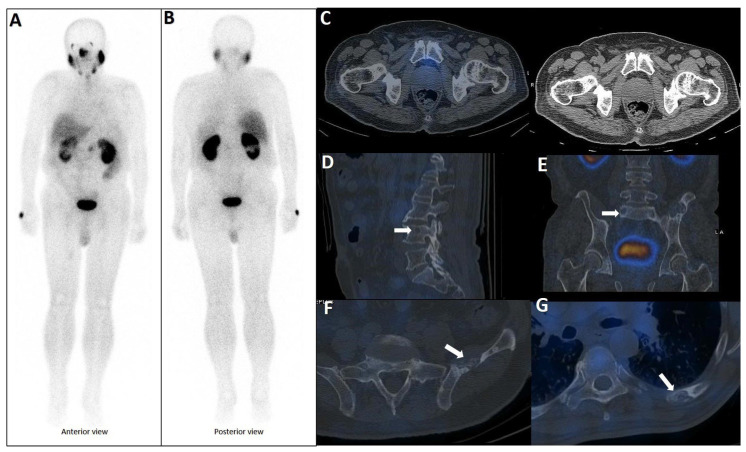 Figure 5
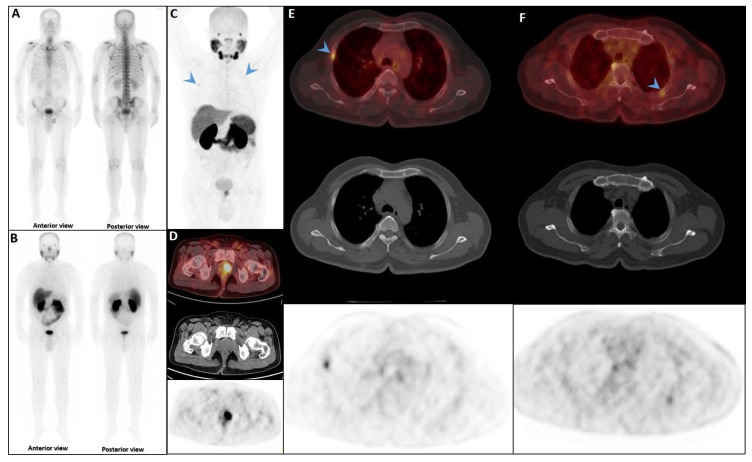 Figure 6
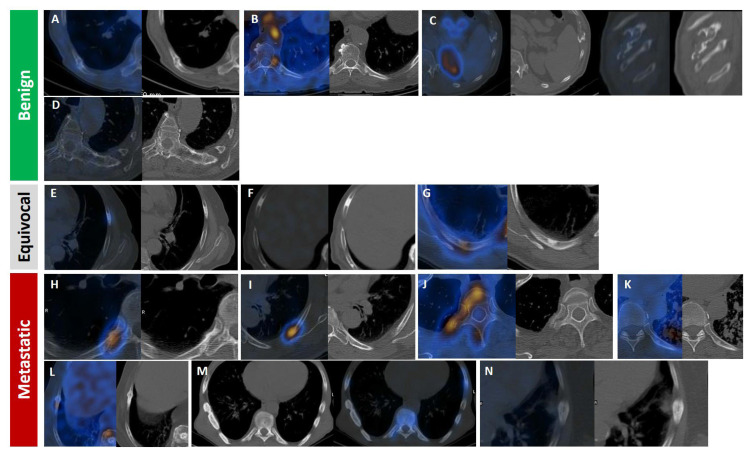 Figure 7
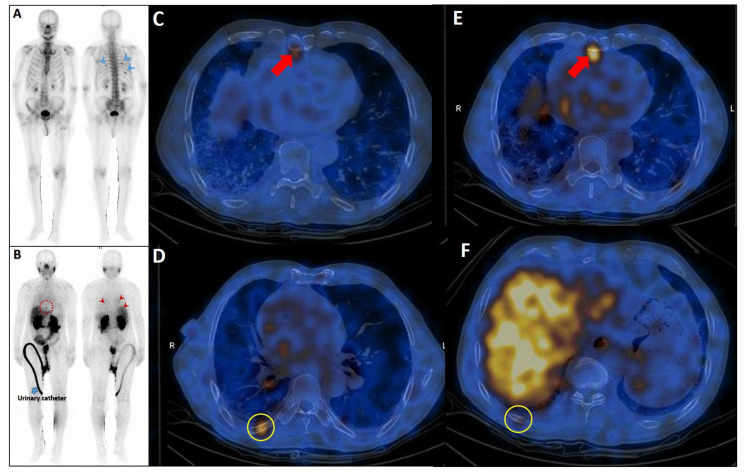 Figure 8
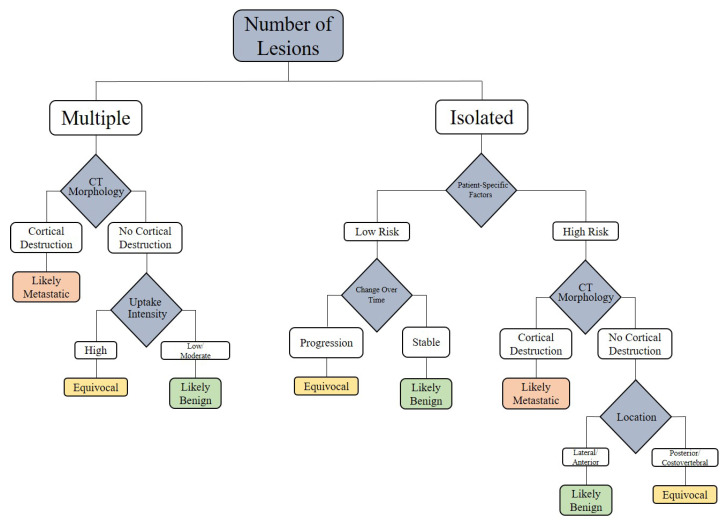 Figure 9
Peer Reviews
No public reviews on file for this paper yet. If you reviewed it on a platform where reviews are public (OpenReview, ICLR, NeurIPS, ICML), you can paste yours below so the community can read it here.
Videos
No videos yet. Explain this paper in a talk, walkthrough, or lecture? Add one.
Taxonomy
TopicsProstate Cancer Treatment and Research · Cancer Diagnosis and Treatment · Peptidase Inhibition and Analysis