Oncological Outcomes of De-Escalation of Axillary Surgery in Breast Cancer Patients at a Referral Cancer Center in Colombia
Sandra Esperanza Díaz-Casas, Andres Augusto Reyes-Agudelo, Oscar Alberto Vergara-Gamarra, Ximena Briceño-Morales, Luis Guzmán-AbiSaab, Daniel Contreras-Perez, Carlos Lehmann-Mosquera, Javier Ángel-Aristizábal, Mauricio García-Mora, Carlos Duarte-Torres, Iván Mariño-Lozano

TL;DR
This study shows that reducing axillary surgery in breast cancer patients in Colombia does not harm oncological outcomes and is safe for certain subtypes.
Contribution
The study provides real-world evidence on the safety and effectiveness of de-escalated axillary surgery in a middle-income country setting.
Findings
SLNB had a 99.3% identification rate and was oncologically safe in both upfront and post-chemotherapy settings.
Triple-negative and luminal B HER2-negative subtypes were most strongly linked to recurrence and mortality.
Omitting ALND was safe in 56% of upfront SLNB and 86.8% of post-NACT patients with no axillary recurrence.
Abstract
This research assessed the effect of de-escalating axillary surgery on oncologic outcomes in breast cancer patients treated from 2013 to 2023 at the Instituto Nacional de Cancerologia (INC) in Colombia, in a real-world clinical practice setting in a middle income country. The applicability of the sentinel lymph node biopsy (SLND) was evaluated in 643 patients who were undergoing SLND as initial surgery and 144 patients who were undergoing SLND after neoadjuvant chemotherapy. The final results showed that oncological outcomes are related to biological subtypes, tumor size and histological grade. Background/Objectives: De-escalation of axillary surgery with sentinel lymph node biopsy (SLNB) has been shown to decrease morbidity in breast cancer patients without affecting oncological outcomes. However, there are very few reports on its applicability in real-world clinical practice,…
Genes, proteins, chemicals, diseases, species, mutations and cell lines named across the full text — each resolved to its canonical identifier and authoritative record.
Click any figure to enlarge with its caption.
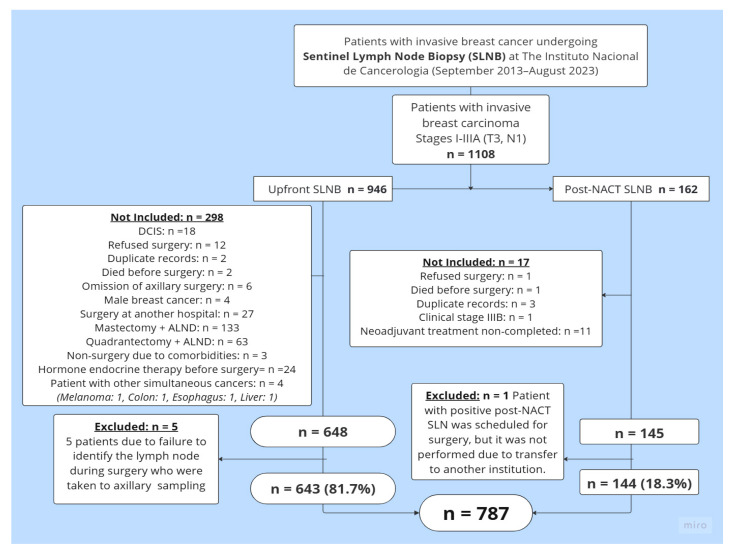 Figure 1
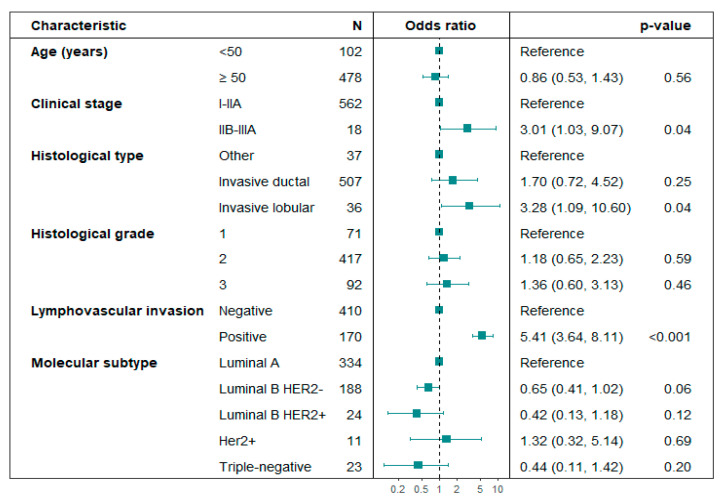 Figure 2
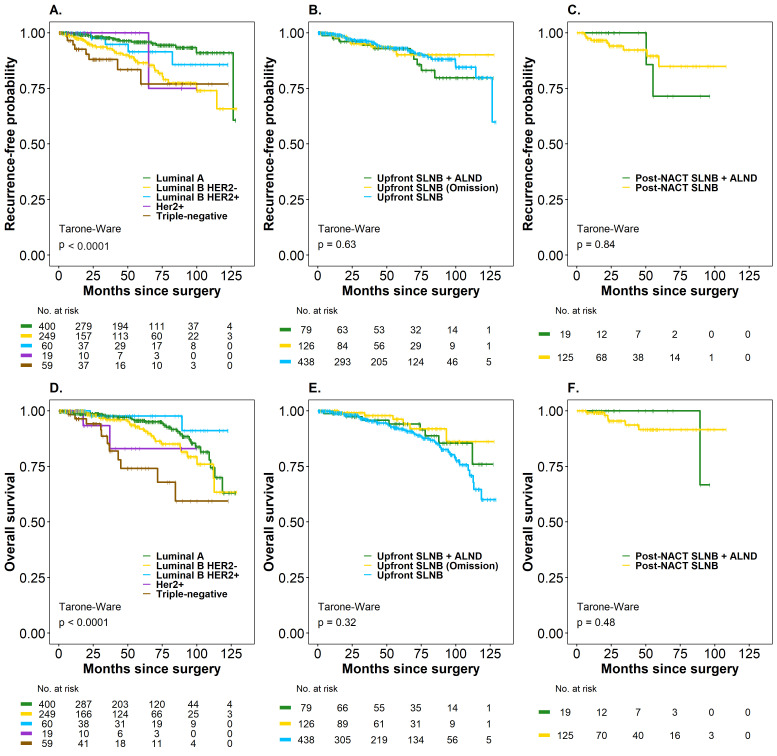 Figure 3
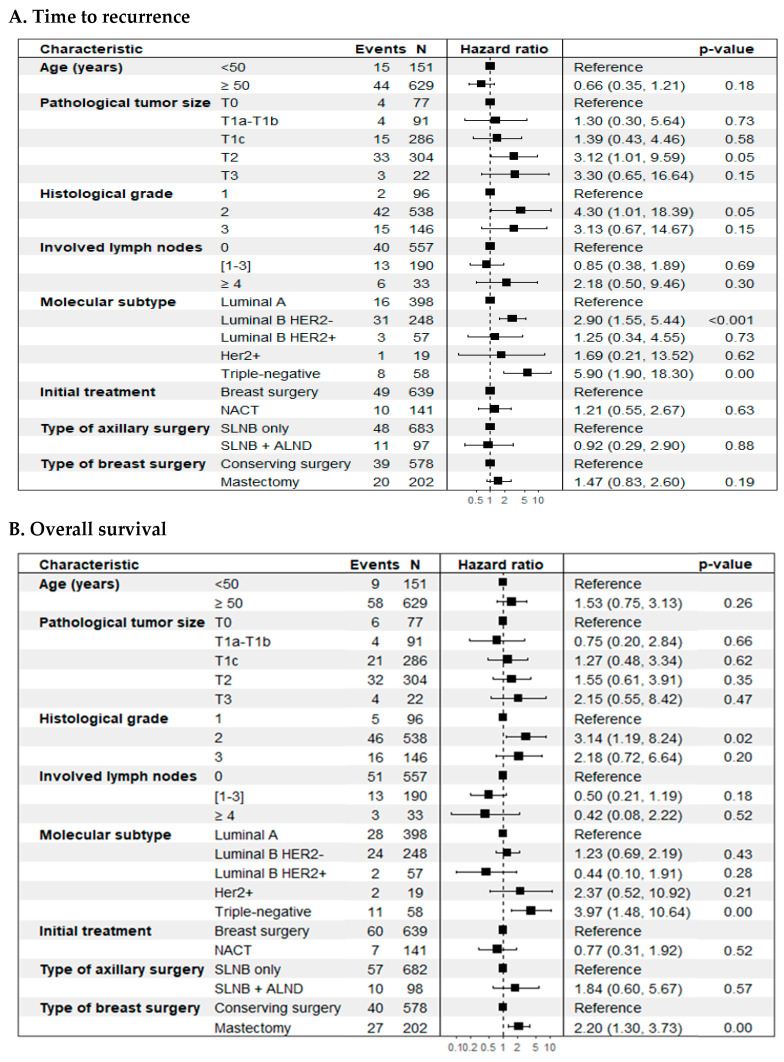 Figure 4
Peer Reviews
No public reviews on file for this paper yet. If you reviewed it on a platform where reviews are public (OpenReview, ICLR, NeurIPS, ICML), you can paste yours below so the community can read it here.
Videos
No videos yet. Explain this paper in a talk, walkthrough, or lecture? Add one.
Taxonomy
TopicsBreast Cancer Treatment Studies · Breast Lesions and Carcinomas · Breast Implant and Reconstruction