The Real-World Impact of PARP Inhibitor Maintenance Therapy in High Grade Serous Tubo-Ovarian and Peritoneal Cancers
Maryam Al-Ani, Bahaaeldin Baraka, Navin Mathiyalagan, Muhammad Adeel Sarwar, Avinash Segaran, Wafaa Abuzahra, Alayna Radford, Kersty Buxton, Lalith Seneviratne, Santhanam Sundar, Anjana Anand, David Nunns, Karin Williamson, Ben Wormald, Ketankumar Gajjar, Srinivasan Madhusudan

TL;DR
This study compares the effectiveness of different PARP inhibitors in treating high-grade serous cancers, finding that olaparib benefits BRCA2-mutated patients more than BRCA1-mutated ones.
Contribution
The study provides real-world evidence comparing PARP inhibitors in high-grade serous cancers, revealing differential benefits based on BRCA mutation status.
Findings
Olaparib provides significantly better progression-free survival in BRCA2-mutated patients compared to BRCA1-mutated patients.
Niraparib and rucaparib show similar clinical benefits in the recurrent cancer setting.
Primary maintenance with niraparib in BRCA wild-type patients shows a median progression-free survival of 11 months.
Abstract
PARP inhibitor (olaparib, niraparib, or rucaparib) maintenance treatment is a standard treatment option in patients with high-grade serous tubo-ovarian and peritoneal cancers following surgery and chemotherapy. Whether olaparib, niraparib, or rucaparib have similar clinical benefit is an area of clinical investigation. The real-world data evaluation of olaparib, niraparib, and rucaparib maintenance can provide valuable insight that can aid clinical decision-making. We conducted a retrospective observational study at our centre to evaluate survival outcomes and compare clinical trial data. We observed significantly better survival benefit from olaparib in BRCA2 germline mutated patients compared to BRCA1 mutated patients. In the recurrent setting, niraparib and rucaparib provide similar clinical benefits. Background: Pivotal clinical trials have led to the routine clinical use of PARP…
Genes, proteins, chemicals, diseases, species, mutations and cell lines named across the full text — each resolved to its canonical identifier and authoritative record.
Click any figure to enlarge with its caption.
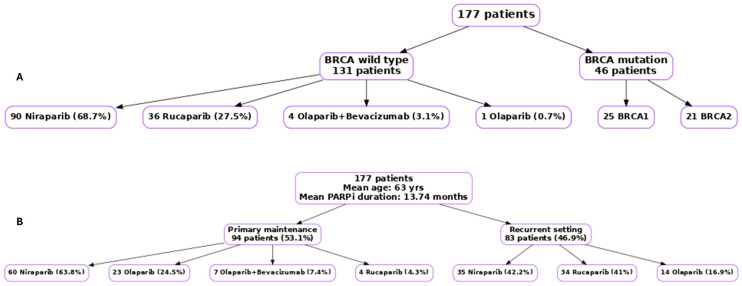 Figure 1
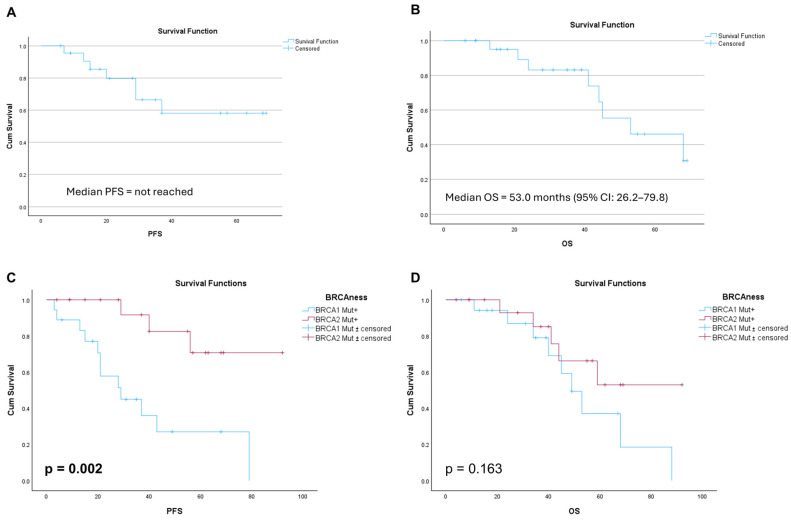 Figure 2
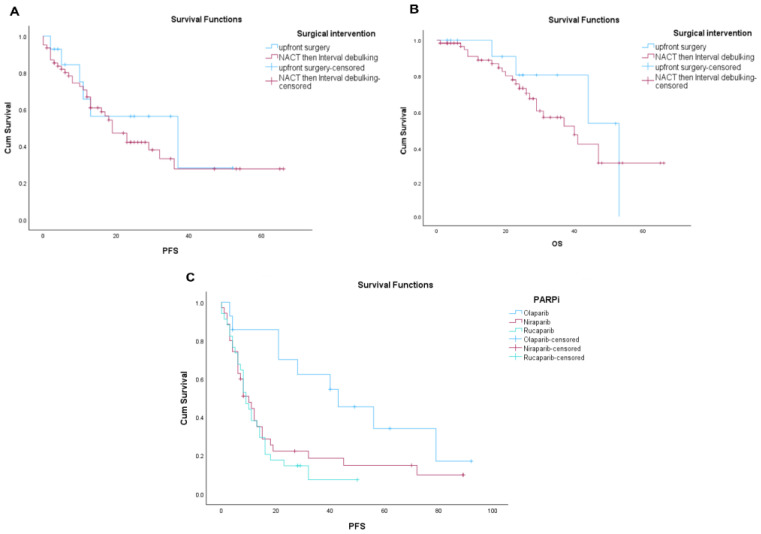 Figure 3
Peer Reviews
No public reviews on file for this paper yet. If you reviewed it on a platform where reviews are public (OpenReview, ICLR, NeurIPS, ICML), you can paste yours below so the community can read it here.
Videos
No videos yet. Explain this paper in a talk, walkthrough, or lecture? Add one.
Taxonomy
TopicsPARP inhibition in cancer therapy · Ovarian cancer diagnosis and treatment · BRCA gene mutations in cancer