Impact of Intramedullary Implants on Metallic Element Homeostasis in Children with Forearm Fractures
Kacper Sowa, Anna Danielewicz, Magdalena Wójciak, Jan Sawicki, Sławomir Dresler, Katarzyna Warda, Michał Latalski, Ireneusz Sowa

TL;DR
This study examines how intramedullary implants affect metal levels in children with forearm fractures, finding minimal systemic impact except for a slight rise in blood titanium.
Contribution
The study provides new evidence on the safety of titanium intramedullary implants in children regarding systemic metal ion release.
Findings
No significant systemic changes in calcium, magnesium, copper, zinc, or aluminum were observed.
A modest but significant increase in blood titanium levels was found after treatment, especially in patients with two rods.
Multivariate analysis confirmed the stability of elemental profiles, with titanium being the main contributor to post-treatment variation.
Abstract
Background/Objectives: Childhood is marked by frequent musculoskeletal injuries, with fractures representing a major cause of pediatric trauma admissions. Unstable long-bone fractures often require surgical stabilization, commonly achieved using elastic stable intramedullary nailing (ESIN). Although this method ensures effective fixation and early mobilization, concerns remain regarding potential metal ion release in growing children. This study aimed to assess changes in calcium, magnesium, copper, zinc, titanium, and aluminum concentrations in blood and material from the medullary cavity of forearm fractures following intramedullary fixation. Methods: A prospective study was conducted on 40 patients aged 4–15 years treated with ESIN at the University Children’s Hospital in Lublin. Peripheral blood and material from the medullary cavity were collected before implantation and at implant…
Genes, proteins, chemicals, diseases, species, mutations and cell lines named across the full text — each resolved to its canonical identifier and authoritative record.
Click any figure to enlarge with its caption.
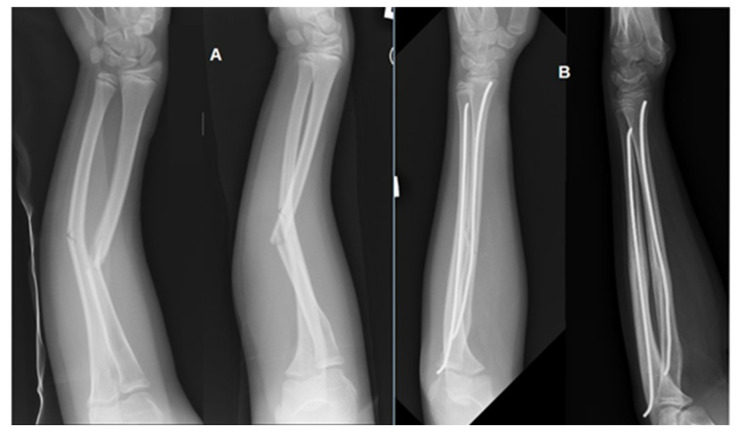 Figure 1
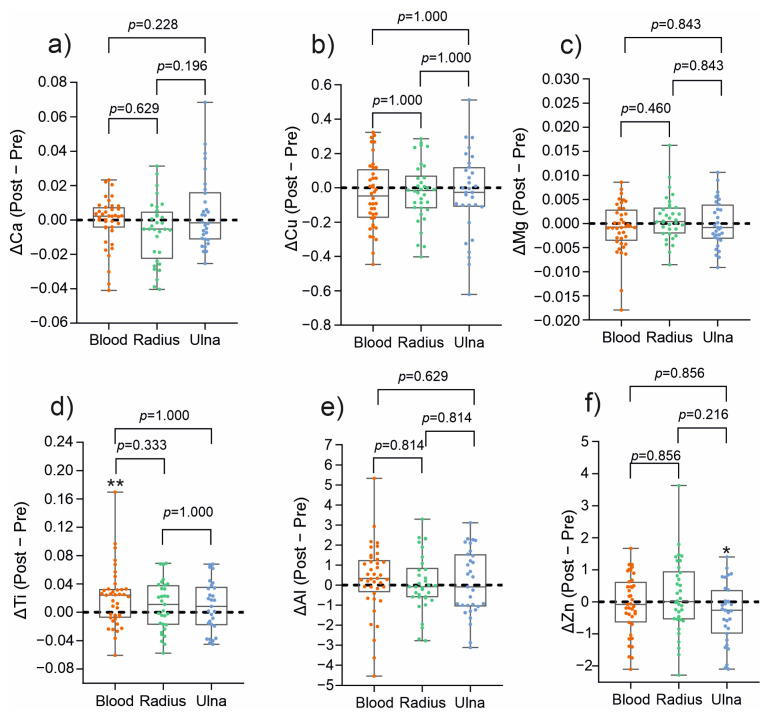 Figure 2
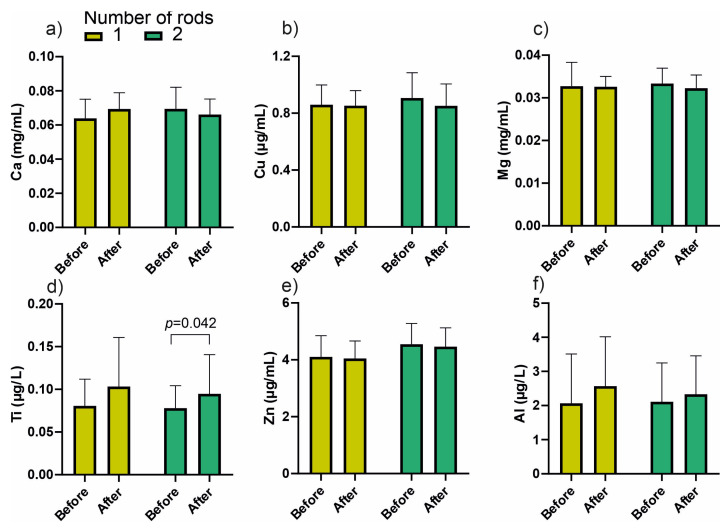 Figure 3
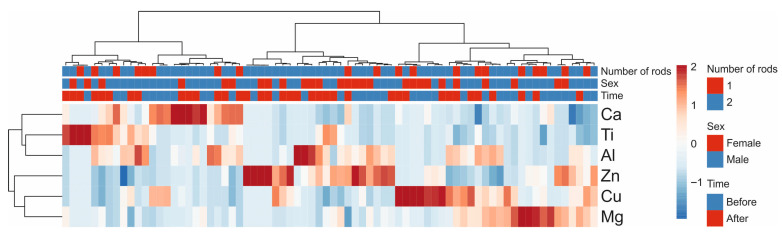 Figure 4
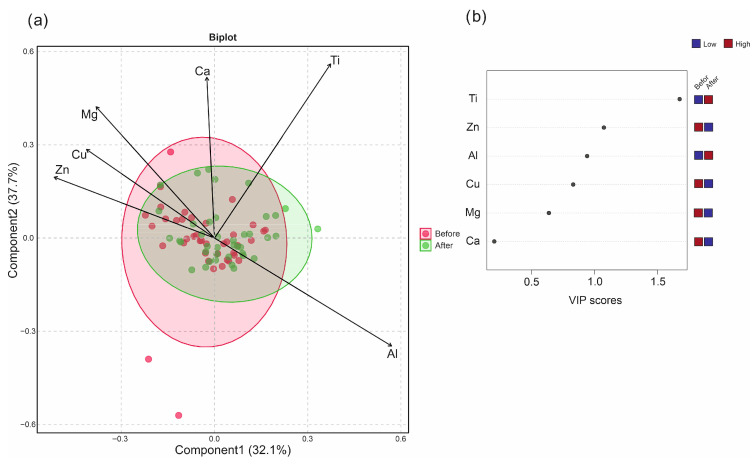 Figure 5
Peer Reviews
No public reviews on file for this paper yet. If you reviewed it on a platform where reviews are public (OpenReview, ICLR, NeurIPS, ICML), you can paste yours below so the community can read it here.
Videos
No videos yet. Explain this paper in a talk, walkthrough, or lecture? Add one.
Taxonomy
TopicsBone fractures and treatments · Elbow and Forearm Trauma Treatment · Musculoskeletal Disorders and Rehabilitation