Segmental Bioimpedance Phase Angles for Frailty Detection in Hospitalized Older Adults with Cardiovascular Disease: A Cross-Sectional Observational Study
Noel Rivas-González, Mª José Castro, Irene Albertos, María López, Belén Martín-Gil, Elsa Rodríguez-Gabella, Mercedes Fernández-Castro, J. Alberto San Román

TL;DR
Segmental bioimpedance phase angles can help detect frailty in older men with cardiovascular disease, but are less effective in women.
Contribution
This study introduces segmental phase angles as a potential non-invasive tool for frailty detection in hospitalized older adults with cardiovascular disease.
Findings
Segmental phase angles in men showed moderate accuracy for frailty detection.
Frailty was associated with lower phase angles and biomarkers like low hemoglobin and high CRP.
Predictive capacity of segmental phase angles was limited in women.
Abstract
What are the main findings? Segmental bioimpedance phase angles are significantly lower in frail older adults hospitalized with cardiovascular disease. In men, left body and left leg phase angles showed moderate discriminatory capacity for frailty detection, while women showed lower predictive performance. What are the implications of the main findings? Segmental phase angle measurement is a simple, rapid, and non-invasive bedside tool that can support early frailty identification in cardiology wards. Integrating phase angles with routine biomarkers such as hemoglobin and CRP could improve patient risk stratification, optimize resource allocation, and guide individualized care strategies in hospital settings. Background/Objectives: Whole-body phase angle is associated with in-hospital morbidity and mortality, although cut-off points vary. Studies on the relationship between…
Genes, proteins, chemicals, diseases, species, mutations and cell lines named across the full text — each resolved to its canonical identifier and authoritative record.
Click any figure to enlarge with its caption.
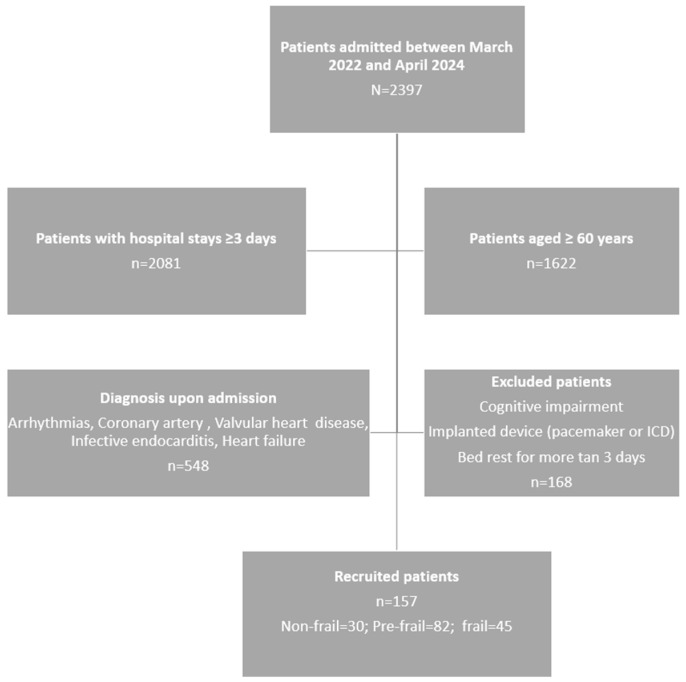 Figure 1
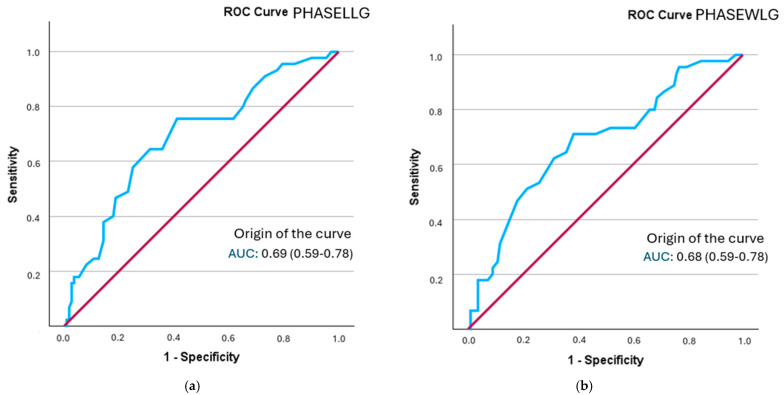 Figure 2
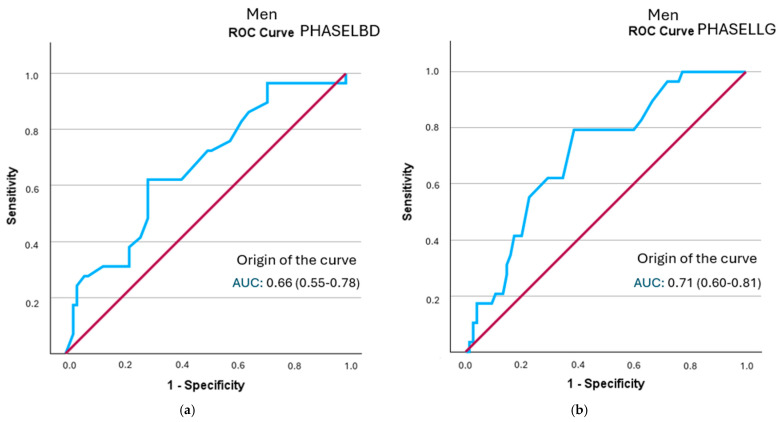 Figure 3
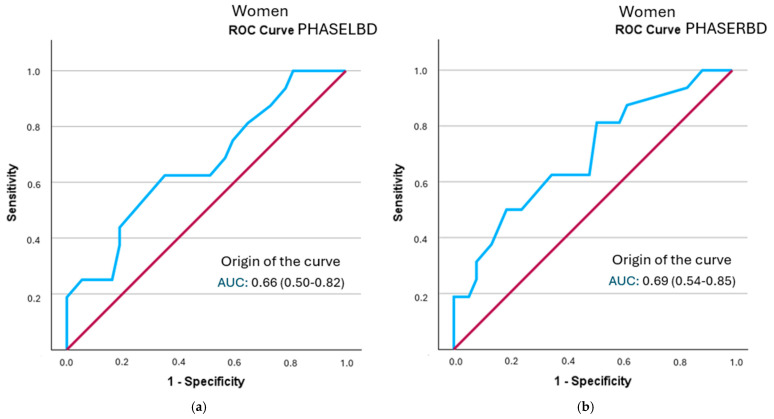 Figure 4
Peer Reviews
No public reviews on file for this paper yet. If you reviewed it on a platform where reviews are public (OpenReview, ICLR, NeurIPS, ICML), you can paste yours below so the community can read it here.
Videos
No videos yet. Explain this paper in a talk, walkthrough, or lecture? Add one.
Taxonomy
TopicsBody Composition Measurement Techniques · Electrical and Bioimpedance Tomography · Nutrition and Health in Aging