Cytocompatible FRET Assembly of CdTe@GSH Quantum Dots and Au@BSA Nanoclusters: A Novel Ratiometric Strategy for Dopamine Detection
Arturo Iván Pavón-Hernández, Doris Ramírez-Herrera, Eustolia Rodríguez-Velázquez, Manuel Alatorre-Meda, Miguel Ramos-Heredia, Antonio Tirado-Guízar, Georgina Pina-Luis

TL;DR
This paper introduces a new method using fluorescent nanoparticles to detect dopamine with high sensitivity and accuracy in biological samples.
Contribution
A novel ratiometric FRET-based sensor using CdTe@GSH QDs and Au@BSA NCs for selective and sensitive dopamine detection.
Findings
The sensor shows a linear response to dopamine concentrations from 0–250 µM with a detection limit of 6.9 nM.
The sensor is selective against common interfering substances and demonstrates excellent cytocompatibility in HeLa cells.
Successful dopamine detection in urine samples with recoveries between 99.1% and 104.2% was achieved.
Abstract
This study presents a novel ratiometric fluorescent sensor based on Förster resonance energy transfer (FRET) between glutathione (GSH)-coated CdTe quantum dots (CdTe/GSH QDs) and bovine serum albumin (BSA)-coated Au nanoclusters (AuNCs/BSA) for dopamine (DA) detection. The nanoparticles were characterized using transmission electron microscopy (TEM), zeta potential measurements, Fourier transform infrared (FTIR) spectroscopy, UV-Vis absorption and fluorescence spectroscopy. Key FRET parameters, including energy transfer efficiency (E), donor–acceptor distance (r), Förster distance (R0), and the overlap integral (J), were determined. The interactions between the CdTe/GSH-AuNCs/BSA conjugate and DA were investigated, revealing a dual mechanism of QDs fluorescence quenching that involves both energy and electron transfer. The average lifetime values and spectral profiles of CdTe/GSH QDs,…
Genes, proteins, chemicals, diseases, species, mutations and cell lines named across the full text — each resolved to its canonical identifier and authoritative record.
Click any figure to enlarge with its caption.
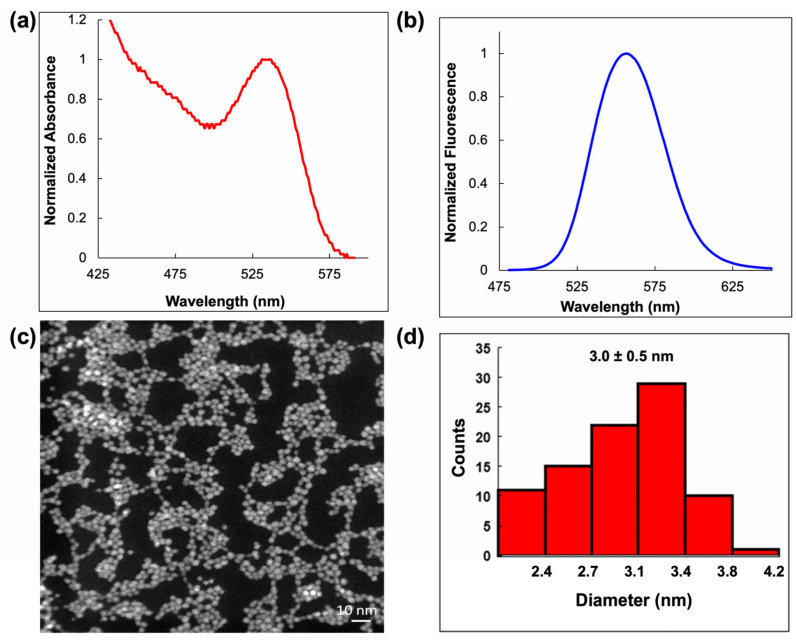 Figure 1
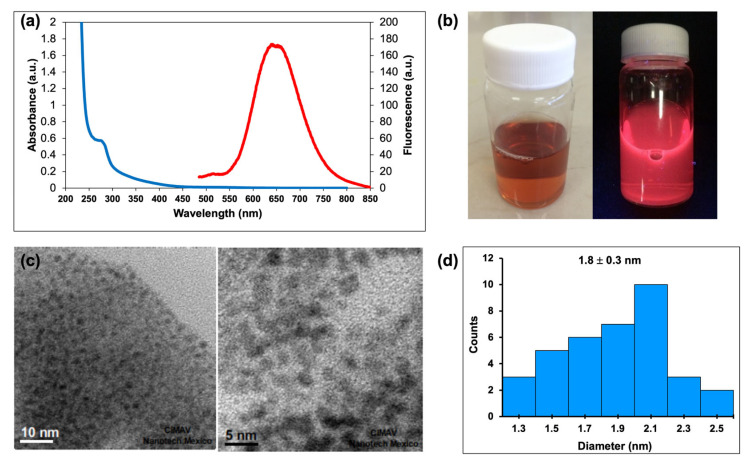 Figure 2
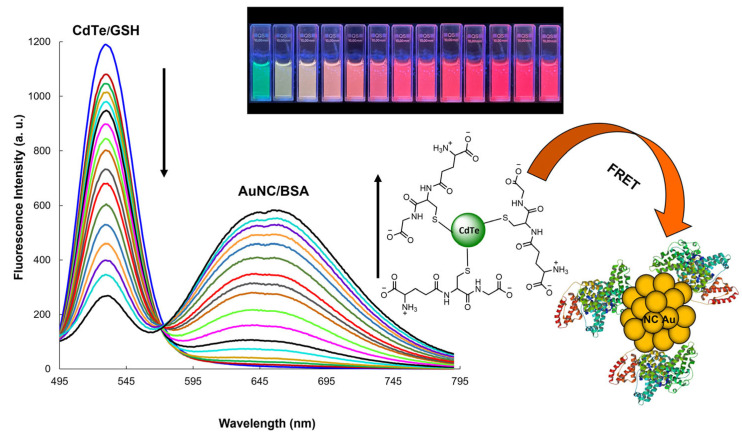 Figure 3
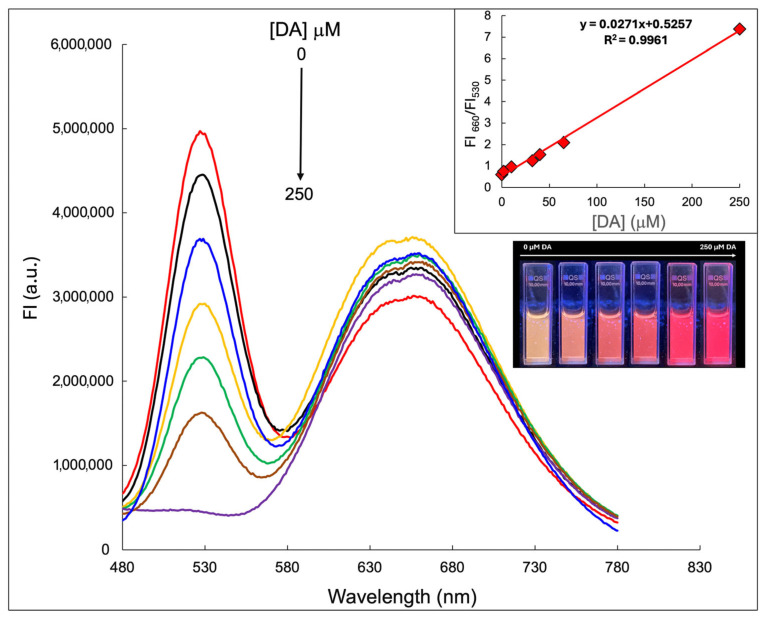 Figure 4
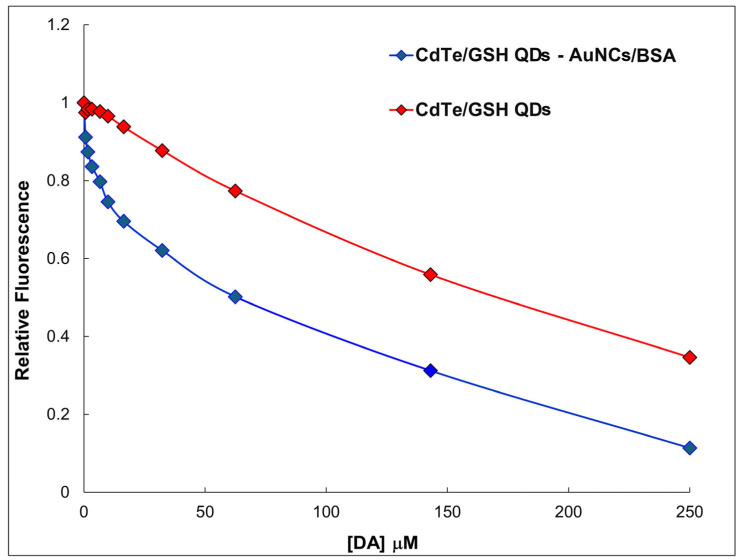 Figure 5
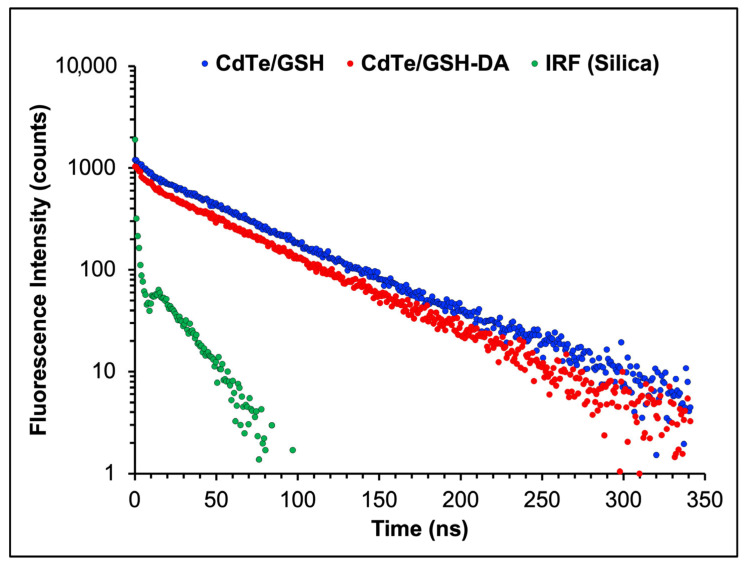 Figure 6
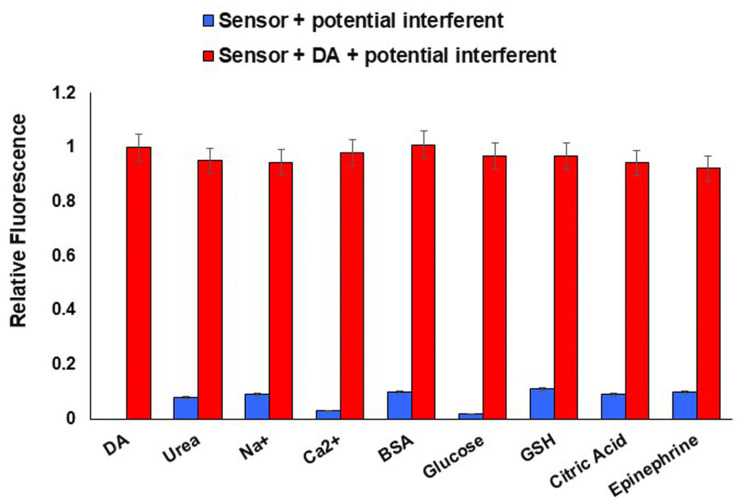 Figure 7
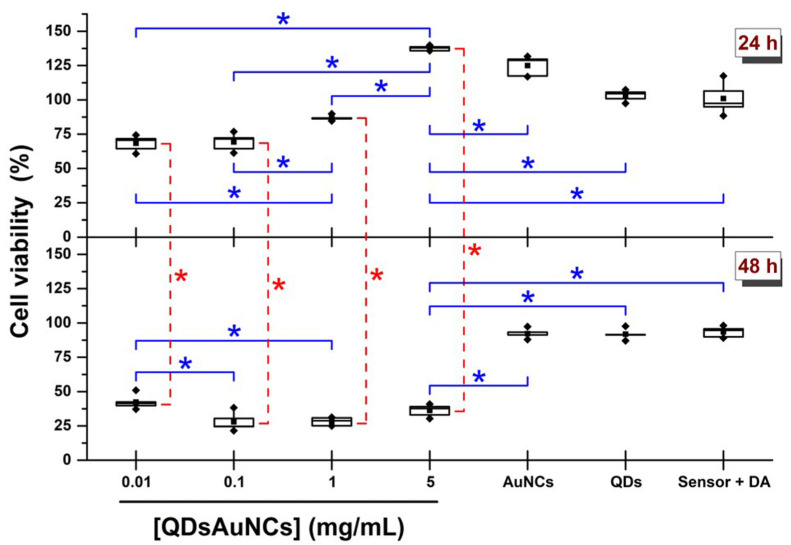 Figure 8
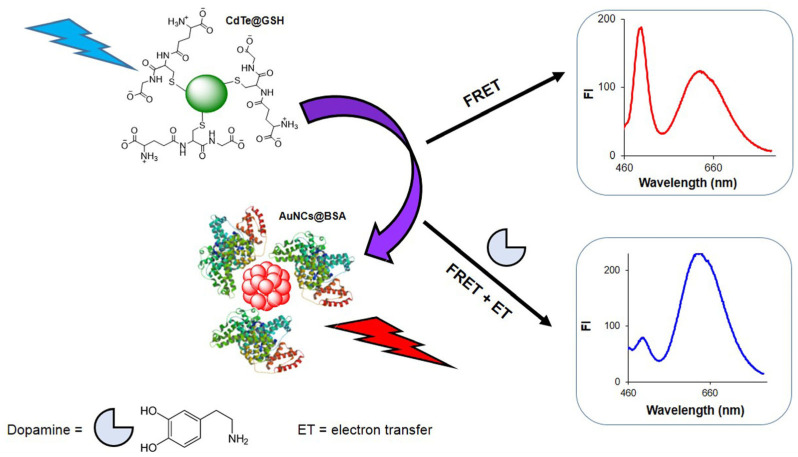 Figure 9
Peer Reviews
No public reviews on file for this paper yet. If you reviewed it on a platform where reviews are public (OpenReview, ICLR, NeurIPS, ICML), you can paste yours below so the community can read it here.
Videos
No videos yet. Explain this paper in a talk, walkthrough, or lecture? Add one.
Taxonomy
TopicsNanocluster Synthesis and Applications · Quantum Dots Synthesis And Properties · Carbon and Quantum Dots Applications