BALAD-2 Emerges as the Most Accurate Prognostic Model in Hepatocellular Carcinoma: Results from a Biobank-Based Cohort Study
Coskun Ozer Demirtas, Fatih Eren, Demet Yilmaz Karadag, Yasemin Kaldirim Armutcuoglu, Tugba Tolu, Javid Huseyinov, Ugur Ciftci, Tuba Yilmaz, Sehnaz Akin, Feyza Dilber, Osman Cavit Ozdogan

TL;DR
A study found that the BALAD-2 model is the most accurate for predicting survival in liver cancer patients, especially those with viral liver disease or undergoing curative treatment.
Contribution
The study demonstrates that BALAD-2 outperforms other biomarker-based models in predicting hepatocellular carcinoma survival across multiple subgroups.
Findings
BALAD-2 had the highest concordance index (0.737) and AUROC values for predicting survival in HCC patients.
BALAD-2 showed consistent performance in patients with viral liver disease and those receiving curative therapies.
Other models like GAAP and ASAP performed slightly better in non-viral liver disease subgroups.
Abstract
Accurate prediction of survival in patients with hepatocellular carcinoma (HCC) is important for multidisciplinary decision-making and follow-up. In this study, we compared several blood-based biomarkers and scoring systems, including AFP; AFP-L3%; DCP; and models such as GALAD, BALAD, BALAD-2, GAAP, ASAP, the Doylestown algorithm, and aMAP. Using data from 186 patients with HCC, we found that all biomarkers and models were related to survival. Among them, the BALAD-2 score provided the best and most consistent performance, particularly in patients with viral liver disease and those receiving curative treatments. These results suggest that BALAD-2 could be a valuable tool for risk assessment and treatment planning in HCC. Background/Objectives: Accurate prognostication of hepatocellular carcinoma (HCC) remains essential for treatment selection and risk stratification. This study aimed…
Genes, proteins, chemicals, diseases, species, mutations and cell lines named across the full text — each resolved to its canonical identifier and authoritative record.
Click any figure to enlarge with its caption.
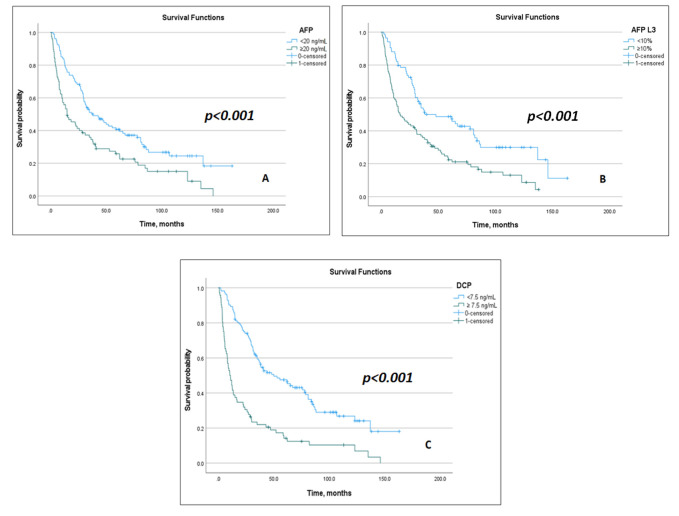 Figure 1
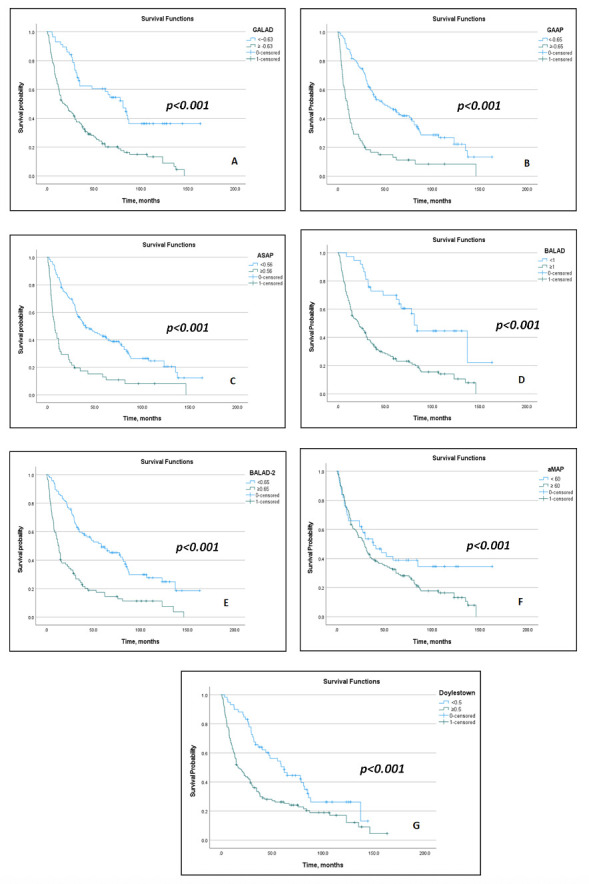 Figure 2
Peer Reviews
No public reviews on file for this paper yet. If you reviewed it on a platform where reviews are public (OpenReview, ICLR, NeurIPS, ICML), you can paste yours below so the community can read it here.
Videos
No videos yet. Explain this paper in a talk, walkthrough, or lecture? Add one.
Taxonomy
TopicsHepatocellular Carcinoma Treatment and Prognosis · Ferroptosis and cancer prognosis · Clusterin in disease pathology