Evaluating the Effectiveness of Gravity-Assisted Ankle Stress AP Imaging in Detecting Syndesmosis Injuries: A Retrospective Clinical Study
Bahattin Kemah, Elif Reyyan Çadırcıbaşı, Muhsin Yıldız, Mehmet Salih Söylemez

TL;DR
This study finds that gravity-assisted ankle stress AP imaging helps detect syndesmosis injuries better than standard X-rays or CT scans in some cases.
Contribution
The study is the first to evaluate GAASA imaging's effectiveness in diagnosing syndesmosis injuries, showing it has better sensitivity than traditional methods.
Findings
GAASA images had higher inter-observer reliability (κ = 0.701) than CT scans (κ = 0.426).
GAASA images showed 82% sensitivity and 68% specificity for syndesmosis injuries.
GAASA images had better discriminatory power than mortise radiographs and CT images.
Abstract
Background: While gravity-assisted ankle stress AP (GAASA) images have proven effective in evaluating deep deltoid ligament injuries, their efficacy in assessing syndesmosis injuries remains unclear. We aimed to investigate the diagnostic performance of GAASA images in detecting syndesmosis injuries. Methods: This study reviewed records of patients aged 16+ with unilateral ankle fractures in a single-center ER from 2022 to 2023. Three orthopedic surgeons evaluated standard AP and lateral X-rays, ankle mortise, and GAASA and bilateral ankle CT images in blinded sessions for syndesmosis injuries. Evaluations were repeated to assess the inter- and intra-rater reliability. Results: A total of 121 patients with suspected syndesmosis injuries were included in this study. The average age of the patients was 49.9 ± 16.6 years. Syndesmosis injuries were present in 32.2% of cases. The…
Genes, proteins, chemicals, diseases, species, mutations and cell lines named across the full text — each resolved to its canonical identifier and authoritative record.
Click any figure to enlarge with its caption.
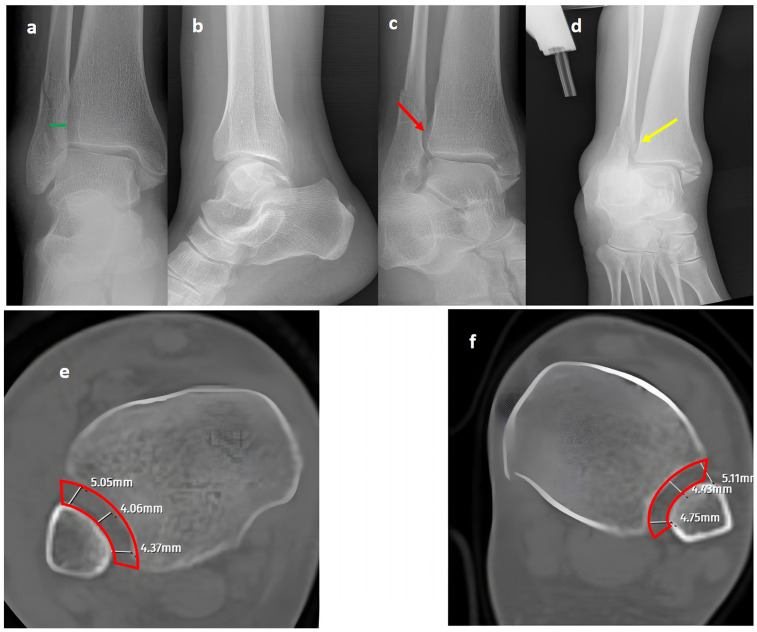 Figure 1
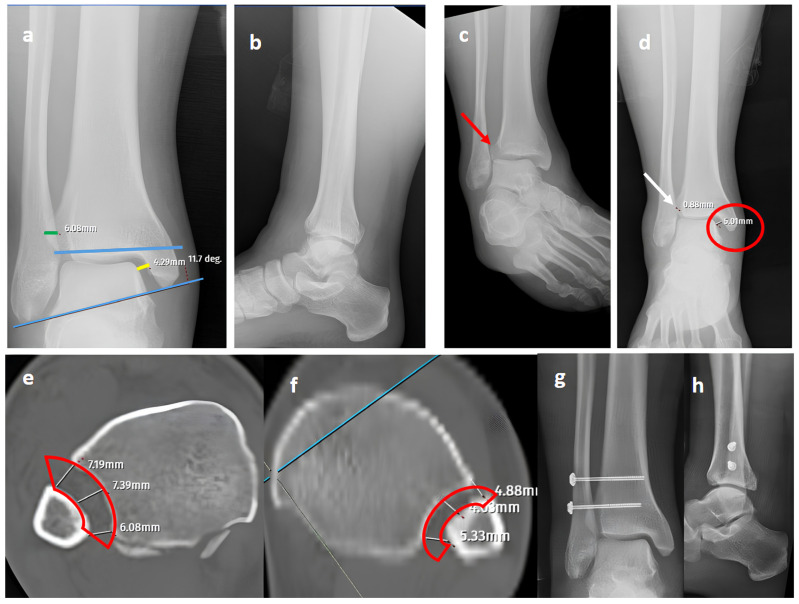 Figure 2
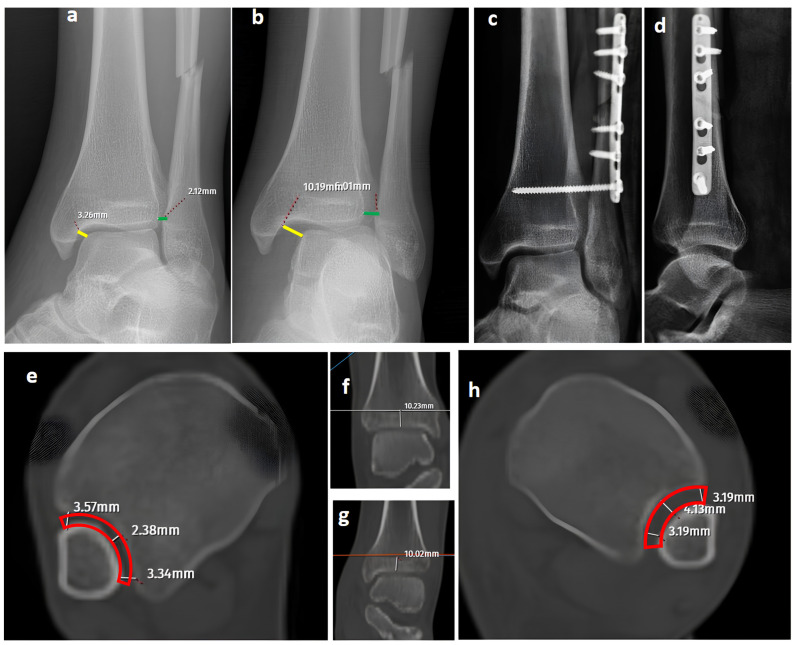 Figure 3
Peer Reviews
No public reviews on file for this paper yet. If you reviewed it on a platform where reviews are public (OpenReview, ICLR, NeurIPS, ICML), you can paste yours below so the community can read it here.
Videos
No videos yet. Explain this paper in a talk, walkthrough, or lecture? Add one.
Taxonomy
TopicsFoot and Ankle Surgery · Lower Extremity Biomechanics and Pathologies · Bone fractures and treatments