Blood Flow Restriction Training Improves Cardiac Structure and Diastolic Function in Runners with Exercise-Induced Hypertension
Young-Joo Kim, Jong-Young Lee, Choung-Hwa Park, Han-Soo Park

TL;DR
Blood flow restriction training helps runners with high exercise blood pressure by improving heart structure and function.
Contribution
This study shows BFR training reduces cardiac hypertrophy and improves diastolic function in runners with EIH.
Findings
BFR training lowered maximal exercise systolic blood pressure and increased exercise duration and VO2max.
Echocardiography showed reduced septal thickness and improved diastolic function in the BFR group.
Systolic function remained unchanged, but diastolic indices improved significantly.
Abstract
Background/Objectives: Exercise-induced hypertension (EIH) in runners predisposes them to cardiovascular diseases, including myocardial hypertrophy, arrhythmias, and coronary artery disease. Blood flow restriction (BFR) training has been reported to exert non-pharmacological benefits in runners with EIH by improving blood pressure, myocardial workload, and cardiorespiratory fitness. The purpose of this study was to investigate whether changes in myocardial structure and function accompany these effects of BFR training in middle-aged runners with EIH. Methods: Participants who exhibited a maximal systolic blood pressure of ≥210 mmHg during an exercise stress test were assigned either to a BFR training group (BFRTg, n = 15) or to a control group without BFR training (non-BFRTg, n = 14). The BFRTg underwent a two-month BFR training program, performed twice per week for 20 min per session.…
Genes, proteins, chemicals, diseases, species, mutations and cell lines named across the full text — each resolved to its canonical identifier and authoritative record.
Click any figure to enlarge with its caption.
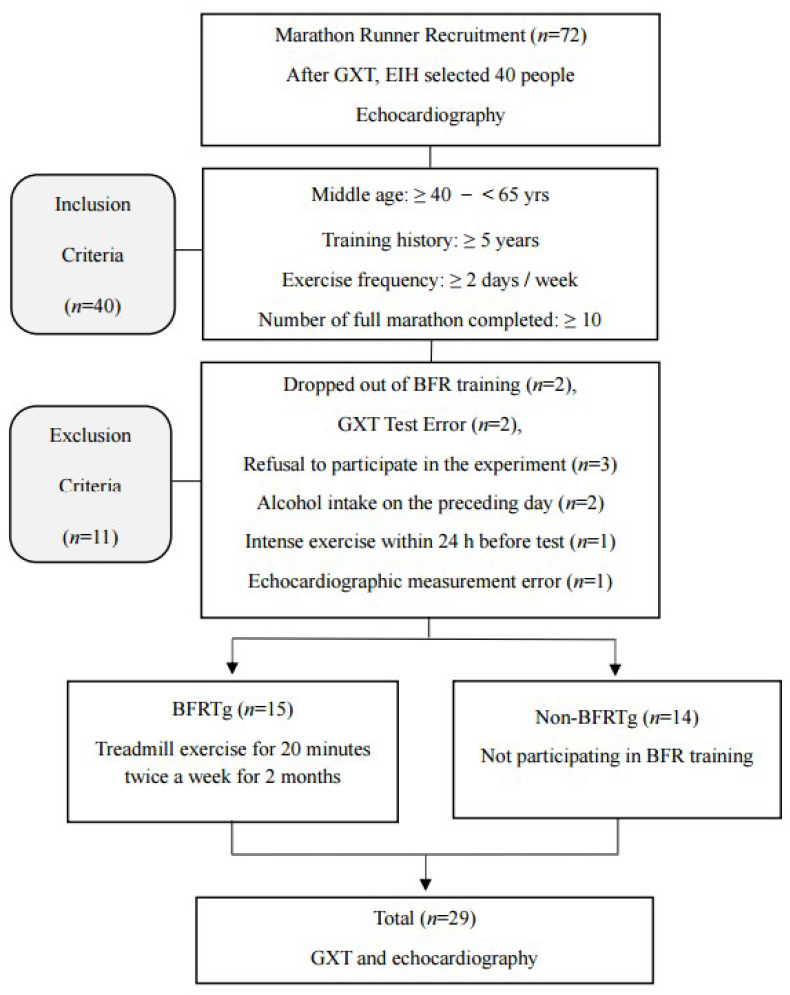 Figure 1
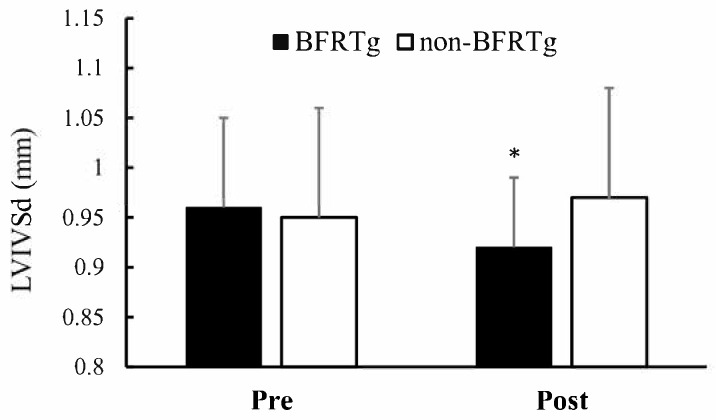 Figure 2
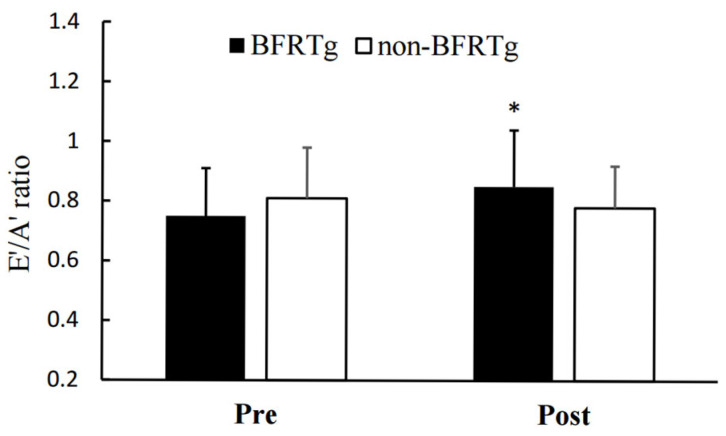 Figure 3
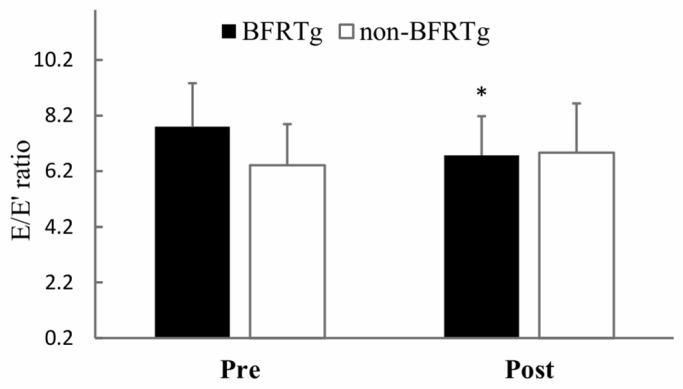 Figure 4
Peer Reviews
No public reviews on file for this paper yet. If you reviewed it on a platform where reviews are public (OpenReview, ICLR, NeurIPS, ICML), you can paste yours below so the community can read it here.
Videos
No videos yet. Explain this paper in a talk, walkthrough, or lecture? Add one.
Taxonomy
TopicsCardiovascular and exercise physiology · Heart Rate Variability and Autonomic Control · Cardiovascular Function and Risk Factors