Pulse Consumption and Metabolic Syndrome: Findings from the Hispanic Community Health Study/Study of Latinos
Juliana Teruel Camargo, Gabriela Recinos, Amanda S. Hinerman, Chelsea Duong, Erik J. Rodriquez, Jordan J. Juarez, Amanda C. McClain, Sarah K. Alver, Martha L. Daviglus, Linda Van Horn, Eliseo J. Pérez-Stable

TL;DR
This study found that eating more pulses, like beans and lentils, is linked to a lower risk of metabolic syndrome in older Latino adults.
Contribution
The study is the first to examine the association between pulse consumption and metabolic syndrome in a large, diverse Latino population.
Findings
Moderate and high pulse intake was associated with a lower prevalence of metabolic syndrome.
About half of the participants had metabolic syndrome, and over half consumed moderate or high amounts of pulses.
Abstract
Background/Objectives: Metabolic syndrome affects half of middle-aged (ages 45–64) Hispanic or Latino (Latino) adults. Pulses, fiber-rich plant proteins common in Latino diets (e.g., dry beans and lentils), may mitigate metabolic syndrome. We evaluated the association between pulse intake and metabolic syndrome. Methods: We analyzed data from 6,958 adults aged ≥ 50 in the Hispanic Community Health Study/Study of Latinos (2008–2011) Visit 1. Pulse intake was assessed using two 24 h dietary recalls and categorized into no, low (<1/2 cup), moderate (≥1/2 to 3/4 cup), and high pulse (>3/4 cup) daily intake groups. Metabolic syndrome was defined by criteria including blood pressure ≥130/85 mmHg or medication use, triglycerides ≥150 mg/dL or medication use, high-density lipoprotein cholesterol (men <40 mg/dL and women <50 mg/dL), and waist circumference (men ≥102 cm and women ≥88 cm). We used…
Genes, proteins, chemicals, diseases, species, mutations and cell lines named across the full text — each resolved to its canonical identifier and authoritative record.
Click any figure to enlarge with its caption.
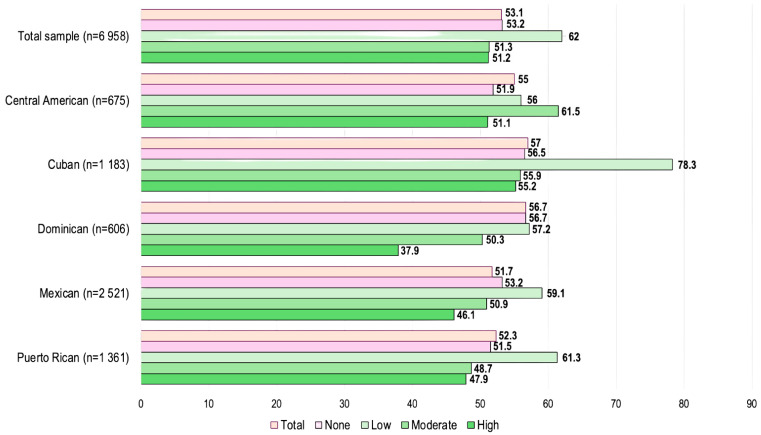 Figure 1
Peer Reviews
No public reviews on file for this paper yet. If you reviewed it on a platform where reviews are public (OpenReview, ICLR, NeurIPS, ICML), you can paste yours below so the community can read it here.
Videos
No videos yet. Explain this paper in a talk, walkthrough, or lecture? Add one.
Taxonomy
TopicsNutritional Studies and Diet · Phytoestrogen effects and research · Heart rate and cardiovascular health