Harnessing C. elegans as a Biosensor: Integrating Microfluidics, Image Analysis, and Machine Learning for Environmental Sensing
Davin Lemmon, Gabriel Lopez, Jarrod Schiffbauer, Sebastian Sensale, Gongchen Sun

TL;DR
This paper explores using the nematode C. elegans as a living biosensor for environmental toxicity by combining microfluidics and machine learning.
Contribution
The paper reviews recent advances in integrating microfluidics and machine learning to enhance C. elegans-based environmental sensing.
Findings
C. elegans is a promising model organism for environmental toxicity studies due to its biological advantages.
Microfluidics enables high-throughput and efficient analysis of C. elegans for toxicity screening.
Machine learning integration improves the accuracy and analytical capabilities of these assays.
Abstract
Environmental contamination is becoming an increasingly evident risk to human health worldwide. The small, free-living nematode Caenorhabditis elegans (C. elegans) has become a compelling model organism for environmental toxicity studies in recent years, owing to its numerous advantages, including its transparent body, small size, well-characterized biology, genetic tractability, short lifespan, and ease of culture. Several assays have been developed using C. elegans to enable a better understanding of toxicant effects, from whole-animal to single-cell levels. While these methods can be extremely useful, they can be time-consuming and cumbersome to perform on a large scale. Recent advances in microfluidics have adapted many of these assays to enable high-throughput analysis of C. elegans, greatly reducing time and resource consumption while increasing efficiency and scalability. Further…
Genes, proteins, chemicals, diseases, species, mutations and cell lines named across the full text — each resolved to its canonical identifier and authoritative record.
Click any figure to enlarge with its caption.
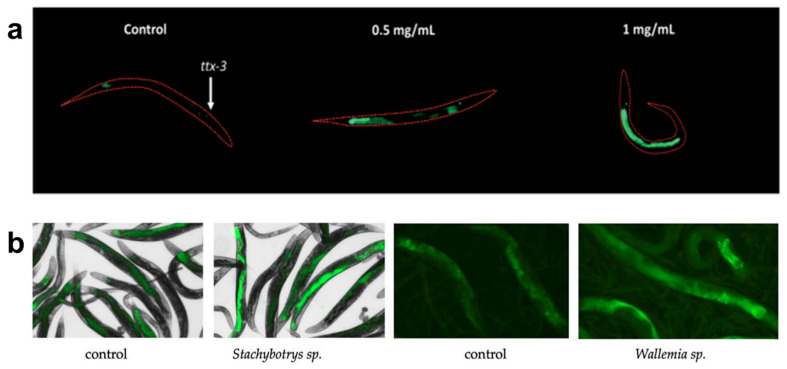 Figure 1
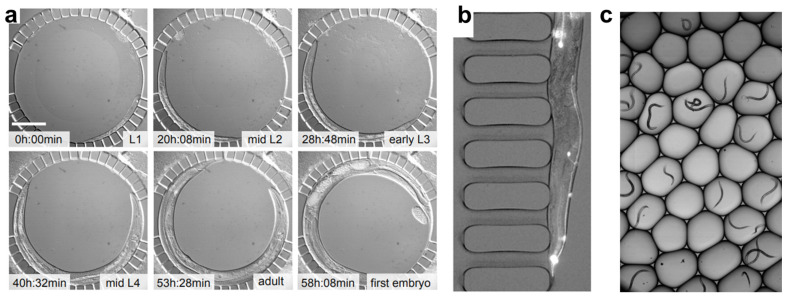 Figure 2
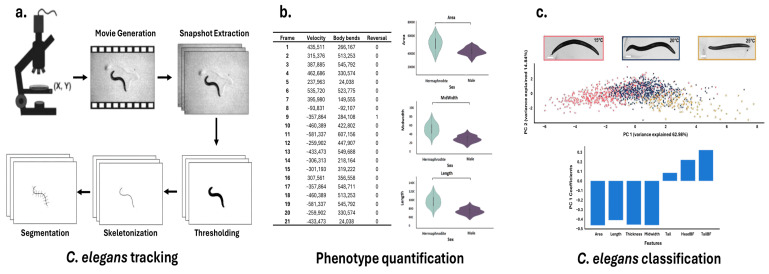 Figure 3
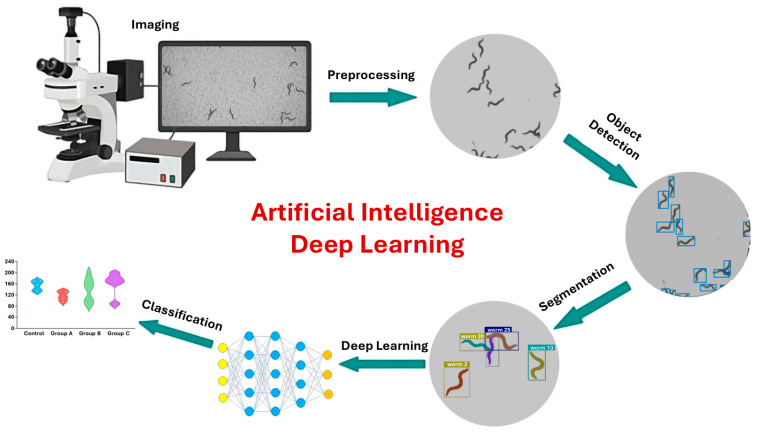 Figure 4
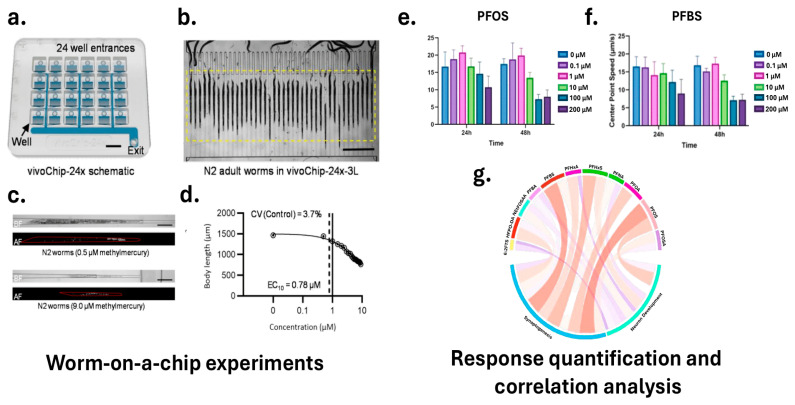 Figure 5
Peer Reviews
No public reviews on file for this paper yet. If you reviewed it on a platform where reviews are public (OpenReview, ICLR, NeurIPS, ICML), you can paste yours below so the community can read it here.
Videos
No videos yet. Explain this paper in a talk, walkthrough, or lecture? Add one.
Taxonomy
TopicsGenetics, Aging, and Longevity in Model Organisms · Planarian Biology and Electrostimulation · Chemical Reactions and Isotopes