Indium Tin Oxide-Based Voltammetric Biosensor for the Detection of Antibodies Against the SARS-CoV-2 Virus Spike Protein
Greta Zvirzdine, Maryia Drobysh, Almira Ramanaviciene, Vilma Ratautaite, Sarunas Zukauskas, Migle Stanciauskaite, Ieva Plikusiene, Arunas Ramanavicius

TL;DR
This paper introduces a new biosensor using indium tin oxide to detect antibodies against the SARS-CoV-2 virus spike protein in serum samples.
Contribution
The novel biosensor uses recombinant spike glycoprotein immobilized on an ITO electrode modified with APTES for antibody detection.
Findings
The biosensor shows a linear relationship between current density and anti-rS concentration.
The limit of detection was 113 ng/mL (0.75 nM), and the limit of quantitation was 338 ng/mL (2.25 nM).
The biosensor efficiently evaluates immune status without requiring a redox probe.
Abstract
This study aims to propose a plausible application of a novel electrochemical biosensing system for detecting antibodies against SARS-CoV-2 (anti-rS) in serum samples. The uniqueness of this study lies in the biosensor utilizing recombinant spike glycoprotein (SCoV2-rS) immobilized on an indium tin oxide (ITO) electrode modified with (3-aminopropyl)triethoxysilane (APTES). The electrochemical performance was evaluated using square wave voltammetry (SWV), demonstrating a linear relationship between the current density and anti-rS concentration. The limit of detection (LOD) was found to be 113 ng/mL (0.75 nM), and the limit of quantitation (LOQ) was equal to 338 ng/mL (2.25 nM). The reported electrochemical biosensor offers a straightforward and efficient method for evaluating the immune status of individuals who have recovered from COVID-19 and been vaccinated against this virus without…
Genes, proteins, chemicals, diseases, species, mutations and cell lines named across the full text — each resolved to its canonical identifier and authoritative record.
Click any figure to enlarge with its caption.
 Figure 1
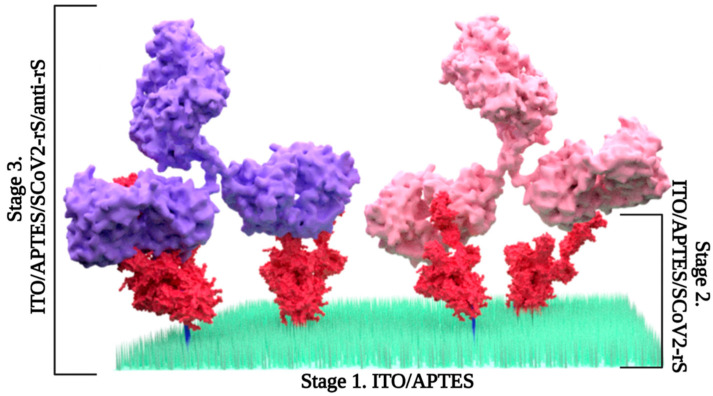 Figure 2
 Figure 3
 Figure 4
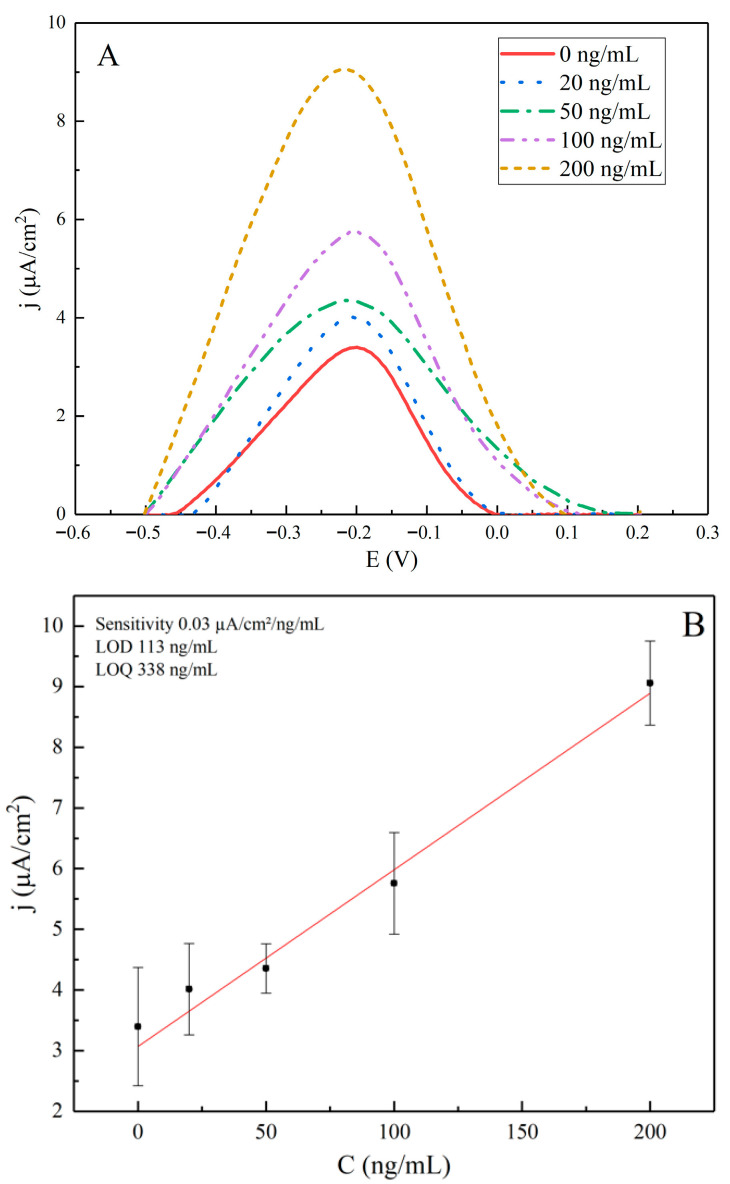 Figure 5
Peer Reviews
No public reviews on file for this paper yet. If you reviewed it on a platform where reviews are public (OpenReview, ICLR, NeurIPS, ICML), you can paste yours below so the community can read it here.
Videos
No videos yet. Explain this paper in a talk, walkthrough, or lecture? Add one.
Taxonomy
TopicsSARS-CoV-2 detection and testing · SARS-CoV-2 and COVID-19 Research · Advanced biosensing and bioanalysis techniques