Fit Hearts, Better Outcomes? A Systematic Review and Meta-Analysis of Exercise Intensity and Peak VO2 in Hypertrophic Cardiomyopathy
Andrija Djuranovic, Jovana Ristic, Milena Antic, Nina Rajovic, Mladen Mirkovic, Djordje Batinic, Milos Maletic, Sevda Ece Kizilkilic, Victoria Zecchin Ferrara, Verica Prodanovic, Suzana Savic, Sanja Mazic, Natasa Milic

TL;DR
This study finds that moderate-intensity exercise is safe and improves heart function in people with hypertrophic cardiomyopathy.
Contribution
The study provides new evidence that moderate-intensity physical activity is safe and beneficial for HCM patients.
Findings
Moderate-intensity exercise significantly improves peak VO2 in HCM patients.
Exercise does not increase the risk of non-sustained ventricular tachycardia, atrial fibrillation, or syncope.
No significant differences in adverse events were found between moderate and high-intensity exercise groups.
Abstract
Background: This study aimed to systematically review and analyze the available evidence on the safety and efficacy of physical activity (PA) in patients with HCM. Methods: We conducted a systematic search of PubMed, Cochrane, and Web of Science databases up to March 30, 2025. Fourteen studies (4 RCTs) were included in the qualitative synthesis and ten in the quantitative synthesis, totaling 10478 patients. Results: The meta-analysis demonstrated a significant improvement in peak VO2 in the moderate intensity PA (MIPA) group, with a mean difference of 1.77 mL/kg/min (95% CI: 0.93 to 2.60, I2 = 38.2%, p = 0.19), while changes in body mass index were not significant (MD: −0.66 kg/m2; 95% CI: −1.77 to 0.44; I2 = 62%; p = 0.07). No significant differences were observed in the occurrence of non-sustained ventricular tachycardia (NSVT) (OR = 1.54, 95% CI: 0.93 to 2.52, I2 = 28.3%, p = 0.24),…
Genes, proteins, chemicals, diseases, species, mutations and cell lines named across the full text — each resolved to its canonical identifier and authoritative record.
Click any figure to enlarge with its caption.
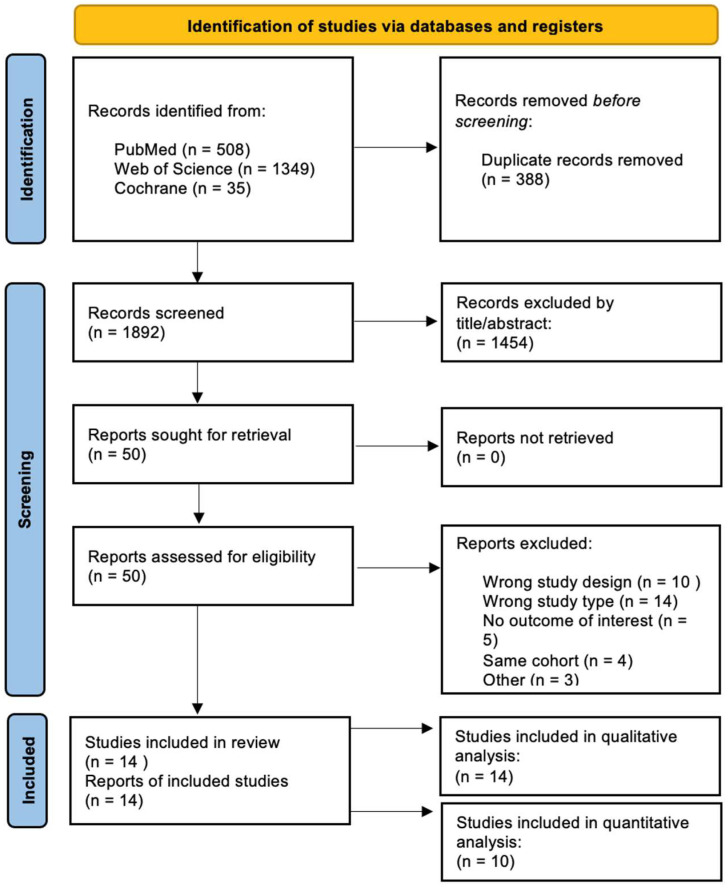 Figure 1
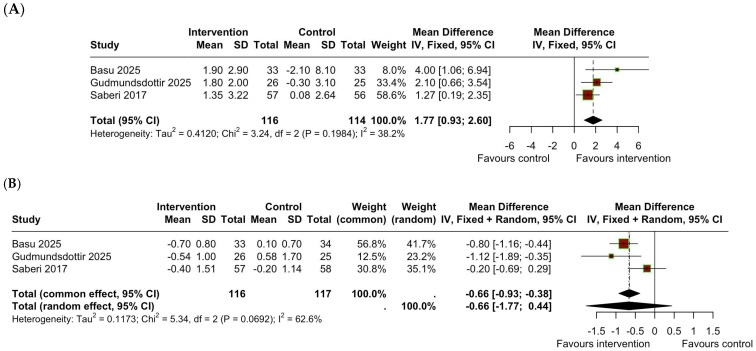 Figure 2
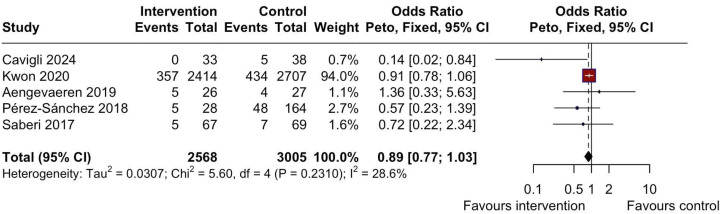 Figure 3
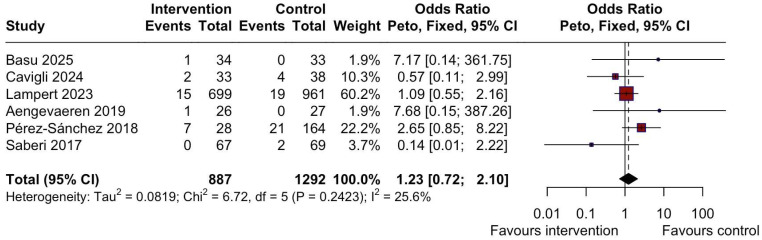 Figure 4
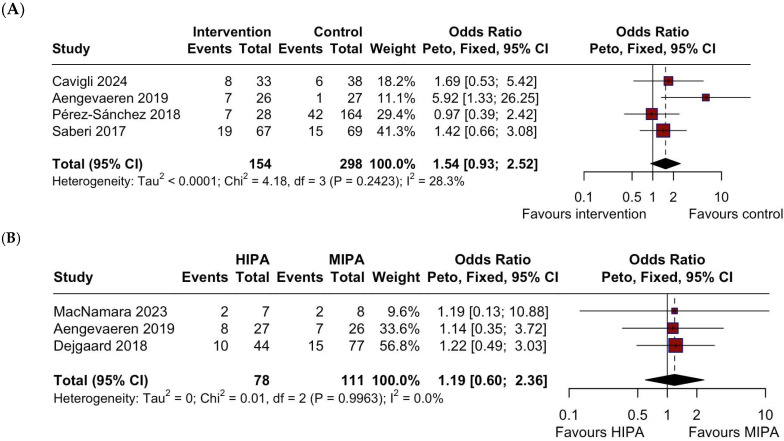 Figure 5
Peer Reviews
No public reviews on file for this paper yet. If you reviewed it on a platform where reviews are public (OpenReview, ICLR, NeurIPS, ICML), you can paste yours below so the community can read it here.
Videos
No videos yet. Explain this paper in a talk, walkthrough, or lecture? Add one.
Taxonomy
TopicsCardiomyopathy and Myosin Studies · Cardiovascular Effects of Exercise · Congenital Heart Disease Studies