Percutaneous Mechanical Circulatory Support Devices in Cardiogenic Shock: A Narrative Review in Light of Recent Evidence
Vincenzo Paragliola, Marco Gamardella, Luca Franchin, Maurizio Bertaina, Francesco Colombo, Paola Zanini, Salvatore Colangelo, Pierluigi Sbarra, Giacomo Boccuzzi, Mario Iannaccone

TL;DR
This paper reviews how percutaneous mechanical devices support heart function in severe heart failure, highlighting their benefits and risks based on recent studies.
Contribution
The paper provides a narrative review of recent evidence on percutaneous mechanical circulatory support devices in cardiogenic shock.
Findings
Percutaneous mechanical circulatory support devices like Impella and IABP do not consistently improve survival but may offer hemodynamic benefits.
Combined strategies like ECPELLA may help in managing left ventricular overload but come with high complication risks.
Device effectiveness is limited to specific subgroups, emphasizing the need for early intervention and individualized care.
Abstract
Cardiogenic shock (CS) is a complex, life-threatening syndrome characterized by inadequate tissue perfusion due to impaired cardiac function. Acute myocardial infarction (AMI) and acute decompensated heart failure are the leading causes, with mortality remaining high despite advances in revascularization and supportive care. The Society for Cardiovascular Angiography and Interventions (SCAI) classification allows risk stratification and guides clinical decision making by capturing the spectrum of shock severity. Percutaneous mechanical circulatory support (pMCS) devices, such as the intra-aortic balloon pump (IABP) and Impella, aim to stabilize hemodynamics by augmenting cardiac output and unloading the left ventricle. However, randomized trials and meta-analyses have not demonstrated a consistent survival advantage of Impella over IABP, while reporting higher rates of bleeding and…
Genes, proteins, chemicals, diseases, species, mutations and cell lines named across the full text — each resolved to its canonical identifier and authoritative record.
Click any figure to enlarge with its caption.
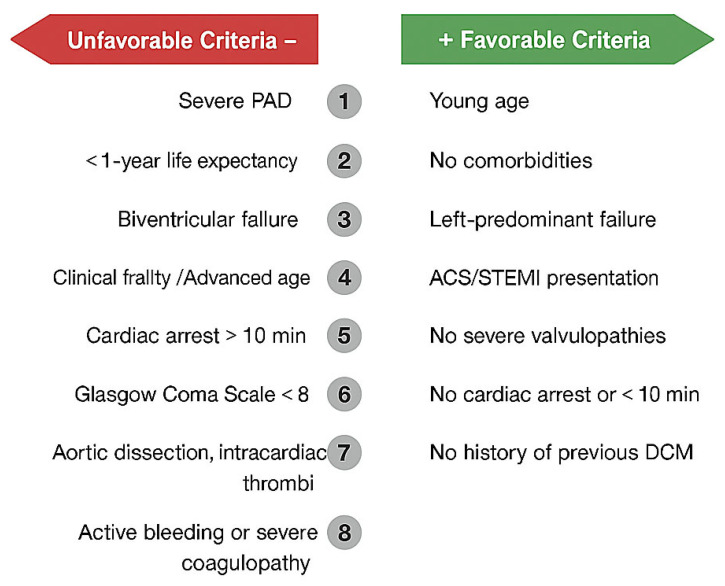 Figure 1
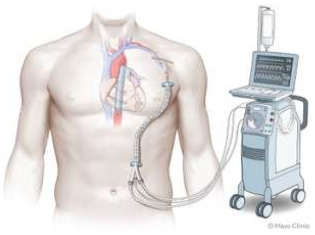 Figure 2
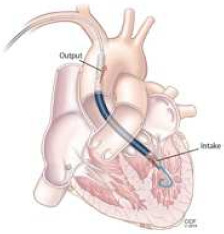 Figure 3
 Figure 4
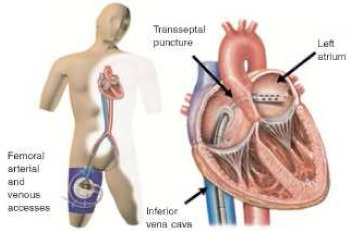 Figure 5
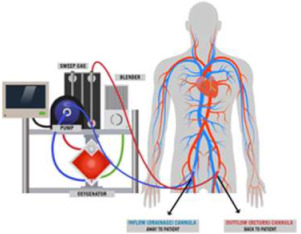 Figure 6
Peer Reviews
No public reviews on file for this paper yet. If you reviewed it on a platform where reviews are public (OpenReview, ICLR, NeurIPS, ICML), you can paste yours below so the community can read it here.
Videos
No videos yet. Explain this paper in a talk, walkthrough, or lecture? Add one.
Taxonomy
TopicsMechanical Circulatory Support Devices · Cardiac Structural Anomalies and Repair · Aortic Disease and Treatment Approaches