Personalized Prediction of Clozapine Treatment Response Using Therapeutic Drug Monitoring Data in Japanese Patients with Treatment-Resistant Schizophrenia
Tatsuo Nakahara, Yukiko Harada, Naho Nakayama, Kijiro Hashimoto, Naoya Kida, Toshiaki Onitsuka, Hiroo Noda, Kenji Murasugi, Yoshihiro Takimoto, Wataru Omori, Tsuruhei Sukegawa, Jun Shiraishi, Kouji Tanaka, Hitoshi Maesato, Takefumi Ueno

TL;DR
This study uses patient data and machine learning to predict how well Japanese patients with schizophrenia will respond to clozapine treatment.
Contribution
A random forest model was developed to personalize clozapine treatment response prediction using TDM data and clinical factors.
Findings
Men received higher clozapine doses than women, and glucose levels were elevated in both sexes.
The model achieved high AUC (0.986) in training and moderate performance (0.852) in testing for predicting treatment response.
Baseline BPRS score, treatment duration, age, and clozapine concentration were key predictors identified by SHAP analysis.
Abstract
Background: Clozapine is the only antipsychotic medication proven effective in patients with treatment-resistant schizophrenia (TRS). However, many patients have serum concentrations outside the recommended therapeutic window, and clozapine exhibits substantial interindividual variability. This study aimed to (1) examine clozapine dosage and blood concentrations in patients with TRS; (2) investigate the effects of sex and age on dosage and blood concentrations; (3) assess clinical response to clozapine treatment; and (4) develop a random forest (RF) model to predict therapeutic response using clinical and therapeutic drug monitoring (TDM) data. Methods: Dried blood spots were used to measure concentrations of clozapine, norclozapine, and clozapine N-oxide. Clinical symptoms were assessed using the Brief Psychiatric Rating Scale (BPRS). The RF algorithm was applied to analyze the…
Genes, proteins, chemicals, diseases, species, mutations and cell lines named across the full text — each resolved to its canonical identifier and authoritative record.
Click any figure to enlarge with its caption.
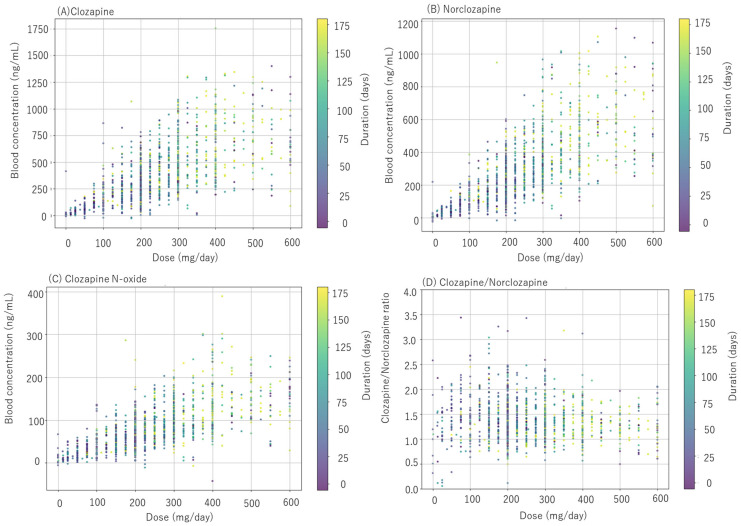 Figure 1
 Figure 2
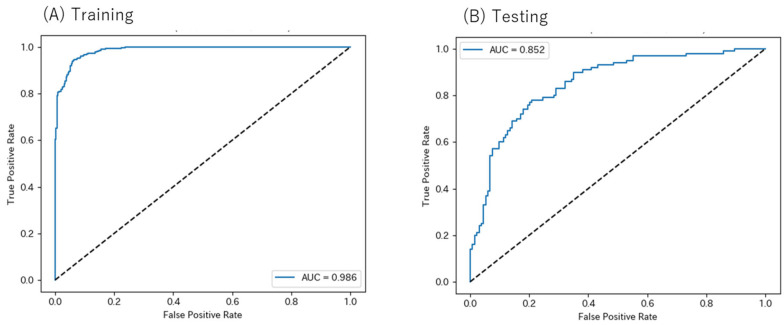 Figure 3
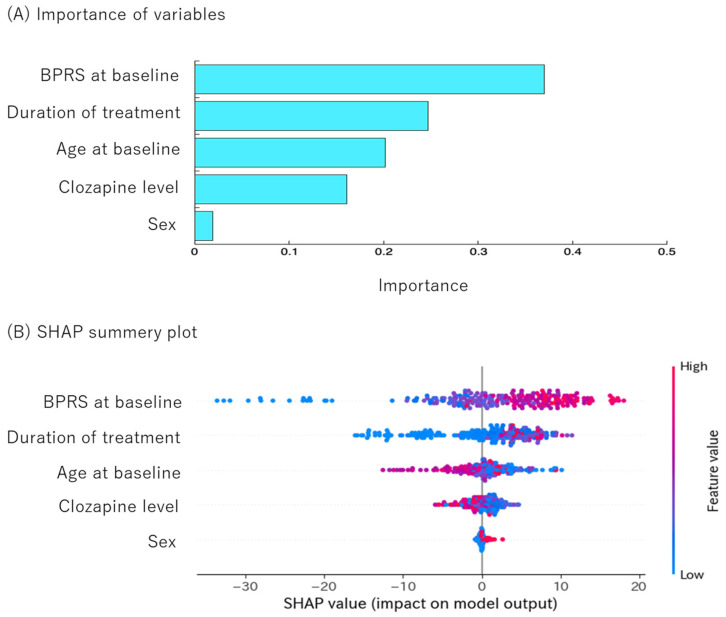 Figure 4
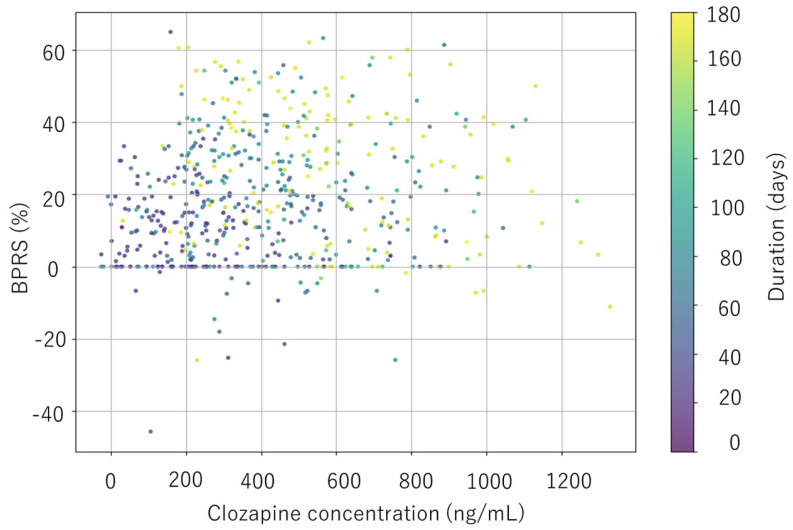 Figure 5
Peer Reviews
No public reviews on file for this paper yet. If you reviewed it on a platform where reviews are public (OpenReview, ICLR, NeurIPS, ICML), you can paste yours below so the community can read it here.
Videos
No videos yet. Explain this paper in a talk, walkthrough, or lecture? Add one.
Taxonomy
TopicsTryptophan and brain disorders · Biosimilars and Bioanalytical Methods · Schizophrenia research and treatment