Placental Thickness Correlates with Severity-Weighted Fetal Dysfunction in the Third Trimester
Julia Murlewska, Oskar Sylwestrzak, Iwona Strzelecka, Łukasz Sokołowski, Paulina Kordjalik, Maciej Słodki, Maria Respondek-Liberska

TL;DR
Thicker placentas in the third trimester are linked to more severe fetal health issues, especially non-heart-related and heart function problems.
Contribution
This study introduces a severity-weighted scoring system to show placental thickness correlates with cumulative fetal dysfunction.
Findings
Placental thickness over 70 mm correlates with higher extracardiac dysfunction scores.
Thick placentas are associated with increased fetal distress indicators like abnormal blood flow.
Measurement of placental thickness could serve as an early marker of fetal jeopardy in the third trimester.
Abstract
This research uncovered that embryos presenting augmented placental thickness, especially those surpassing 70 mm, exhibited heightened incidences of both operational cardiac and extracardiac complications. By attributing weights to each diagnosis in accordance with clinical severity, we established that placental thickness is associated with the cumulative burden of fetal dysfunctions. Although a correlation between thick placentae and structural cardiac anomalies was not strongly established, such placentae were more frequently linked to indicators of fetal distress, including atypical blood flow, regurgitation, or soft tissue abnormalities. Measurement of placental thickness is a straightforward process during standard ultrasound examinations and may function as an early marker of fetal jeopardy, especially during the third trimester. Background: Placental thickness has been…
Genes, proteins, chemicals, diseases, species, mutations and cell lines named across the full text — each resolved to its canonical identifier and authoritative record.
Click any figure to enlarge with its caption.
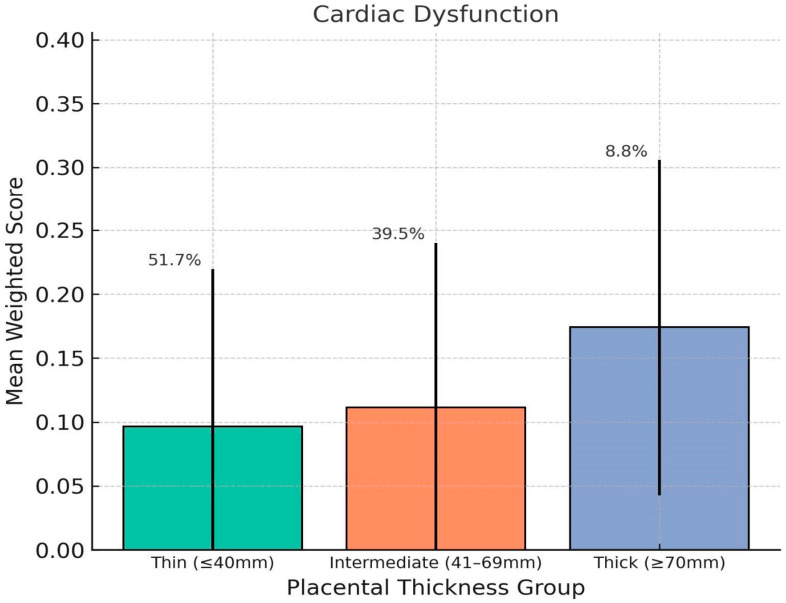 Figure 1
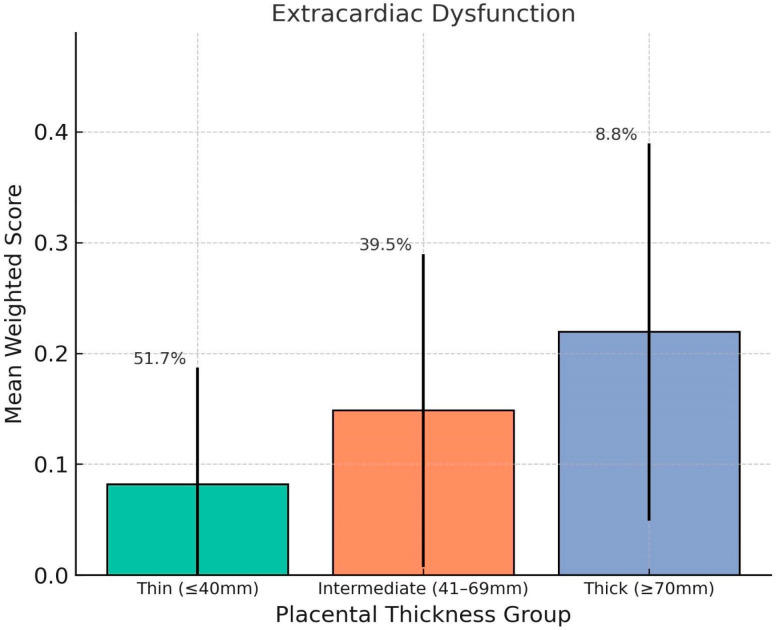 Figure 2
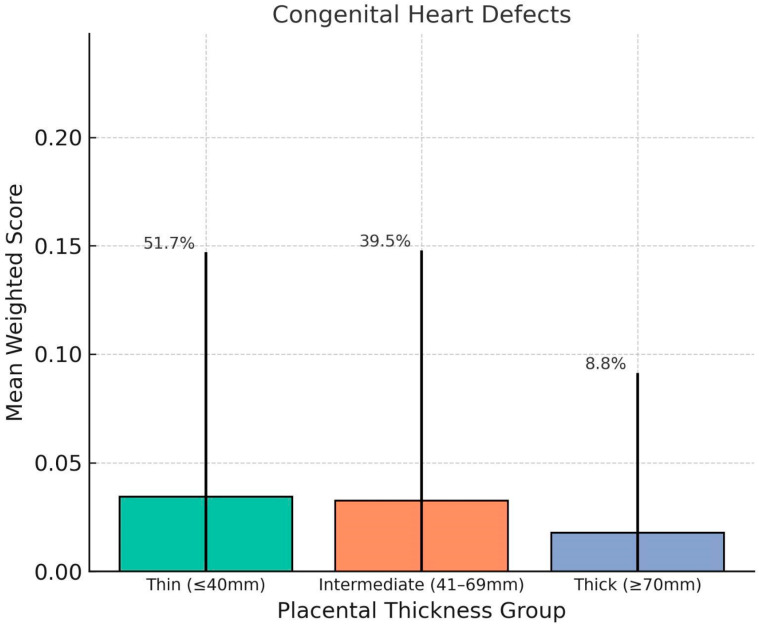 Figure 3
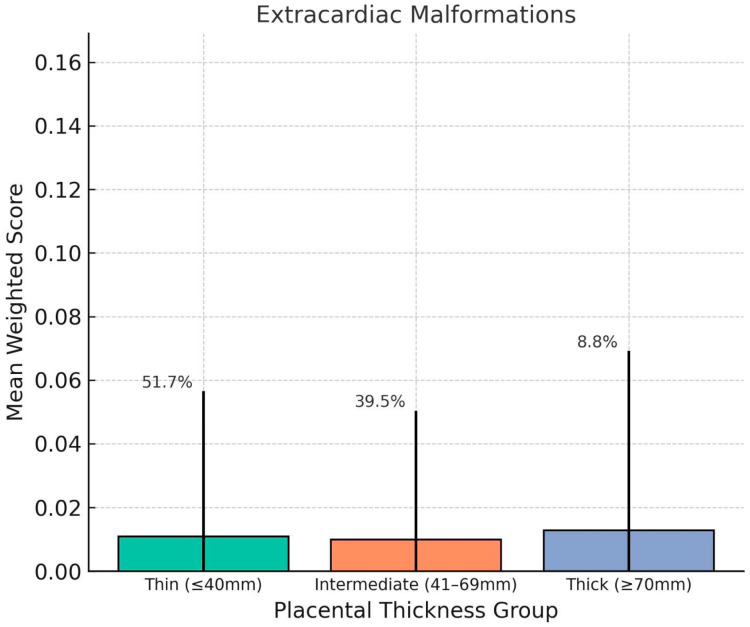 Figure 4
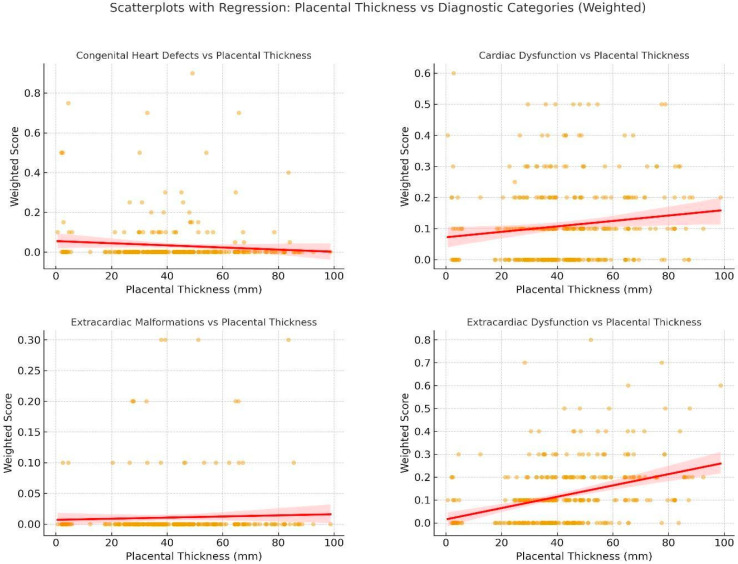 Figure 5
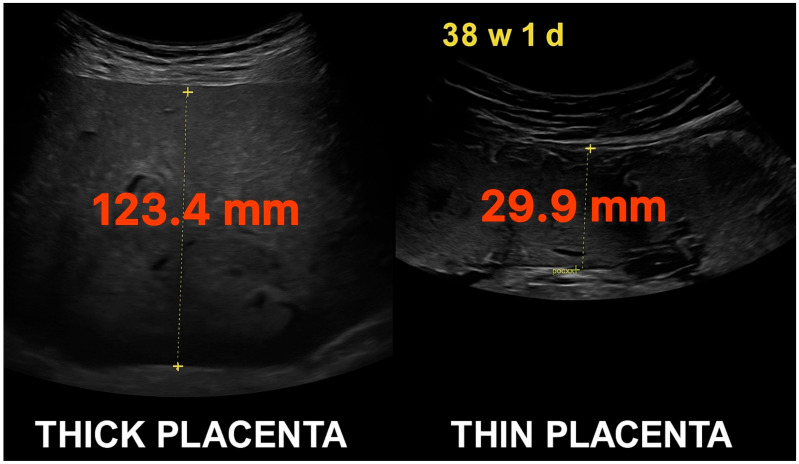 Figure 6
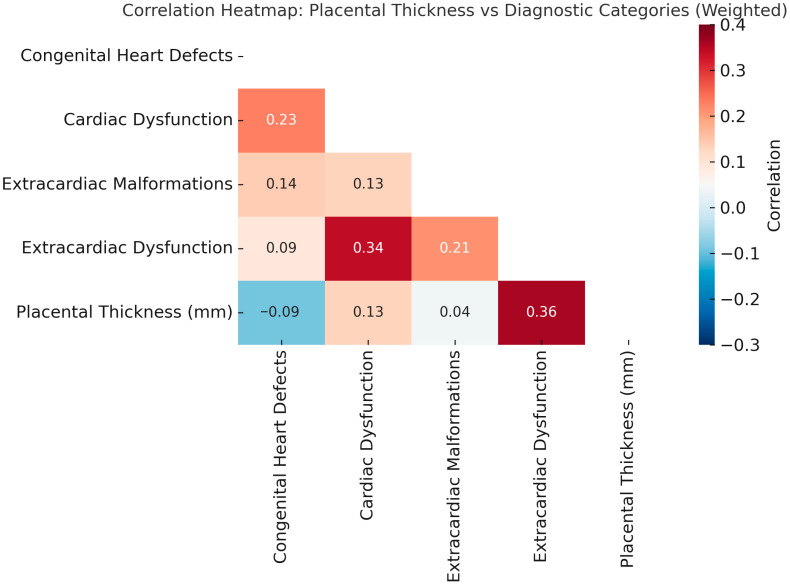 Figure 7
Peer Reviews
No public reviews on file for this paper yet. If you reviewed it on a platform where reviews are public (OpenReview, ICLR, NeurIPS, ICML), you can paste yours below so the community can read it here.
Videos
No videos yet. Explain this paper in a talk, walkthrough, or lecture? Add one.
Taxonomy
TopicsPregnancy and preeclampsia studies · Birth, Development, and Health · Gestational Diabetes Research and Management