Structural and Textural Ultrasound Features of Gastrocnemius Medialis in Chronic Stroke: Associations with Functional Outcomes and Spasticity
Clara Pujol-Fuentes, Juan Nicolas Cuenca-Zaldívar, Mª Dolores Navarro Pérez, Kristin Musselman, Francisco Álvarez-Salvago, Pablo Herrero, Samuel Fernández-Carnero

TL;DR
This study examines ultrasound features of the gastrocnemius medialis in chronic stroke patients and finds no significant differences from healthy controls.
Contribution
The study provides new insights into the lack of association between GM ultrasound features and functional outcomes in chronic stroke.
Findings
No significant differences in GM ultrasound parameters were found between stroke and control groups.
Stroke participants showed reduced dorsiflexion mobility and lower muscle strength.
Ultrasound parameters did not correlate with spasticity severity or functional measures.
Abstract
Background/Objectives: Stroke is a leading cause of disability, and post-stroke spasticity frequently impairs ankle mobility, strength, and gait. The gastrocnemius medialis (GM) is central to these deficits, yet the relationship between its ultrasound characteristics, functional outcomes, and spasticity severity remains unclear. This study aimed to compare structural and textural ultrasound features of the GM between individuals with chronic stroke presenting ankle spasticity and healthy controls, and to examine their associations with functional performance and spasticity severity. Methods: This case–control study included 26 individuals with stroke and 26 matched controls. Ultrasound assessments were performed using B-mode imaging to obtain parameters such as muscle thickness, pennation angle, and textural features (first-, second-, and higher-order). Functional measures included…
Genes, proteins, chemicals, diseases, species, mutations and cell lines named across the full text — each resolved to its canonical identifier and authoritative record.
Click any figure to enlarge with its caption.
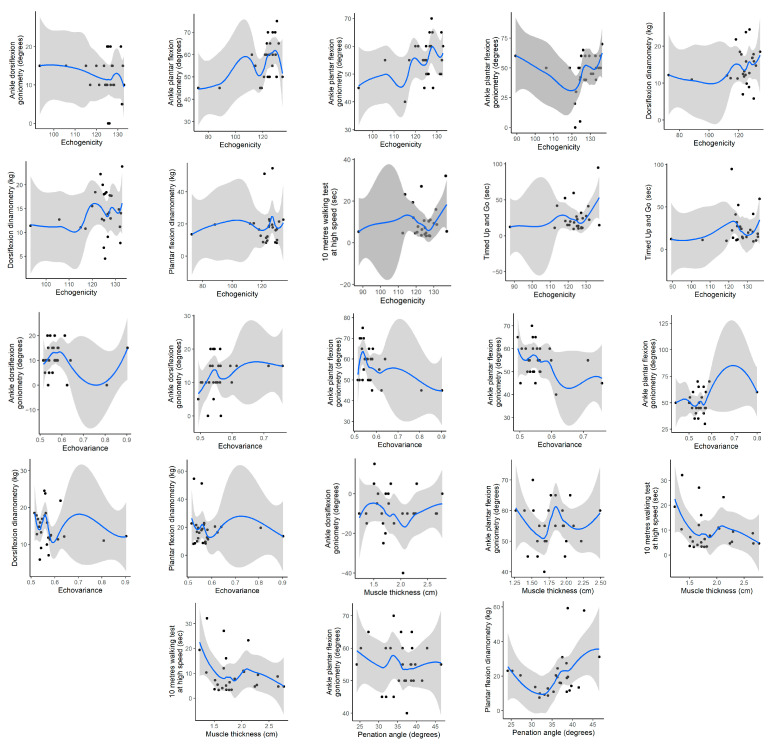 Figure 1
Peer Reviews
No public reviews on file for this paper yet. If you reviewed it on a platform where reviews are public (OpenReview, ICLR, NeurIPS, ICML), you can paste yours below so the community can read it here.
Videos
No videos yet. Explain this paper in a talk, walkthrough, or lecture? Add one.
Taxonomy
TopicsBotulinum Toxin and Related Neurological Disorders · Cerebral Palsy and Movement Disorders · Sports injuries and prevention