Super-Resolution Reconstruction of Sonograms Using Residual Dense Conditional Generative Adversarial Network
Zengbo Xu, Yiheng Wei

TL;DR
This paper introduces a new AI method to enhance the resolution of ultrasound images, improving both detail and clarity for better medical diagnosis.
Contribution
A novel Residual Dense Conditional GAN is proposed for high-quality super-resolution of medical sonograms.
Findings
The RDC-GAN method outperforms Bicubic, SRGAN, and SRCNN in both objective and subjective evaluations.
The method achieves four times magnification of ultrasound images while preserving texture details.
Super-resolution images show improved accuracy in cirrhosis staging compared to original images.
Abstract
A method for super-resolution reconstruction of sonograms based on Residual Dense Conditional Generative Adversarial Network (RDC-GAN) is proposed in this paper. It is well known that the resolution of medical ultrasound images is limited, and the single-frame image super-resolution algorithms based on a convolutional neural network are prone to losing texture details, extracting much fewer features, and then blurring the reconstructed images. Therefore, it is very important to reconstruct high-resolution medical images in terms of retaining textured details. A Generative Adversarial Network could learn the mapping relationship between low-resolution and high-resolution images. Based on GAN, a new network is designed, where the generation network is composed of dense residual modules. On the one hand, low-resolution (LR) images are input into the dense residual network, then the…
Genes, proteins, chemicals, diseases, species, mutations and cell lines named across the full text — each resolved to its canonical identifier and authoritative record.
Click any figure to enlarge with its caption.
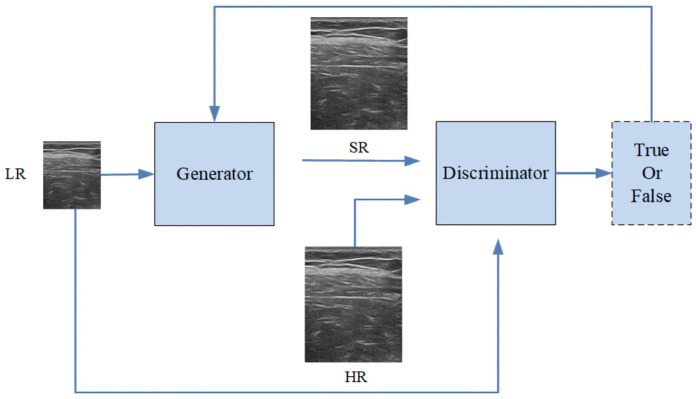 Figure 1
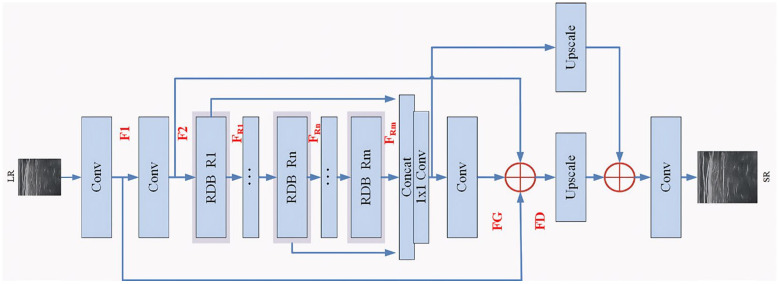 Figure 2
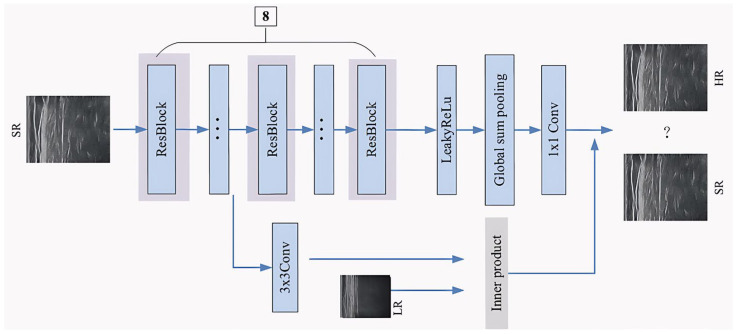 Figure 3
 Figure 4
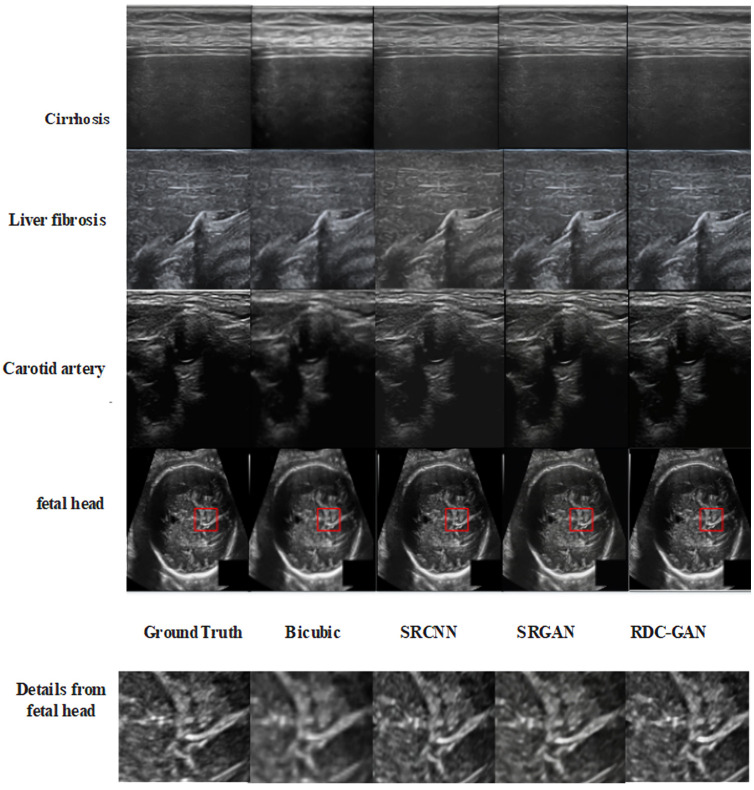 Figure 5
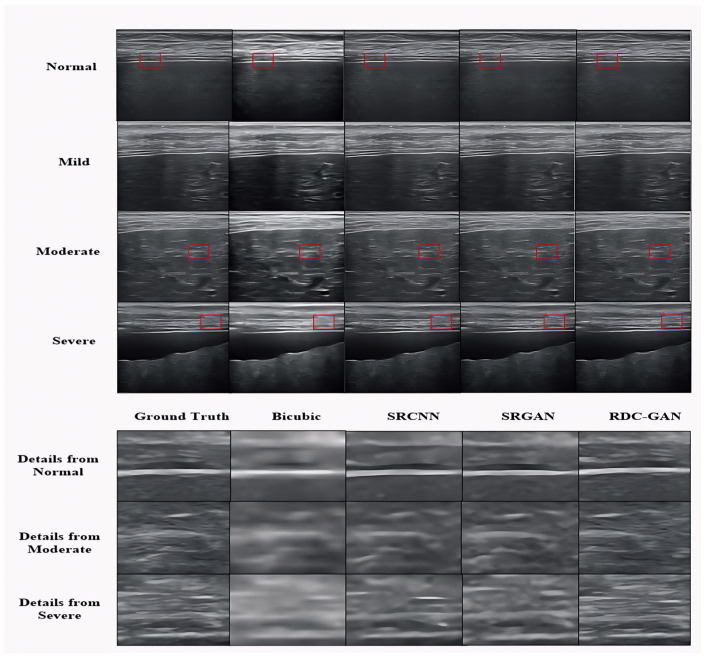 Figure 6
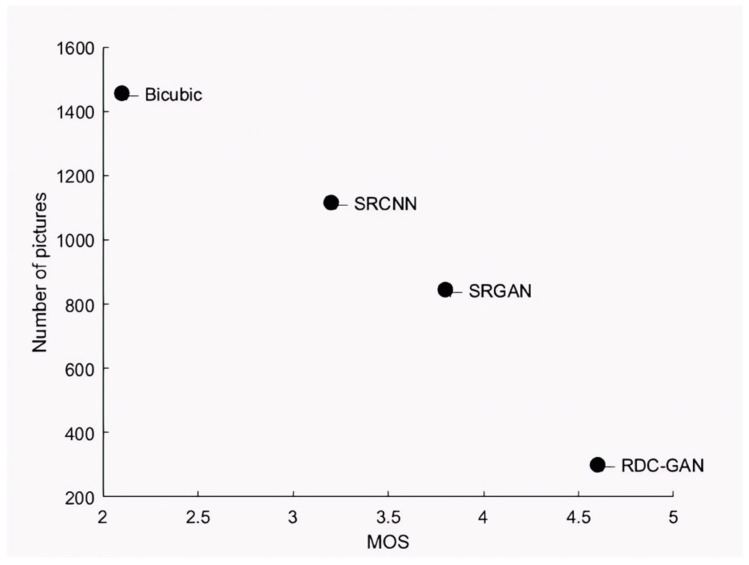 Figure 7
Peer Reviews
No public reviews on file for this paper yet. If you reviewed it on a platform where reviews are public (OpenReview, ICLR, NeurIPS, ICML), you can paste yours below so the community can read it here.
Videos
No videos yet. Explain this paper in a talk, walkthrough, or lecture? Add one.
Taxonomy
TopicsAdvanced Image Processing Techniques · Generative Adversarial Networks and Image Synthesis · Advanced Image Fusion Techniques