circ_0000132 Regulates Chicken Granulosa Cell Proliferation Apoptosis and E2/P4 Synthesis via miR-206 E2F5 Signaling
Huanqi Yang, Wei Li, Guanhua Fu, Sihan Liu, Tenghe Ma

TL;DR
This study shows how a circular RNA called circFBN1 helps chicken egg cells grow and produce hormones by interacting with miR-206 and E2F5.
Contribution
The study identifies a novel regulatory axis (circFBN1/miR-206/E2F5) involved in chicken granulosa cell function and steroid hormone synthesis.
Findings
circFBN1 promotes granulosa cell proliferation and inhibits apoptosis by upregulating PCNA, CDK1, and CCND1.
circFBN1 enhances estradiol and progesterone secretion by upregulating StAR and CYP11A1.
circFBN1 acts as a sponge for miR-206, which regulates E2F5 to control cell growth and hormone production.
Abstract
This study investigates the regulatory role of circFBN1 in chicken follicular granulosa cells (GCs) and its underlying molecular mechanisms through the miR-206/E2F5 pathway. circFBN1 was found to significantly enhance GC proliferation and inhibit apoptosis, as evidenced by increased expression of proliferation-related genes (PCNA, CDK1, and CCND1) and decreased expression of apoptosis-related genes (Caspase-3). Additionally, circFBN1 overexpression promoted the secretion of estradiol (E2) and progesterone (P4) by upregulating steroidogenesis-related genes (StAR and CYP11A1). Mechanistic studies revealed that circFBN1 functions as a molecular sponge for miR-206, thereby alleviating its inhibitory effect on the target gene E2F5. Dual-luciferase reporter assays confirmed the specific binding between circFBN1 and miR-206. Overexpression of miR-206 had the opposite effects, inhibiting GC…
Genes, proteins, chemicals, diseases, species, mutations and cell lines named across the full text — each resolved to its canonical identifier and authoritative record.
Click any figure to enlarge with its caption.
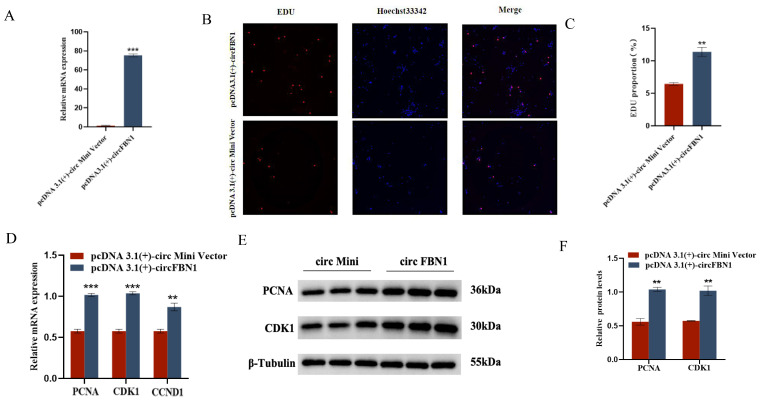 Figure 1
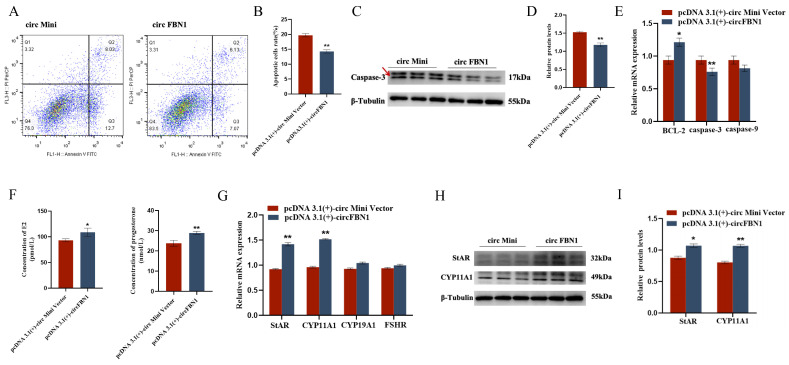 Figure 2
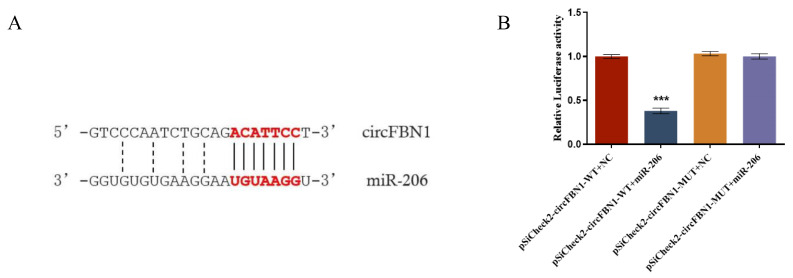 Figure 3
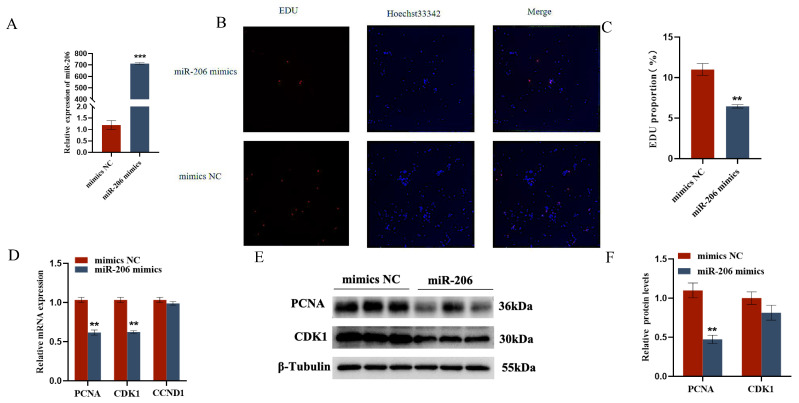 Figure 4
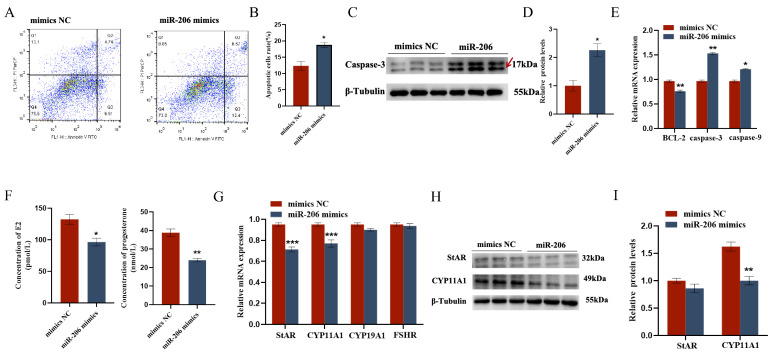 Figure 5
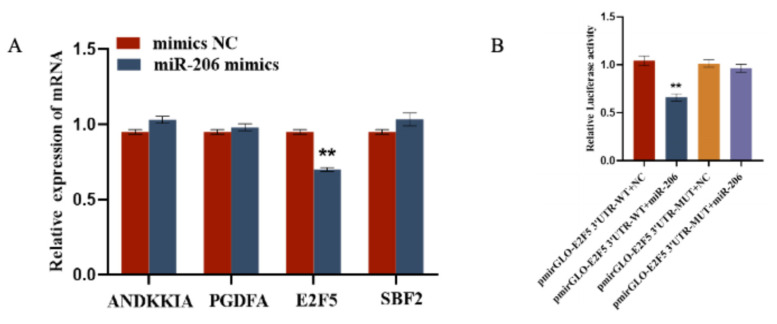 Figure 6
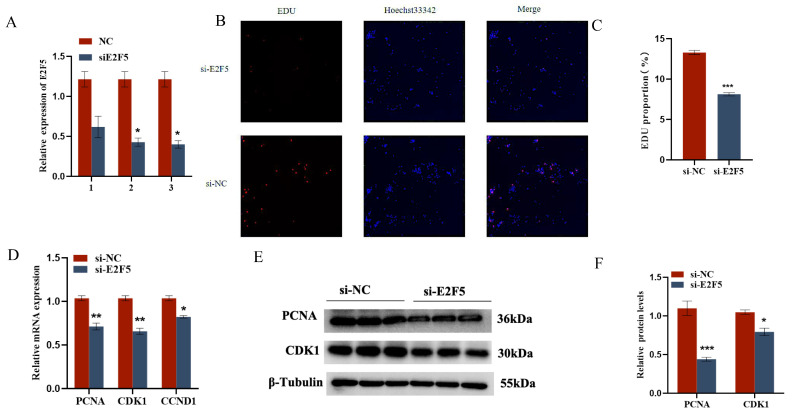 Figure 7
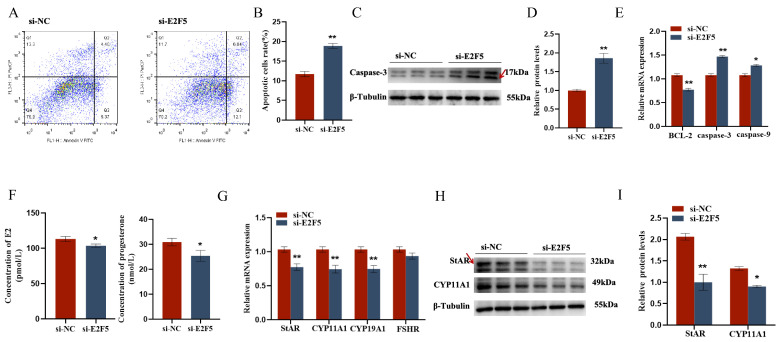 Figure 8
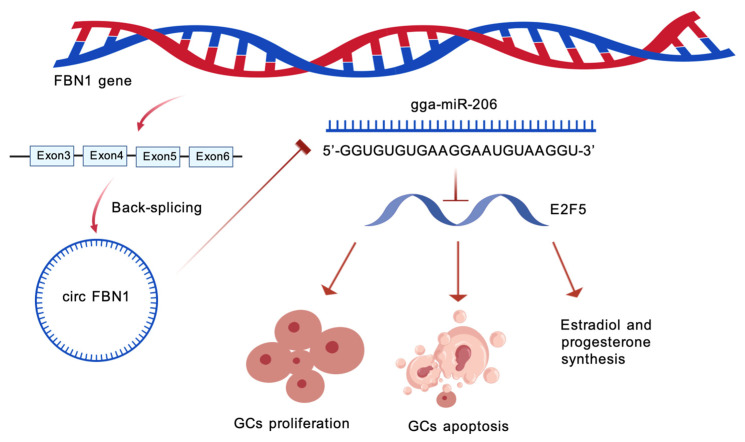 Figure 9
Peer Reviews
No public reviews on file for this paper yet. If you reviewed it on a platform where reviews are public (OpenReview, ICLR, NeurIPS, ICML), you can paste yours below so the community can read it here.
Videos
No videos yet. Explain this paper in a talk, walkthrough, or lecture? Add one.
Taxonomy
TopicsCircular RNAs in diseases · Reproductive Biology and Fertility · MicroRNA in disease regulation