GC Content and Thermal Stability of Double-Stranded RNA: Fragments of Microsporidia Vairimorpha ceranae and Nosema bombycis AT-Rich Genes Are Sensitive to Standard Heat Treatment
Ruslan R. Fadeev, Sergey A. Timofeev, Igor V. Senderskiy, Viacheslav V. Dolgikh

TL;DR
This study shows that AT-rich dsRNA from microsporidia is sensitive to heat, leading to degradation and loss of RNAi activity, which can be mitigated with cations.
Contribution
The study reveals the thermal sensitivity of AT-rich dsRNA from microsporidia and identifies cations as stabilizers to prevent degradation during heat treatment.
Findings
AT-rich dsRNA from microsporidia degrades at 95°C, unlike control fragments with normal GC content.
Mono- and divalent cations stabilize dsRNA during heating, preserving RNAi activity.
Thermal destruction of dsRNA reduces pest-suppressing activity in Colorado potato beetle larvae.
Abstract
Heating at 95 °C or boiling E. coli HT115 (DE3) cells is often used to extract heterologous dsRNA or kill bacteria, although these temperatures cause dsRNA denaturation and destruction. In this study, we examined the risk of degradation of dsRNA fragments of AT-rich genes at high temperature. The expression of dsRNA fragments of AT-rich genes encoding DNA replication enzymes from the microsporidia Vairimorpha ceranae and Nosema bombycis in E. coli HT115 (DE3) was accompanied by heating the bacteria at 95 °C for 30 min. In contrast to four control fragments with normal GC content, the AT-rich dsRNAs of microsporidia were destroyed by this treatment. The in vitro synthesis and heating of the studied dsRNAs showed the degradation of both microsporidia and control fragments. The thermal degradation of in vitro-synthesized control dsRNA with a normal GC content of 47.6% was prevented by the…
Genes, proteins, chemicals, diseases, species, mutations and cell lines named across the full text — each resolved to its canonical identifier and authoritative record.
Click any figure to enlarge with its caption.
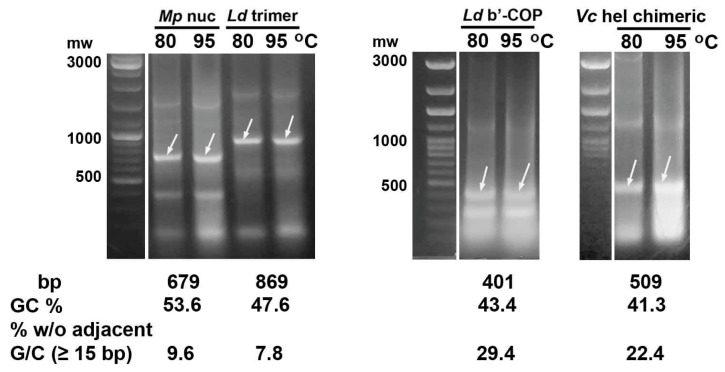 Figure 1
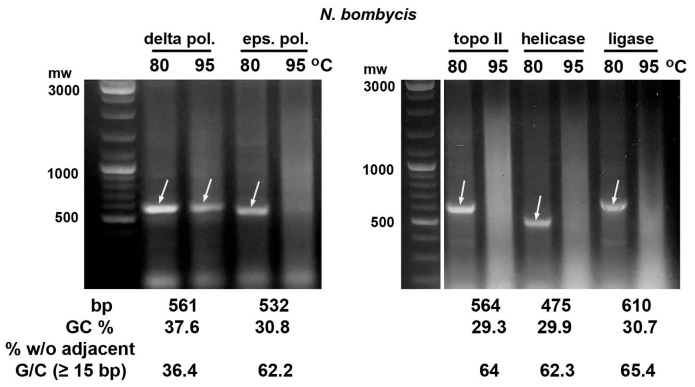 Figure 2
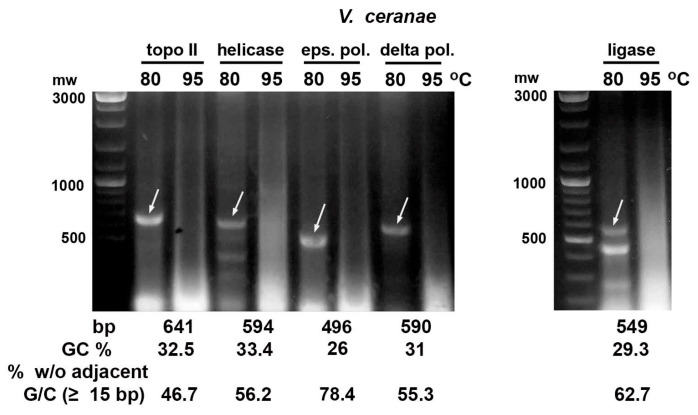 Figure 3
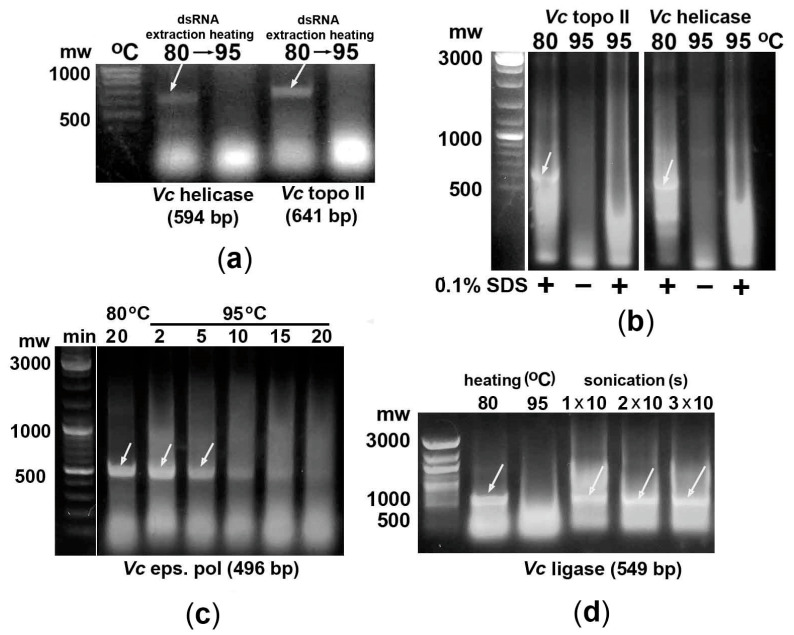 Figure 4
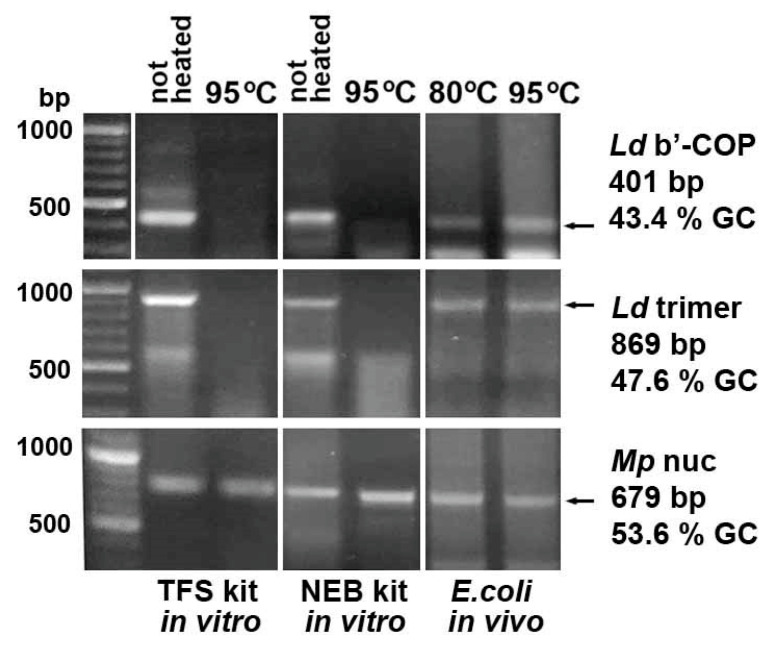 Figure 5
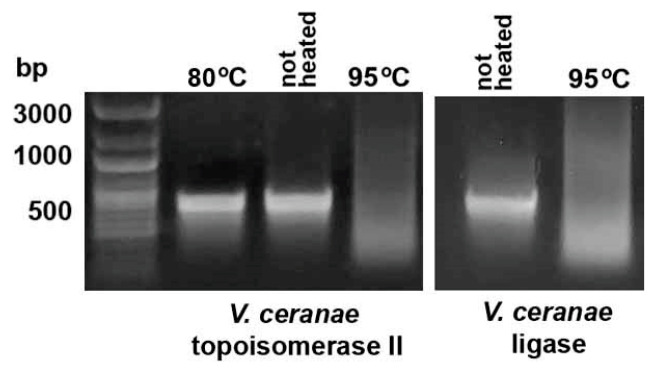 Figure 6
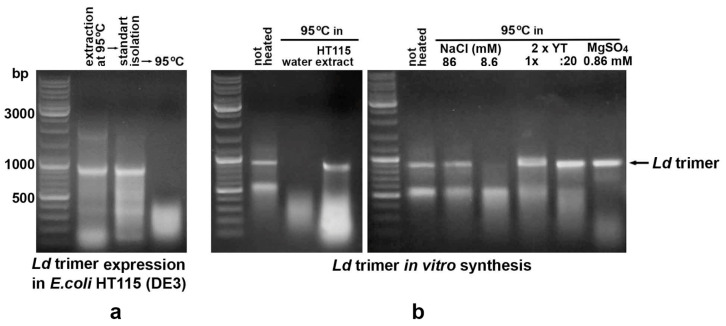 Figure 7
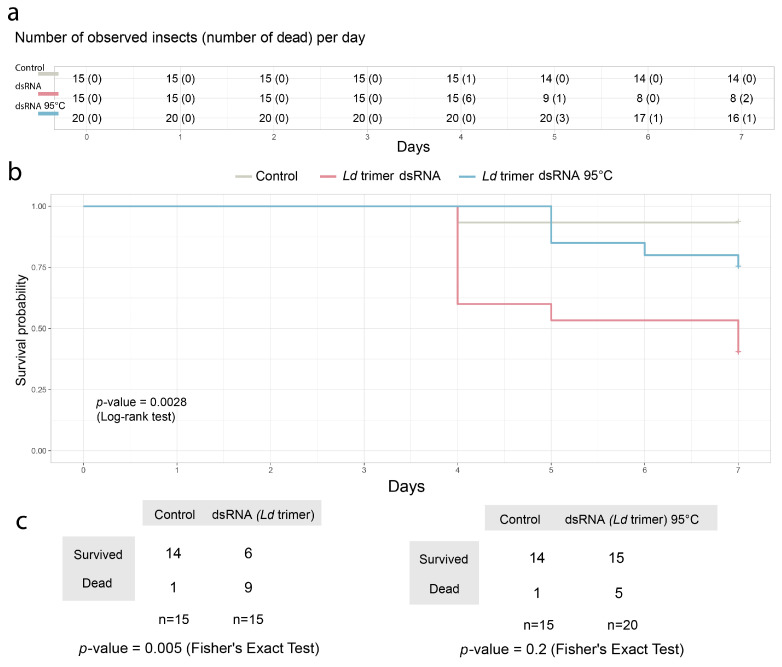 Figure 8
Peer Reviews
No public reviews on file for this paper yet. If you reviewed it on a platform where reviews are public (OpenReview, ICLR, NeurIPS, ICML), you can paste yours below so the community can read it here.
Videos
No videos yet. Explain this paper in a talk, walkthrough, or lecture? Add one.
Taxonomy
TopicsInsect and Pesticide Research · Viral gastroenteritis research and epidemiology · Parasitic Infections and Diagnostics