A Reproducible 3D Classification of Orbital Morphology Derived from CBCT and FBCT Segmentation
Natalia Bielecka-Kowalska, Bartosz Bielecki-Kowalski, Marcin Kozakiewicz

TL;DR
This paper introduces a reproducible 3D classification system for orbital morphology using CT scans, which could aid in surgical planning when anatomical references are unavailable.
Contribution
A novel 3D morphological classification of orbits using clustering and statistical validation for surgical applications.
Findings
Three distinct orbital morphotypes were identified using k-means clustering and validated with high accuracy.
Male orbits were significantly deeper and wider than female orbits.
A simplified decision algorithm achieved 82.1% classification accuracy.
Abstract
Background: Accurate reconstruction of the orbit after trauma or oncological resection requires reliable anatomical references. In unilateral cases, the contralateral orbit can guide repair, but bilateral injuries or pathologies remove this option. To address this problem, we developed a new morphological classification of orbits based on three linear dimensions. Methods: A total of 499 orbits from patients of Caucasian descent (age 8–88 years) were analyzed using three-dimensional models generated from cone-beam and fan-beam CT scans. Orbital depth (D), height (H), and width (W) were measured, and proportional indices were calculated. K-means clustering (k = 3) identified recurring morphotypes, validated by linear discriminant analysis (LDA) and supported by ANOVA, Kruskal–Wallis, and correlation tests (age and sex). Results: Three morphotypes were identified: Tall & Broad (type A,…
Genes, proteins, chemicals, diseases, species, mutations and cell lines named across the full text — each resolved to its canonical identifier and authoritative record.
Click any figure to enlarge with its caption.
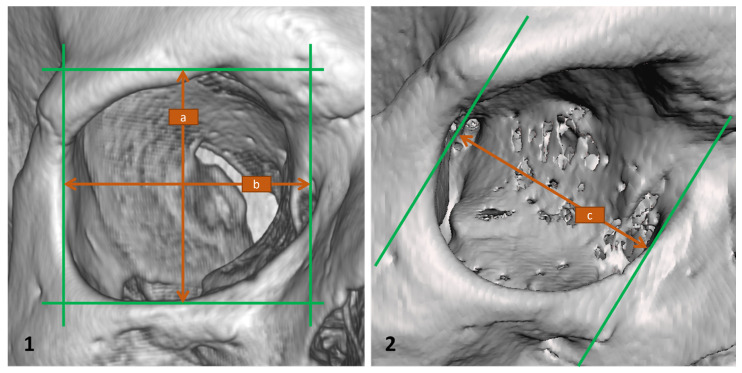 Figure 1
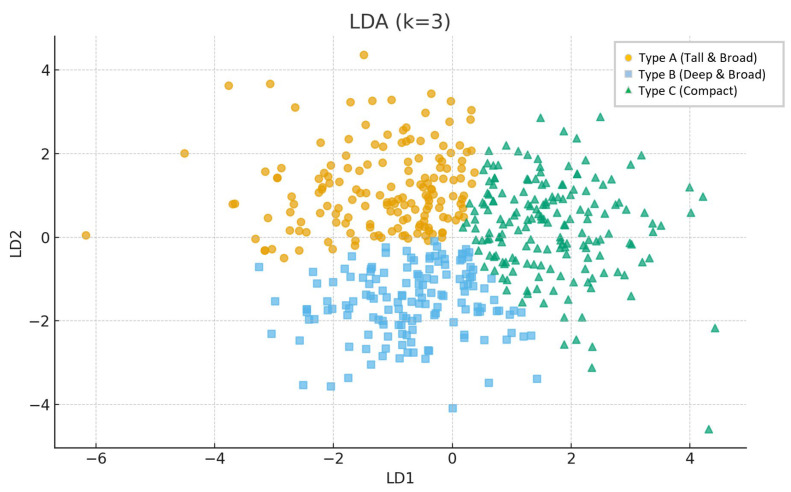 Figure 2
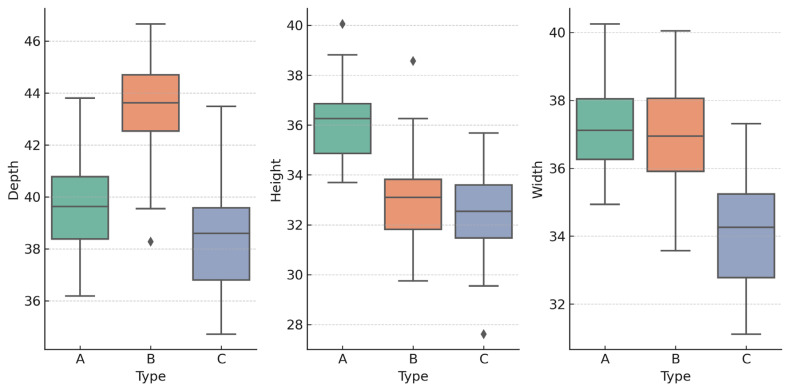 Figure 3
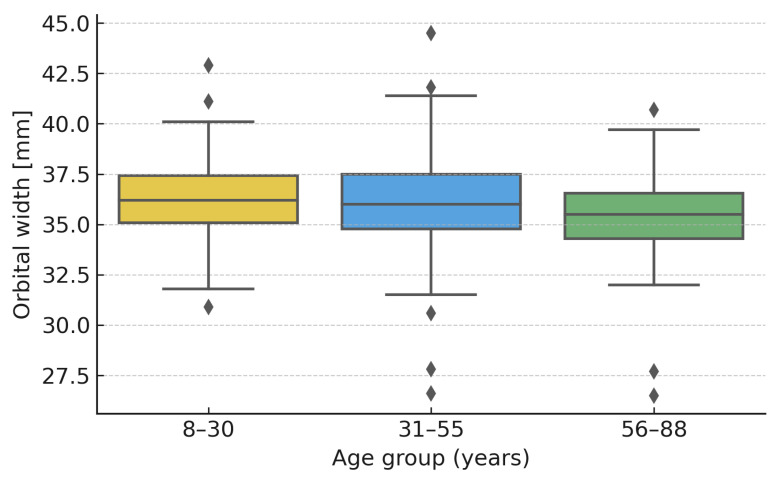 Figure 4
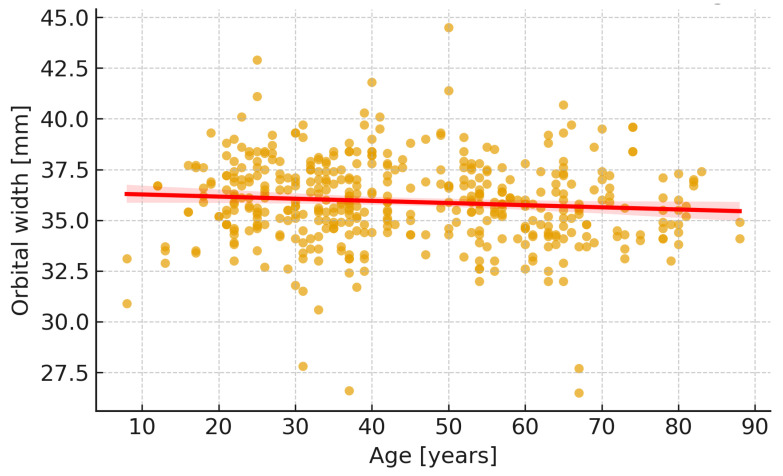 Figure 5
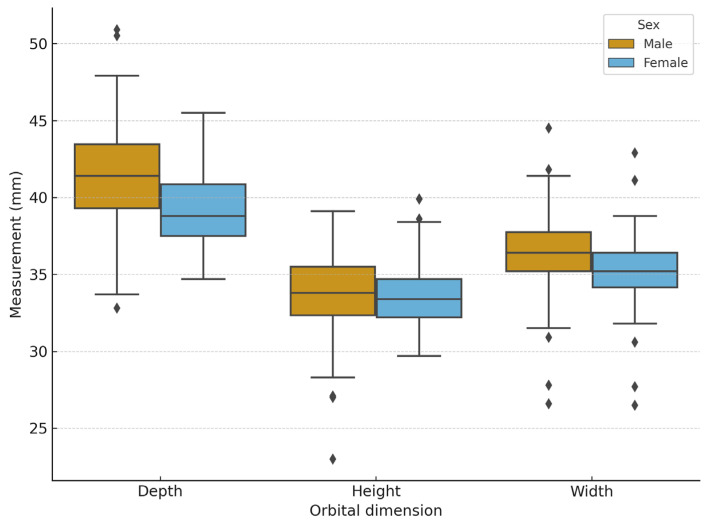 Figure 6
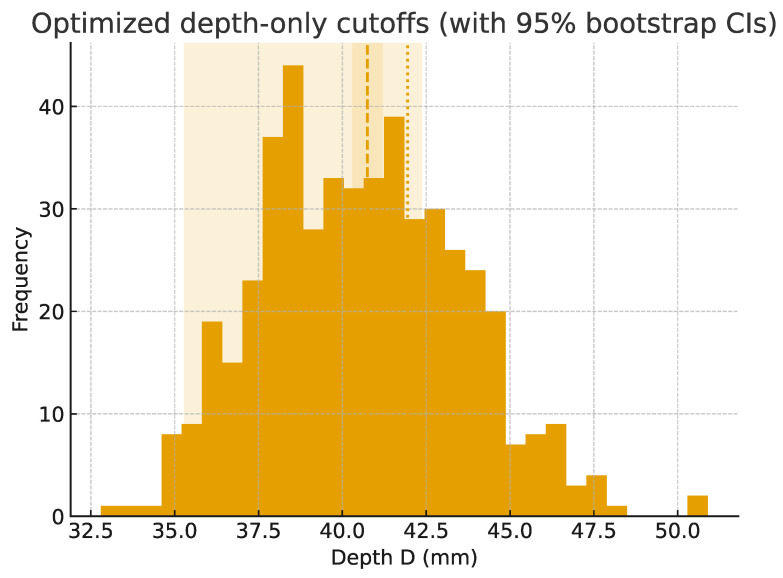 Figure 7
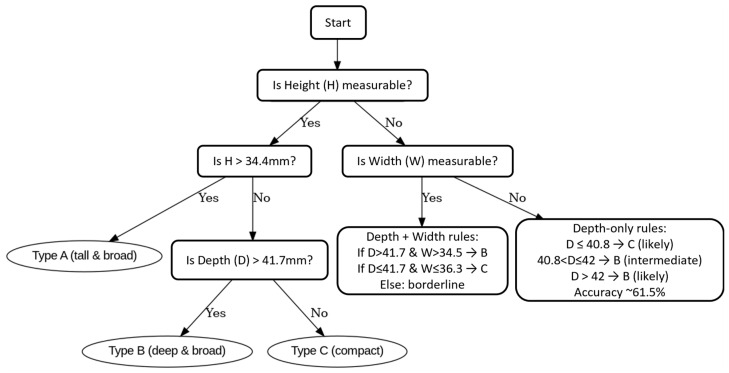 Figure 8
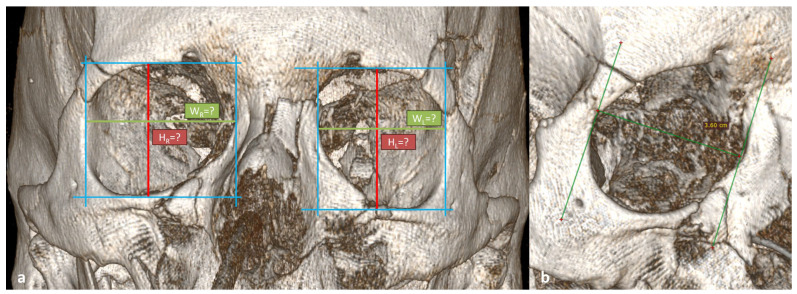 Figure 9
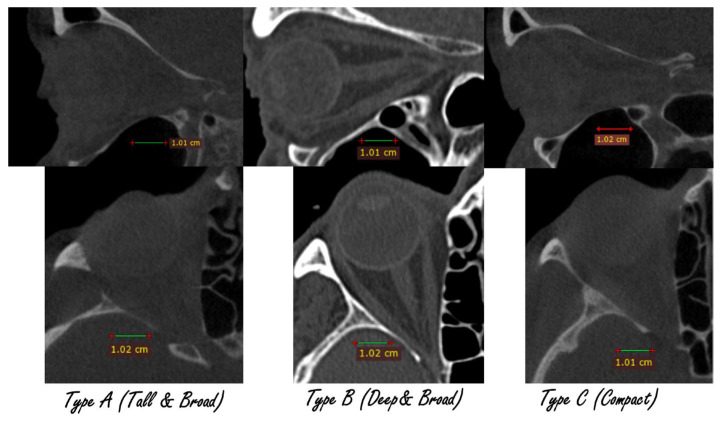 Figure 10
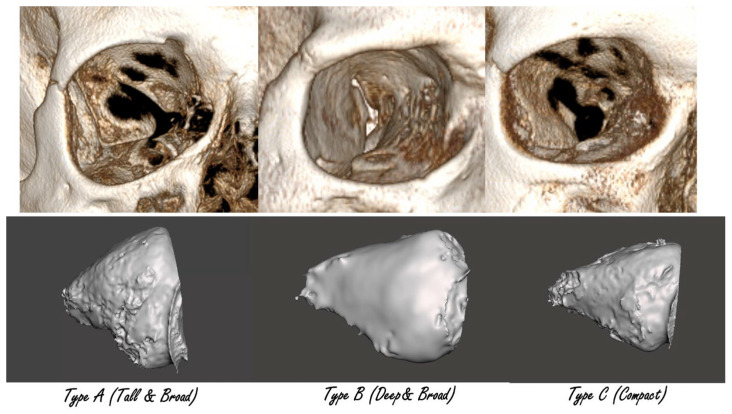 Figure 11
Peer Reviews
No public reviews on file for this paper yet. If you reviewed it on a platform where reviews are public (OpenReview, ICLR, NeurIPS, ICML), you can paste yours below so the community can read it here.
Videos
No videos yet. Explain this paper in a talk, walkthrough, or lecture? Add one.
Taxonomy
TopicsFacial Trauma and Fracture Management · Meningioma and schwannoma management · Ophthalmology and Eye Disorders