Hybrid Poly(Lactic)-Chitosan Scaffold Intensifying In Situ Bioprocessing of Rindera graeca Transgenic Roots for Enhanced Rinderol Production
Kamil Wierzchowski, Szymon Bober, Aleksandra Bandzerewicz, Miroslav Šlouf, Jiří Hodan, Agnieszka Gadomska-Gajadhur, Katarzyna Sykłowska-Baranek, Maciej Pilarek

TL;DR
A hybrid scaffold made of poly(lactic) and chitosan boosts rinderol production in Rindera graeca roots, a plant with potential cancer-fighting properties.
Contribution
A novel hybrid scaffold system is introduced to enhance rinderol yield from Rindera graeca hairy roots using chitosan-based materials.
Findings
A hybrid poly(lactic)–chitosan scaffold increased rinderol production 635-fold compared to reference scaffolds.
Fungal chitosan at 33% concentration in the scaffold yielded the highest rinderol production (3660 µg gDW−1).
Chitosan concentration in the scaffold was identified as a key factor influencing rinderol production.
Abstract
In vitro cultured biomass of Rindera graeca, a rare endemic plant, is an efficient renewable source of bioactive naphthoquinones, e.g., rinderol, a potential bioactive inducer of apoptosis in cancer cells. Bioengineering strategies, as biomass immobilization on functionalized biomaterial-based scaffolds, elicitation by chitosan, and in situ extraction of metabolites, are tested for intensifying naphthoquinones production in R. graeca hairy roots. The aim of the study was to investigate the effects of hybrid poly(lactic)–chitosan scaffolds on biomass proliferation and rinderol production in R. graeca hairy roots. Effects of chitosan origin (fungal or squid), molecular mass (350–1800 kDa), and concentration (up to 45%) in the developed hybrid scaffolds have been quantitatively identified, and the results were compared to the reference culture system containing an unmodified PLA-based…
Genes, proteins, chemicals, diseases, species, mutations and cell lines named across the full text — each resolved to its canonical identifier and authoritative record.
Click any figure to enlarge with its caption.
 Figure 1
 Figure 2
 Figure 3
 Figure 4
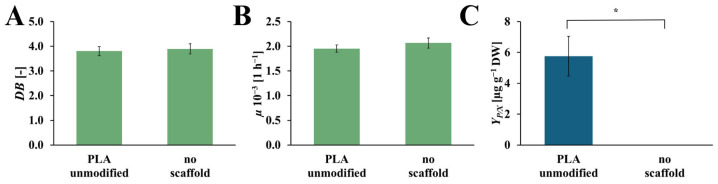 Figure 5
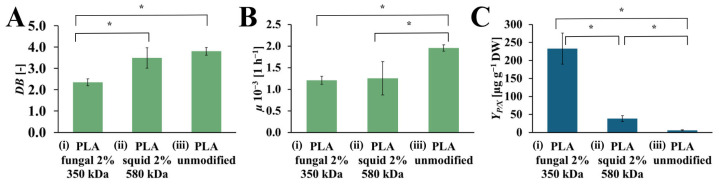 Figure 6
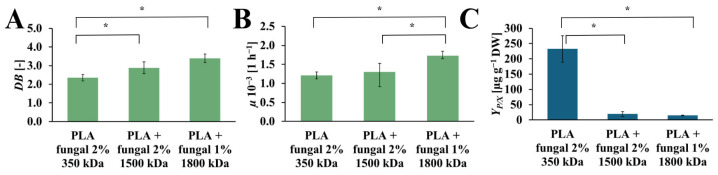 Figure 7
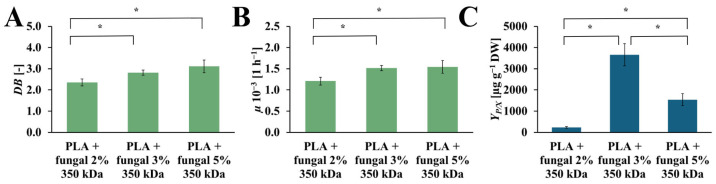 Figure 8
 Figure 9
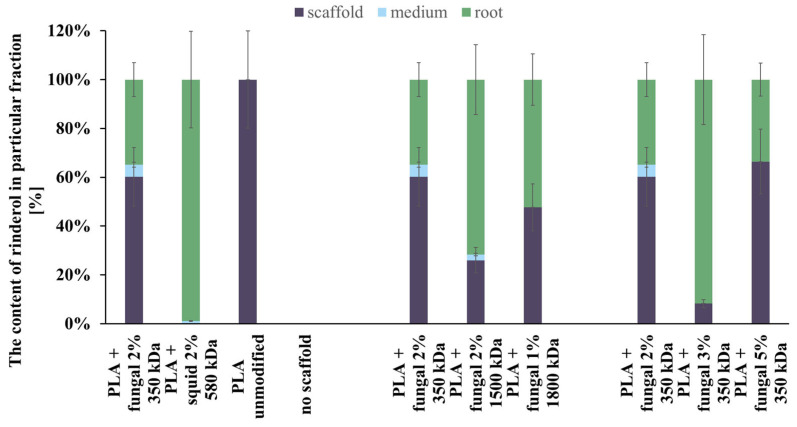 Figure 10
Peer Reviews
No public reviews on file for this paper yet. If you reviewed it on a platform where reviews are public (OpenReview, ICLR, NeurIPS, ICML), you can paste yours below so the community can read it here.
Videos
No videos yet. Explain this paper in a talk, walkthrough, or lecture? Add one.
Taxonomy
TopicsPlant tissue culture and regeneration · Natural Compound Pharmacology Studies · Plant-Derived Bioactive Compounds