A CMOS Voltage Reference with PTAT Current Using DIBL Compensation for Low Line Sensitivity
Minji Jung, Youngwoo Ji

TL;DR
This paper introduces a low-power CMOS voltage reference with improved sensitivity to supply voltage changes.
Contribution
A novel DIBL-based compensation path is used to reduce line sensitivity in PTAT current generation.
Findings
The circuit achieves 0.01%/V line sensitivity for the voltage reference.
It consumes 68 nW while generating a 538 mV reference voltage and 38 nA PTAT current.
The temperature coefficient is 58 ppm/℃ over a wide temperature range.
Abstract
This paper presents a low-power CMOS voltage reference with low supply sensitivity, designed and verified in a 180 nm standard CMOS technology. A DIBL-based line-sensitivity (LS) compensation path is incorporated into the conventional PTAT generation circuit to simultaneously provide a reference voltage and a bias current with improved LS. The proposed circuit achieves LS values of 0.01%/V for the voltage reference and 0.07%/V for the bias current reference over a supply voltage range of 1.4 V to 2 V. It generates a reference voltage of 538 mV and a PTAT current of 38 nA, consuming 68 nW. The simulated temperature coefficient is 58 ppm/℃ from −40 °C to 130 °C, and the power supply rejection ratio is −59 dB at 100 Hz.
Genes, proteins, chemicals, diseases, species, mutations and cell lines named across the full text — each resolved to its canonical identifier and authoritative record.
Click any figure to enlarge with its caption.
 Figure 1
 Figure 2
 Figure 3
 Figure 4
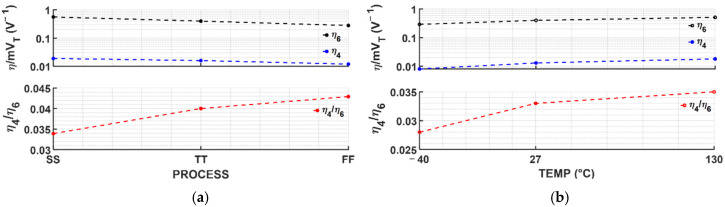 Figure 5
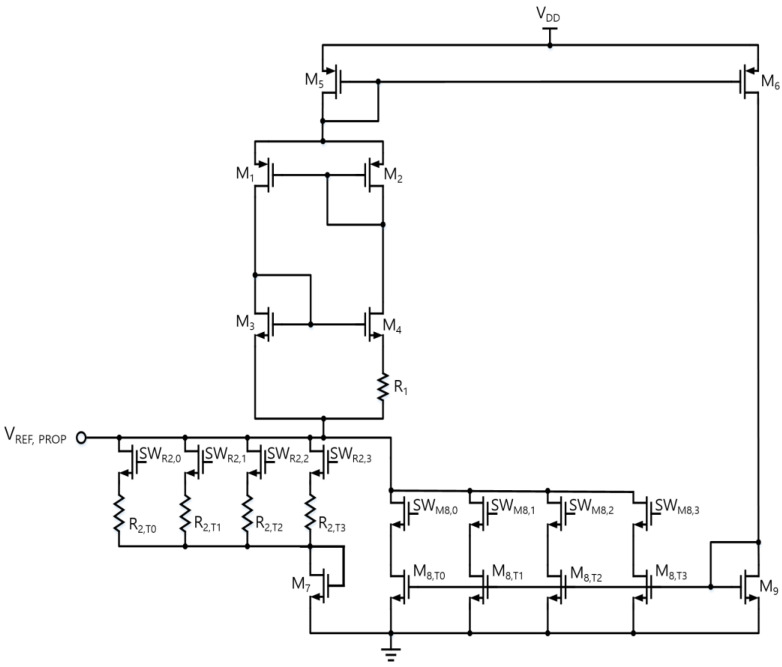 Figure 6
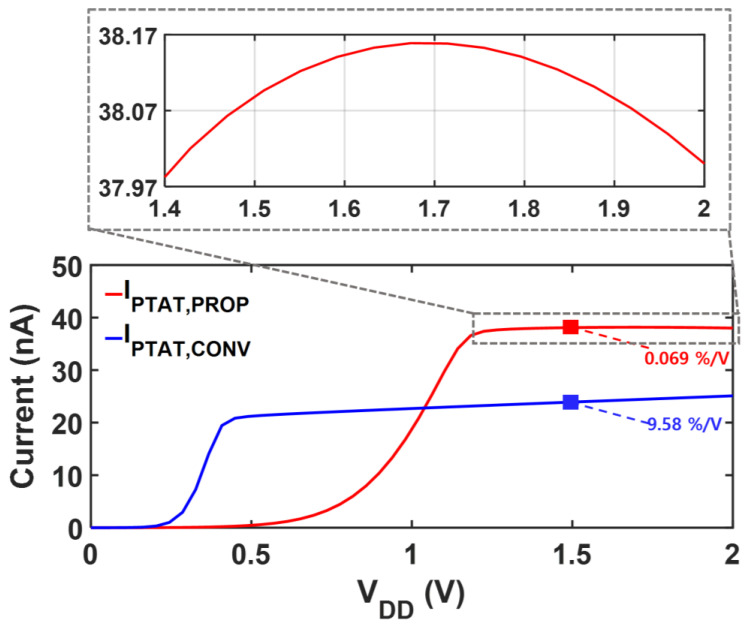 Figure 7
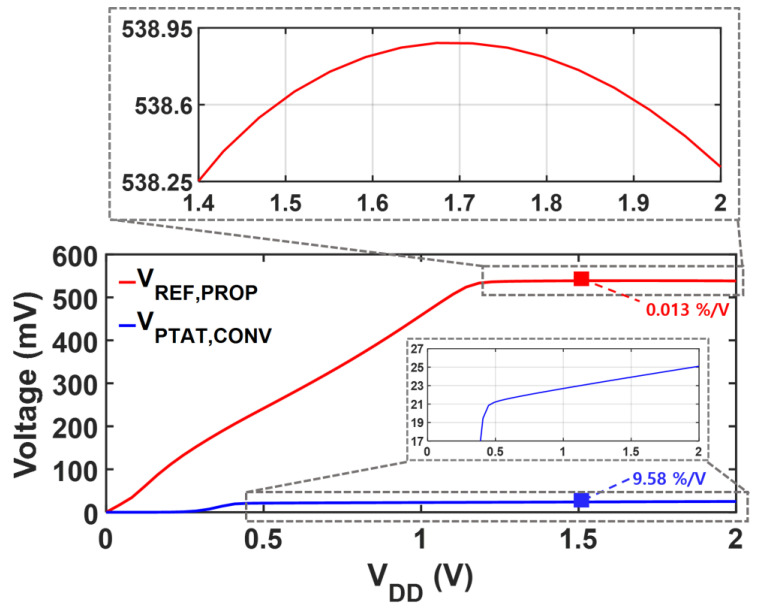 Figure 8
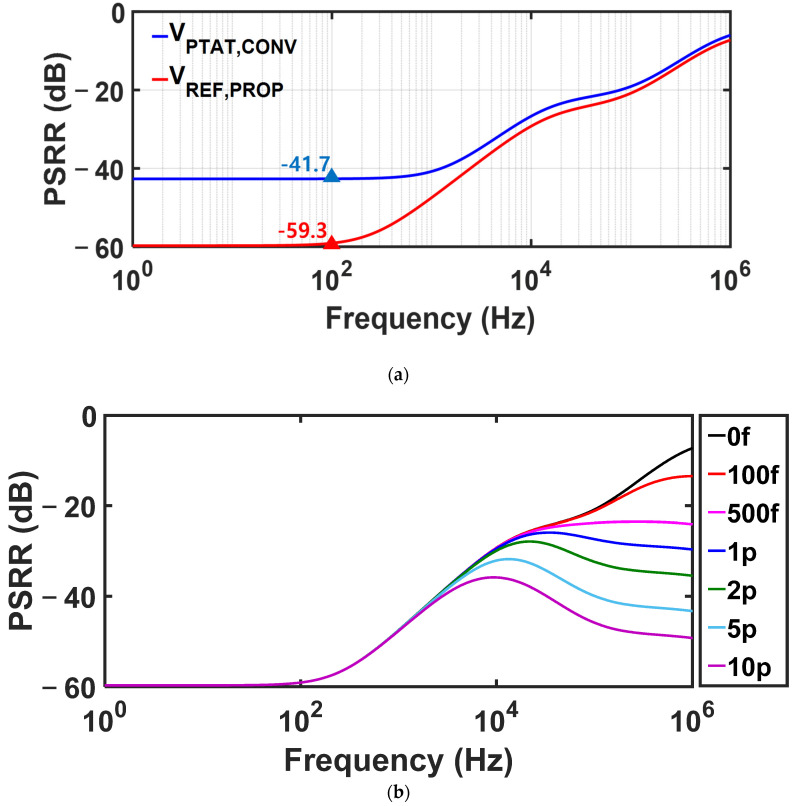 Figure 9
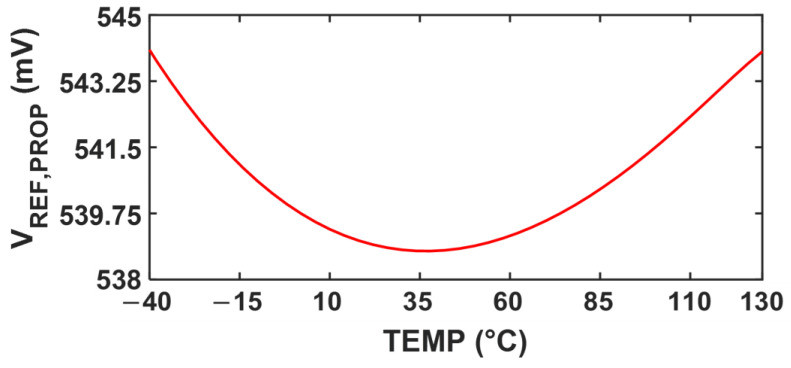 Figure 10
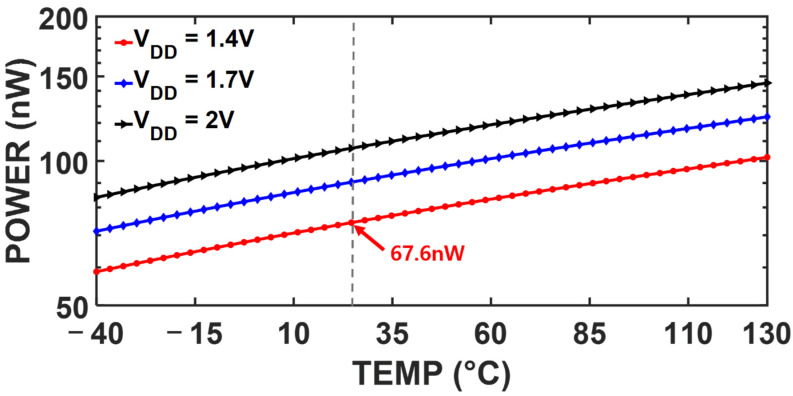 Figure 11
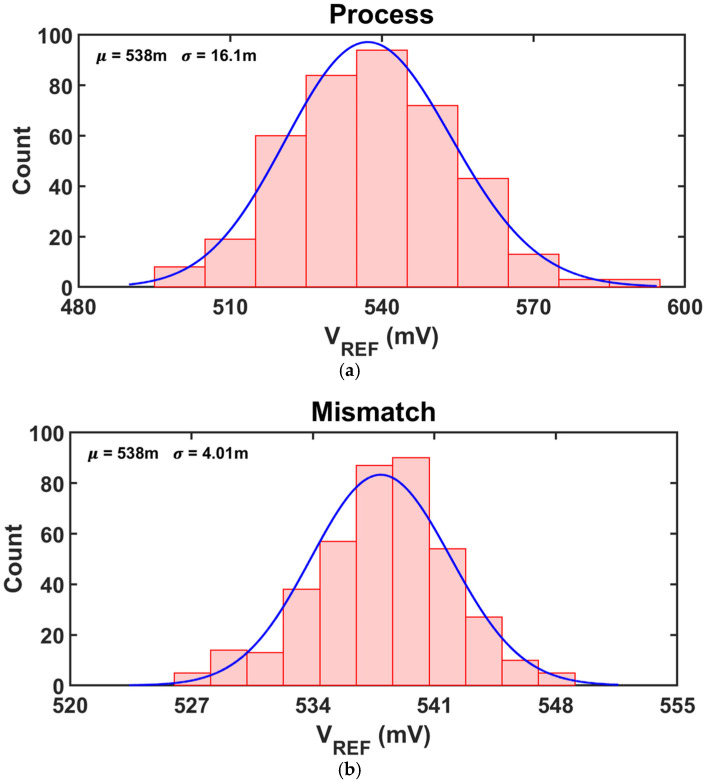 Figure 12
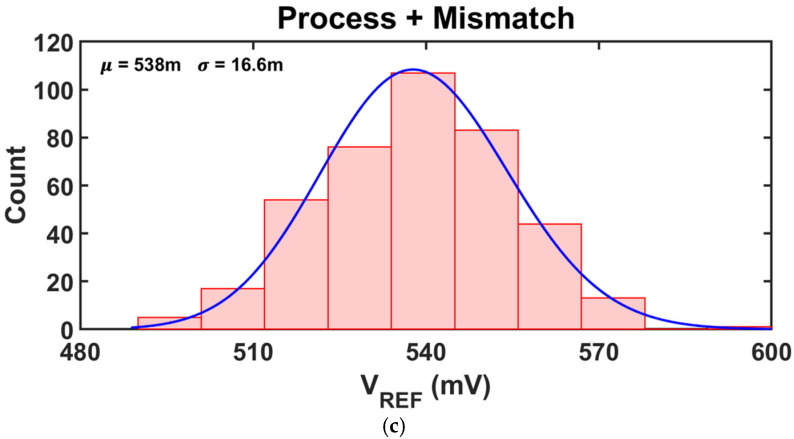 Figure 13
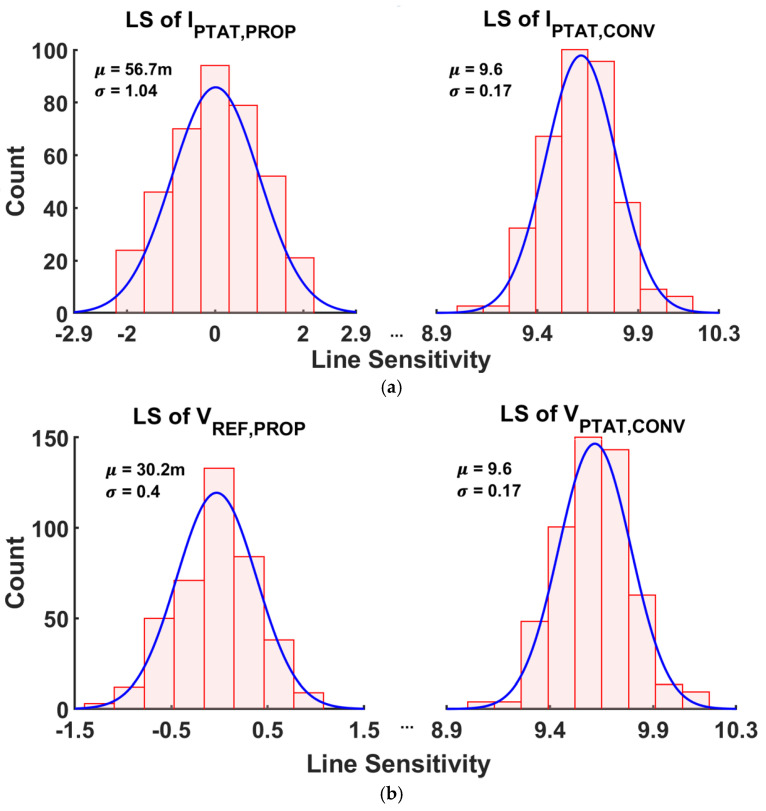 Figure 14
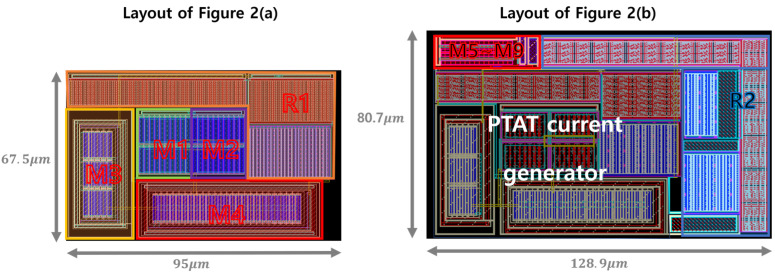 Figure 15
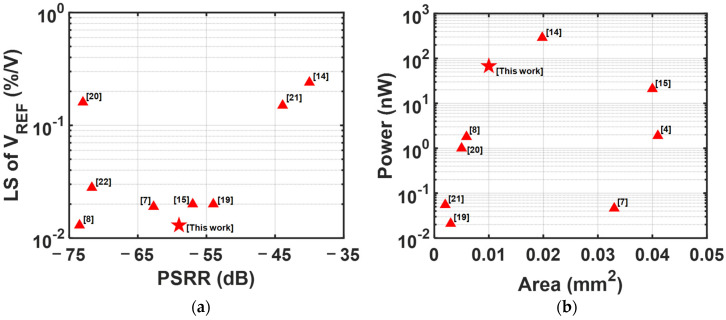 Figure 16
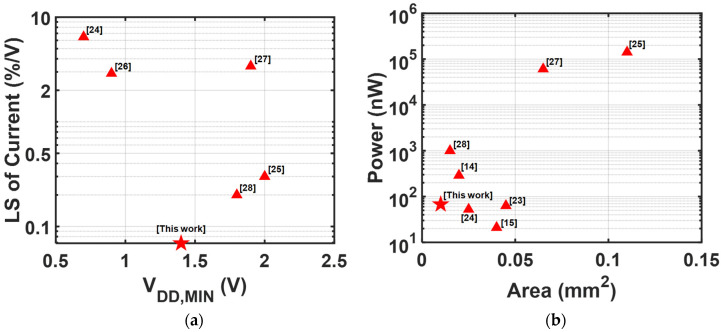 Figure 17
Peer Reviews
No public reviews on file for this paper yet. If you reviewed it on a platform where reviews are public (OpenReview, ICLR, NeurIPS, ICML), you can paste yours below so the community can read it here.
Videos
No videos yet. Explain this paper in a talk, walkthrough, or lecture? Add one.
Taxonomy
TopicsAnalog and Mixed-Signal Circuit Design · Low-power high-performance VLSI design · Innovative Energy Harvesting Technologies