Dysfunction in Cardiovascular Autonomic Modulation Caused by Chronic Use of Ketamine Hydrochloride Can Be Prevented by Aerobic Exercise Training in Wistar Rats
Adriano Dos-Santos, Lucas Porto Fernandes dos Santos, Gabriela da Silva-Santos, Bruno Durante da Silva, Bruno Nascimento-Carvalho, Hunter Douglas de Souza-Lima, Nicolas da Costa-Santos, Erico Chagas Caperuto, Nathalia Bernardes, Katia De Angelis, Maria Claudia Irigoyen

TL;DR
Aerobic exercise can prevent heart issues caused by long-term ketamine use in rats, suggesting exercise could help people exposed to ketamine.
Contribution
This study shows aerobic training can counteract ketamine-induced cardiovascular dysfunction in a rat model.
Findings
Chronic ketamine increased blood pressure and reduced baroreflex sensitivity in sedentary rats.
Aerobic exercise preserved autonomic function and improved baroreflex sensitivity in ketamine-treated rats.
Trained rats showed similar heart rate variability to controls despite ketamine exposure.
Abstract
Background/Objectives: Ketamine, widely used for its anesthetic and analgesic properties, has been linked to cardiotoxic effects, particularly with chronic use. Prolonged ketamine exposure may impair cardiovascular function, while aerobic exercise is known to promote protective cardiovascular adaptations. This study aimed to evaluate whether aerobic training can mitigate the deleterious cardiovascular effects of chronic ketamine administration in rats. Methods: Twenty-four Wistar rats were randomly assigned to four groups: sedentary control (S), trained control (T), sedentary with ketamine (S-ket), and trained with ketamine (T-ket). Ketamine was administered intraperitoneally at a dose of 10 mg/kg, three times per week for six weeks. Aerobic training was conducted on a treadmill in the trained groups throughout the protocol. At the end of the experiment, cardiac function was assessed by…
Genes, proteins, chemicals, diseases, species, mutations and cell lines named across the full text — each resolved to its canonical identifier and authoritative record.
Click any figure to enlarge with its caption.
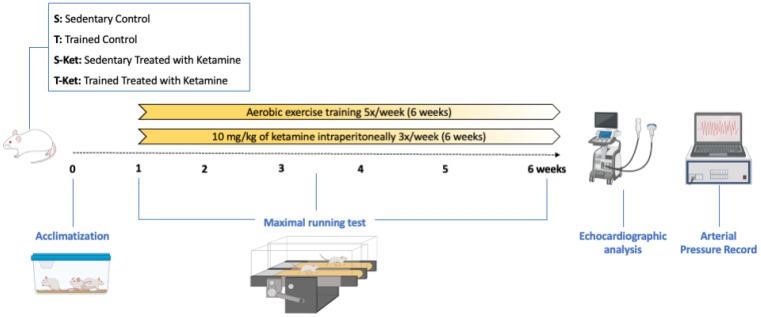 Figure 1
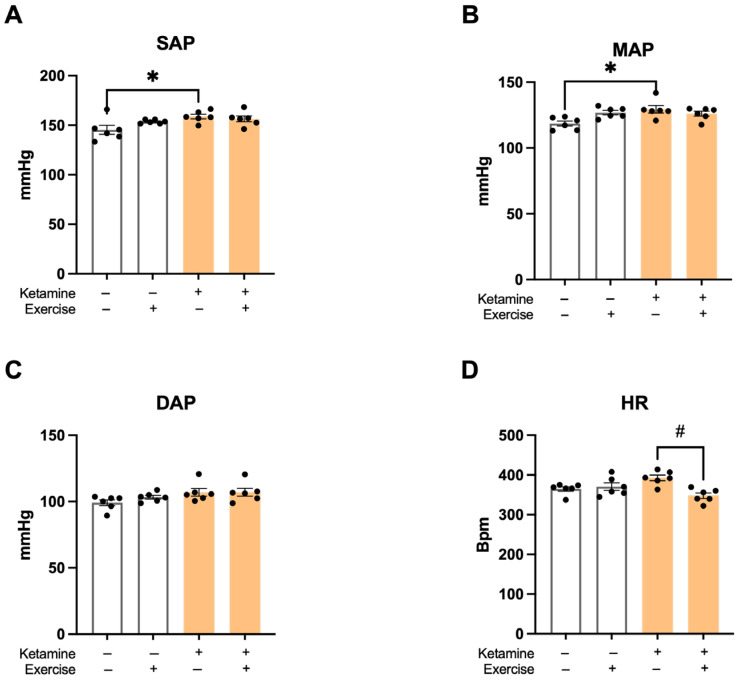 Figure 2
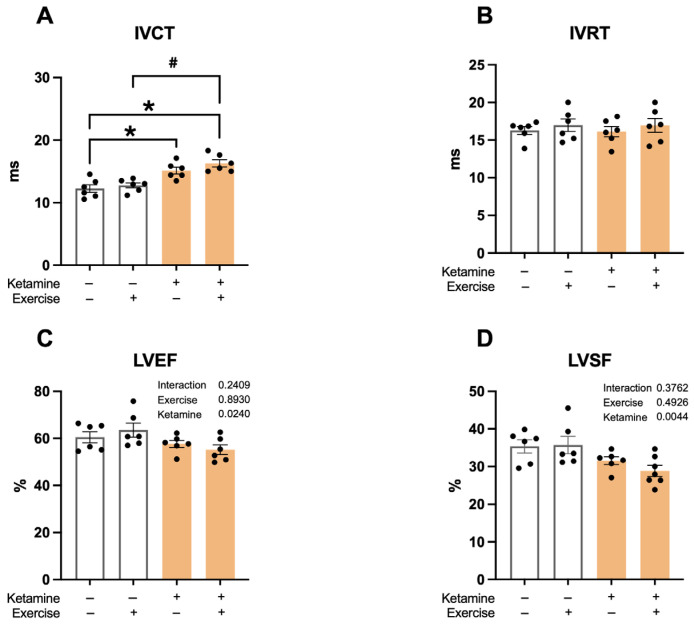 Figure 3
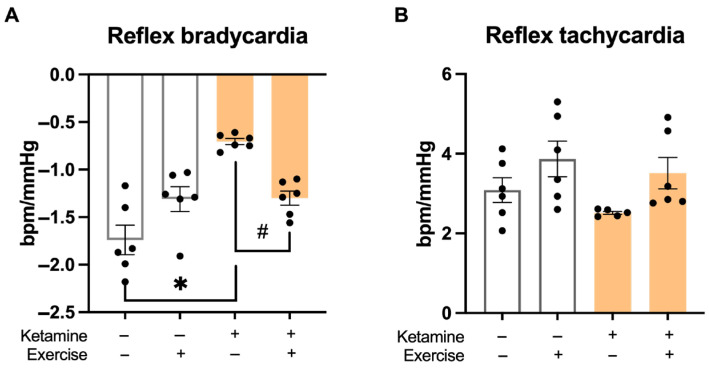 Figure 4
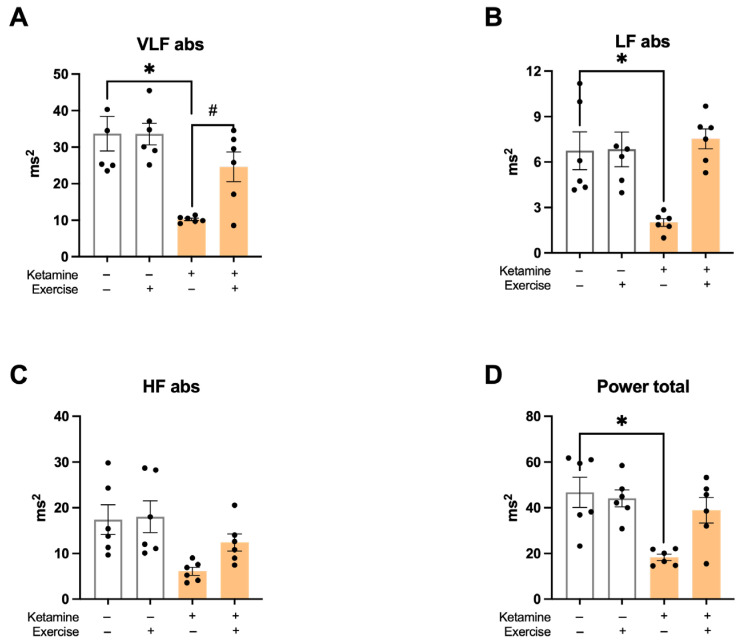 Figure 5
Peer Reviews
No public reviews on file for this paper yet. If you reviewed it on a platform where reviews are public (OpenReview, ICLR, NeurIPS, ICML), you can paste yours below so the community can read it here.
Videos
No videos yet. Explain this paper in a talk, walkthrough, or lecture? Add one.
Taxonomy
TopicsTreatment of Major Depression · Veterinary Pharmacology and Anesthesia · Anesthesia and Neurotoxicity Research