Hand Size Measurements in Children Aged 1–15 Years to Help the Development of Pediatric Electromyography Sensors for Neuromuscular Monitoring
Réka Nemes, Erzsébet Németh, Katalin A. Szatmári, Adrienn Timkó, Péter Luterán, Sorin J. Brull, Béla Fülesdi, Adrienn Pongrácz

TL;DR
This study measured children's hand sizes to help design better pediatric electromyography sensors for monitoring neuromuscular function during anesthesia.
Contribution
The study provides a new pediatric hand size database to guide the design of electromyography sensors tailored for children.
Findings
Hand size parameters increased with age, with significant variation across four pediatric age groups.
Height showed stronger correlations with hand size parameters than age or weight.
The database has already been used by a manufacturer to design pediatric electrodes.
Abstract
Background/Objectives: The aim of this observational study was to collect hand measurements and anthropometric data in children aged 1–15 years of age to help the design of a pediatric skin electrode for electromyography-based neuromuscular monitoring. Methods: Data collection was performed at the Pediatric Department of the University of Debrecen Medical Centre between 1 December 2019 and 31 January 2021. After gaining written informed consent from the parents or legal representatives and verbal acceptance from age-appropriate (12–35 months) patients, a total of 153 children were enrolled. The following parameters were recorded: demographics (age, sex, weight, height, and hand dominance) and hand size parameters, defined as the distance between the following reference points: the ulnar groove and the midpoint of the hypothenar eminence (A); the midpoint of the hypothenar eminence and…
Genes, proteins, chemicals, diseases, species, mutations and cell lines named across the full text — each resolved to its canonical identifier and authoritative record.
Click any figure to enlarge with its caption.
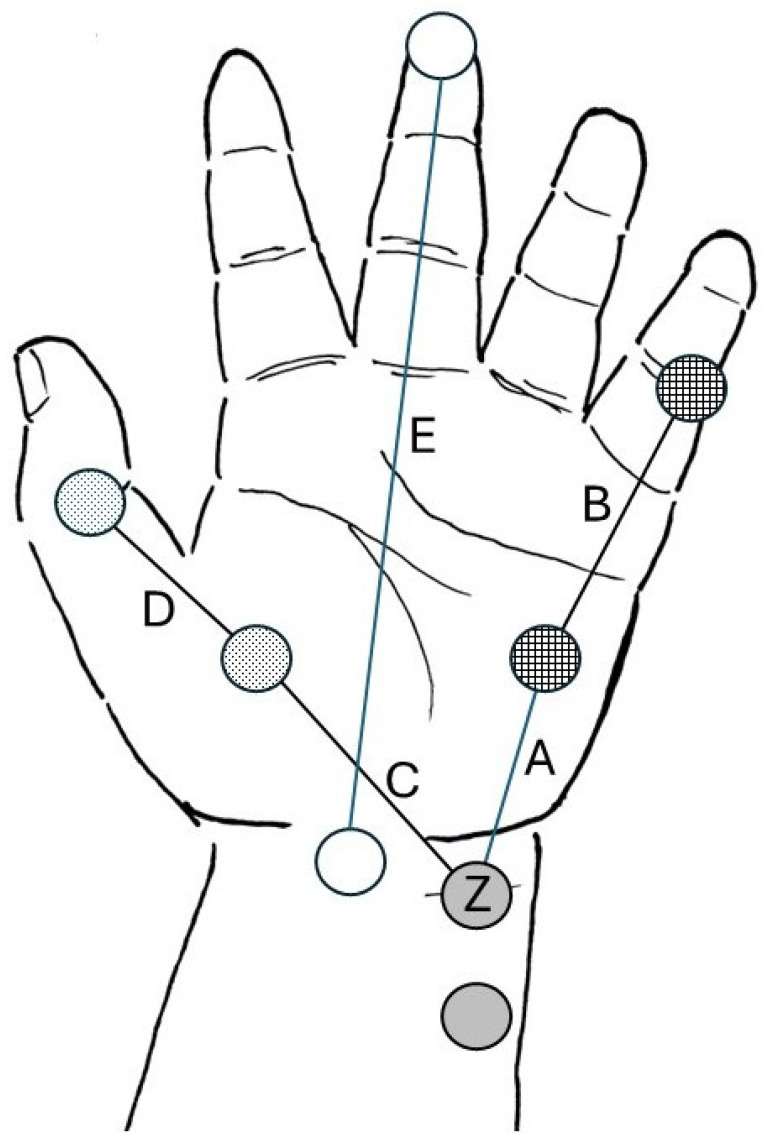 Figure 1
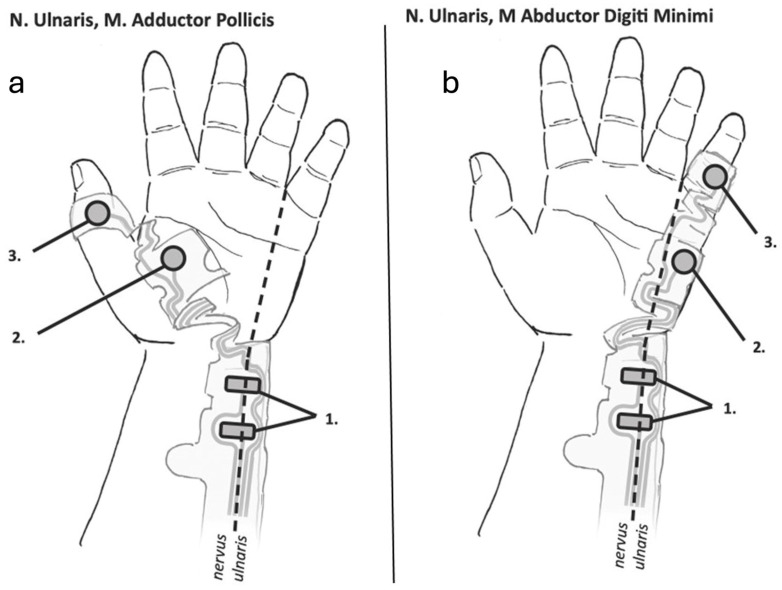 Figure 2
Peer Reviews
No public reviews on file for this paper yet. If you reviewed it on a platform where reviews are public (OpenReview, ICLR, NeurIPS, ICML), you can paste yours below so the community can read it here.
Videos
No videos yet. Explain this paper in a talk, walkthrough, or lecture? Add one.
Taxonomy
TopicsAnesthesia and Sedative Agents · Anesthesia and Neurotoxicity Research · Muscle activation and electromyography studies