Risk Assessment of Dietary Exposure to Fluoride from Follow-On Milk Consumption
Santiago Cerdán-Pérez, Soraya Paz-Montelongo, Samuel Alejandro-Vega, Carmen Rubio, Ángel J. Gutiérrez, Arturo Hardisson, Chaxiraxi de la Cruz Morales, Inés A. Revelo-Mejía, Javier Darias-Rosales, Natalia Pérez-Rodríguez, Consuelo Revert

TL;DR
This study assesses the risk of fluoride exposure in infants from consuming follow-on milk, finding that some formulas may exceed safe limits.
Contribution
The study quantifies fluoride levels in follow-on milk and evaluates potential health risks for infants.
Findings
Hydrolysate formulas had the highest mean fluoride concentration at 3.38 ± 2.78 mg/L.
Some hydrolyzed formulas could provide up to 94.1% of the upper fluoride limit in one serving for infants 0–6 months old.
Fluoride content in preparation water can significantly increase total infant intake.
Abstract
Breastfeeding based on the use of follow-on milk may contain traces of xenobiotic elements that could pose a risk to the health of the vulnerable population for which it is intended. Fluorine is a non-essential element that, at high concentrations, can produce adverse health effects such as dental fluorosis, decreased IQ (intelligence quotient), thyroid alterations, and kidney damage. Given the vulnerability of infants and the possible presence of fluoride in this type of product, the content of this anion was determined in a total of 46 samples of follow-on milk from different brands and types (starter, follow-on, and hydrolysate formulas) using a fluoride ion-selective electrode (EWI). The highest mean concentration of fluoride was recorded in the hydrolysate formulas (3.38 ± 2.78 mg/L). The dietary intake assessment indicated that some brands of hydrolyzed formulas could pose a…
Genes, proteins, chemicals, diseases, species, mutations and cell lines named across the full text — each resolved to its canonical identifier and authoritative record.
Click any figure to enlarge with its caption.
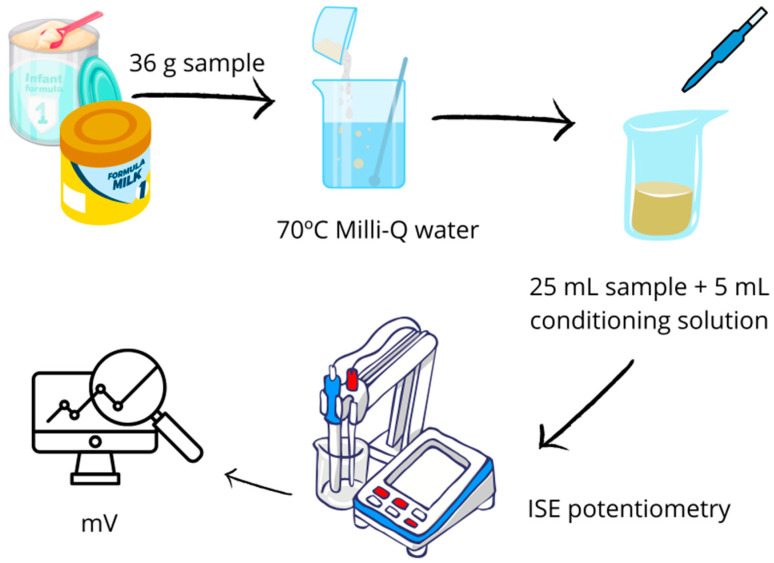 Figure 1
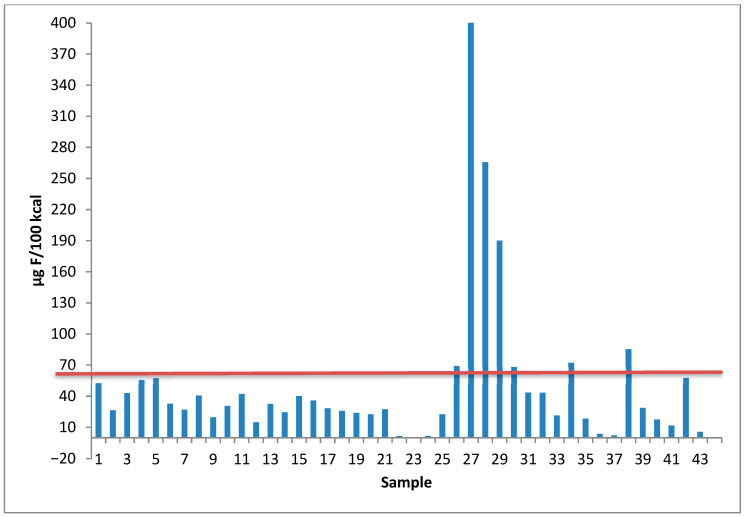 Figure 2
Peer Reviews
No public reviews on file for this paper yet. If you reviewed it on a platform where reviews are public (OpenReview, ICLR, NeurIPS, ICML), you can paste yours below so the community can read it here.
Videos
No videos yet. Explain this paper in a talk, walkthrough, or lecture? Add one.
Taxonomy
TopicsFluoride Effects and Removal · Dental Health and Care Utilization · Inorganic Fluorides and Related Compounds