Interacting Quantum Atoms Analysis of Covalent and Collective Interactions in Single Elongated Carbon–Carbon Bonds
Antonio Bonesana-Espinoza, José Manuel Guevara-Vela, Evelio Francisco, Tomás Rocha-Rinza, Ángel Martín Pendás

TL;DR
This paper explores how long carbon-carbon bonds remain stable by analyzing electronic interactions in molecules with bulky substituents.
Contribution
The study reveals the role of collective non-covalent interactions in stabilizing elongated C–C bonds using advanced quantum analysis methods.
Findings
Collective non-covalent interactions dominate over covalent bonding in molecules with bulky substituents.
Electron sharing and London dispersion contribute significantly to the stability of long C–C bonds.
Wave function analysis methods like QTAIM and IQA provide insights into the bonding mechanisms of these molecules.
Abstract
Chemical bonds among carbon atoms are central to chemistry. A general working principle regarding these interactions is that these contacts become stronger as the carbon atoms become closer to each other. Nevertheless, there are long, yet strong single C–C bonds that challenge this interpretation. Herein, we perform a quantitative thorough decomposition of the electronic energy of hexaphenylethane and several derivatives of this molecule with increasingly bulkier substituents. For this purpose, we exploit state-of-the-art methods of wave function analysis for the examination of the chemical bonding scenario in the examined systems, namely, the quantum theory of atoms in molecules (QTAIM) and the interacting quantum atoms (IQA) electronic energy partition. Our results reveal the predominance of collective non-covalent interactions over the central, covalent one in the chemical bonding of…
Genes, proteins, chemicals, diseases, species, mutations and cell lines named across the full text — each resolved to its canonical identifier and authoritative record.
Click any figure to enlarge with its caption.
 Figure 1
 Figure 2
 Figure 3
 Figure 4
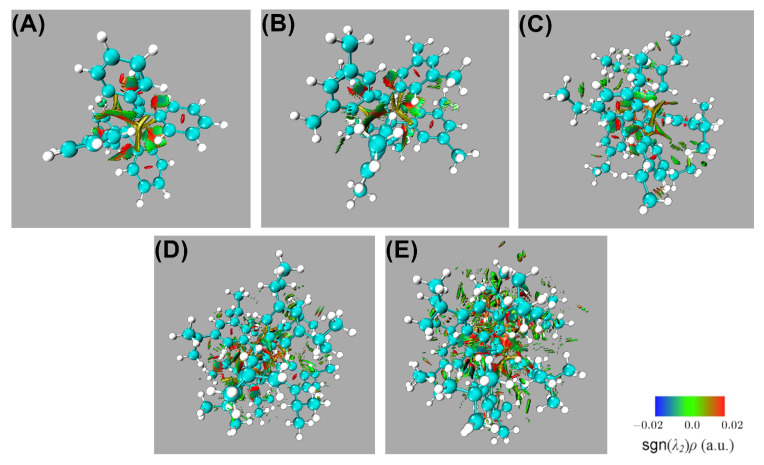 Figure 5
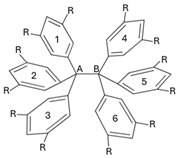 Figure 6
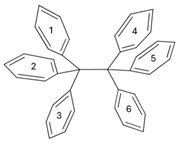 Figure 7
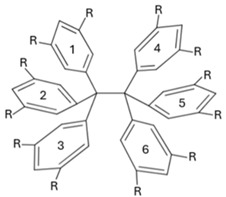 Figure 8
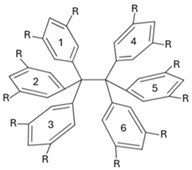 Figure 9
Peer Reviews
No public reviews on file for this paper yet. If you reviewed it on a platform where reviews are public (OpenReview, ICLR, NeurIPS, ICML), you can paste yours below so the community can read it here.
Videos
No videos yet. Explain this paper in a talk, walkthrough, or lecture? Add one.
Taxonomy
TopicsCrystallography and molecular interactions · Synthesis and Properties of Aromatic Compounds · Advanced Chemical Physics Studies